
Saturday, May 16 — Leave Some for the Stranger
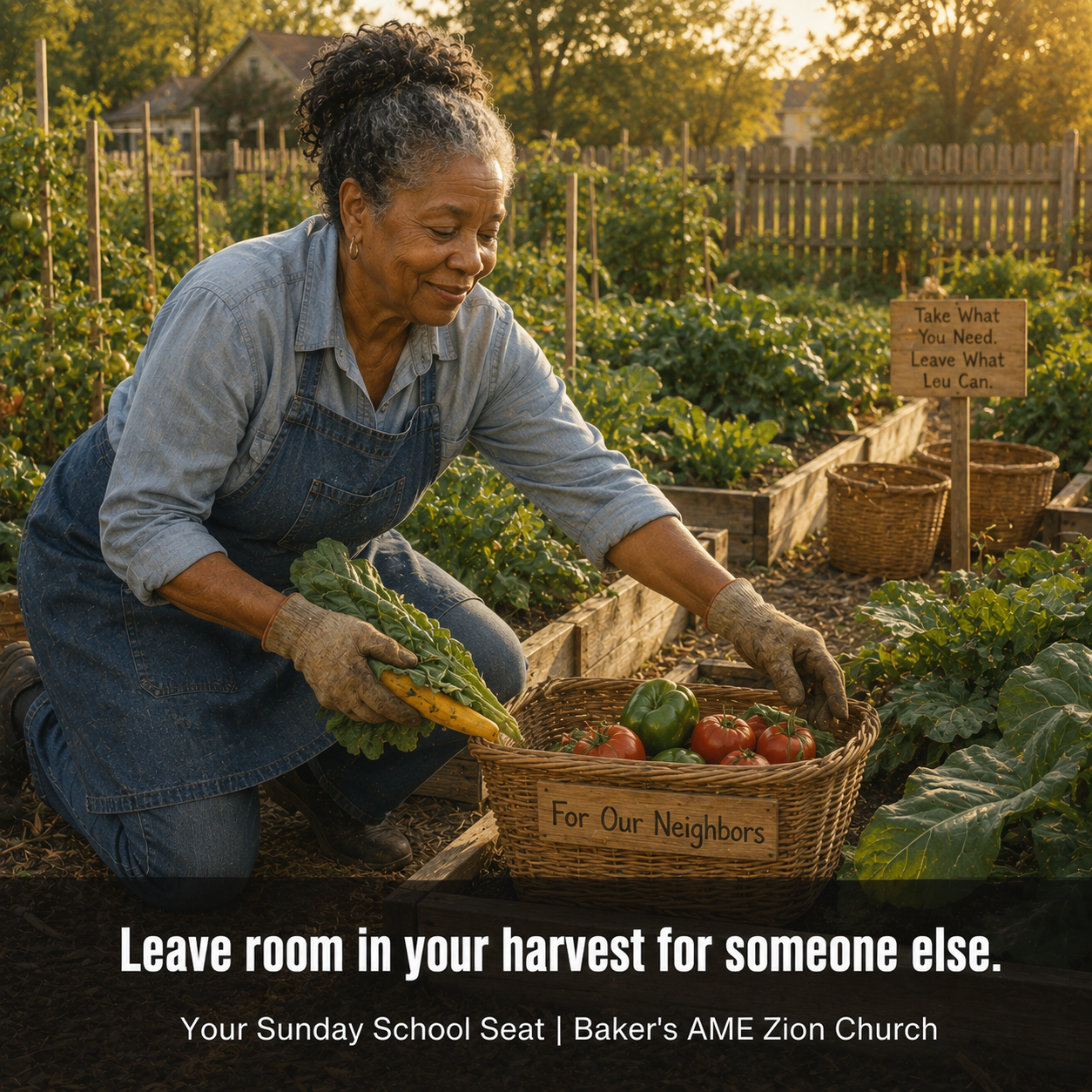
God's law has a generosity built into it that most modern economics doesn't. Don't strip the field bare. Leave something for the people who don't have a field.
Deuteronomy 24:14-21 — KJV 14 Thou shalt not oppress an hired servant that is poor and needy, whether he be of thy brethren, or of thy strangers that are in thy land within thy gates: 15 At his day thou shalt give him his hire, neither shall the sun go down upon it; for he is poor, and setteth his heart upon it: lest he cry against thee unto the LORD, and it be sin unto thee. 16 The fathers shall not be put to death for the children, neither shall the children be put to death for the fathers: every man shall be put to death for his own sin. 17 Thou shalt not pervert the judgment of the stranger, nor of the fatherless; nor take a widow's raiment to pledge: 18 But thou shalt remember that thou wast a bondman in Egypt, and the LORD thy God redeemed thee thence: therefore I command thee to do this thing. 19 When thou cuttest down thine harvest in thy field, and hast forgot a sheaf in the field, thou shalt not go again to fetch it: it shall be for the stranger, for the fatherless, and for the widow: that the LORD thy God may bless thee in all the work of thine hands. 20 When thou beatest thine olive tree, thou shalt not go over the boughs again: it shall be for the stranger, for the fatherless, and for the widow. 21 When thou gatherest the grapes of thy vineyard, thou shalt not glean it afterward: it shall be for the stranger, for the fatherless, and for the widow.
Deuteronomy 24:14-21 — WEB 14 You shall not oppress a hired servant who is poor and needy, whether he is one of your brothers, or one of the foreigners who are in your land within your gates. 15 In his day you shall give him his wages, neither shall the sun go down on it; for he is poor and sets his heart on it; lest he cry against you to Yahweh, and it be sin to you. 16 The fathers shall not be put to death for the children, neither shall the children be put to death for the fathers. Every man shall be put to death for his own sin. 17 You shall not deprive the foreigner or the fatherless of justice, nor take a widow's clothing in pledge; 18 but you shall remember that you were a slave in Egypt, and Yahweh your God redeemed you there. Therefore I command you to do this thing. 19 When you reap your harvest in your field, and have forgotten a sheaf in the field, you shall not go again to get it. It shall be for the foreigner, for the fatherless, and for the widow; that Yahweh your God may bless you in all the work of your hands. 20 When you beat your olive tree, you shall not go over the boughs again. It shall be for the foreigner, for the fatherless, and for the widow. 21 When you harvest your vineyard, you shall not glean it after yourselves. It shall be for the foreigner, for the fatherless, and for the widow.
Deuteronomy was Moses' final sermon to a generation of Israelites preparing to enter the promised land. Most of the people he was speaking to were the children and grandchildren of slaves. They had grown up hearing how God brought their families out of Egypt with a strong hand. Now they were about to plant fields, raise livestock, and become an economy of their own. And before they crossed the Jordan, Moses gave them laws to make sure they didn't forget what slavery felt like.
Chapter 24, verses 14-21, lays out a practical ethic. Don't oppress a hired worker — whether that worker is one of your own or a foreigner living in your gates. Pay him his wages the same day, before sundown, because he's poor and depending on it. Don't pervert justice for the foreigner or the orphan. Don't take a widow's last piece of clothing as collateral. And here's the kicker: when you reap your fields, leave a sheaf behind. When you beat your olive tree, don't go back over the branches. When you harvest your vineyard, don't pick it twice. Leave it for the foreigner, the orphan, and the widow.
Built into the ancient farmer's economy was an intentional inefficiency — a holy waste that wasn't waste at all. Maximizing wasn't the highest virtue. Mercy was. And the reason given is haunting and beautiful: remember that you were a slave in Egypt, and the Lord your God redeemed you.
The ethic of "The Christian Spirit in Industry" isn't a New Testament invention. It is woven all the way back through Moses. God has always cared about how the worker is paid, how the foreigner is treated, how the widow is fed, and what we do at the edges of our own success. The corners of the field belong to those who don't have one.
In our economy, the corners look different. They look like the person who cleans your building. The single mom on your block. The stranger who just moved in. The unhoused man at the intersection. The worker who can't afford the rent in the neighborhood she serves. We are not asked to fix everything. But we are asked not to glean every last grape of our own lives without looking up.
The Lord your God redeemed you. Don't forget it.
Thought for the Day Leave room in your harvest for someone else.
Reflection What "corner of your field" — your time, money, attention — could you leave for someone this week?
Prayer God of every generation, You have been generous with us, and You remember the stranger and the worker when we forget. Make us a people who do not strip our fields bare. Where we have margin — of time, money, energy — let us leave some for those who have less. Help us remember we were redeemed. Help us live like it. Amen.
This week we walk toward Sunday's lesson: The Christian Spirit in Industry.