
Saturday, May 23 — He Turns Mourning Into Dancing
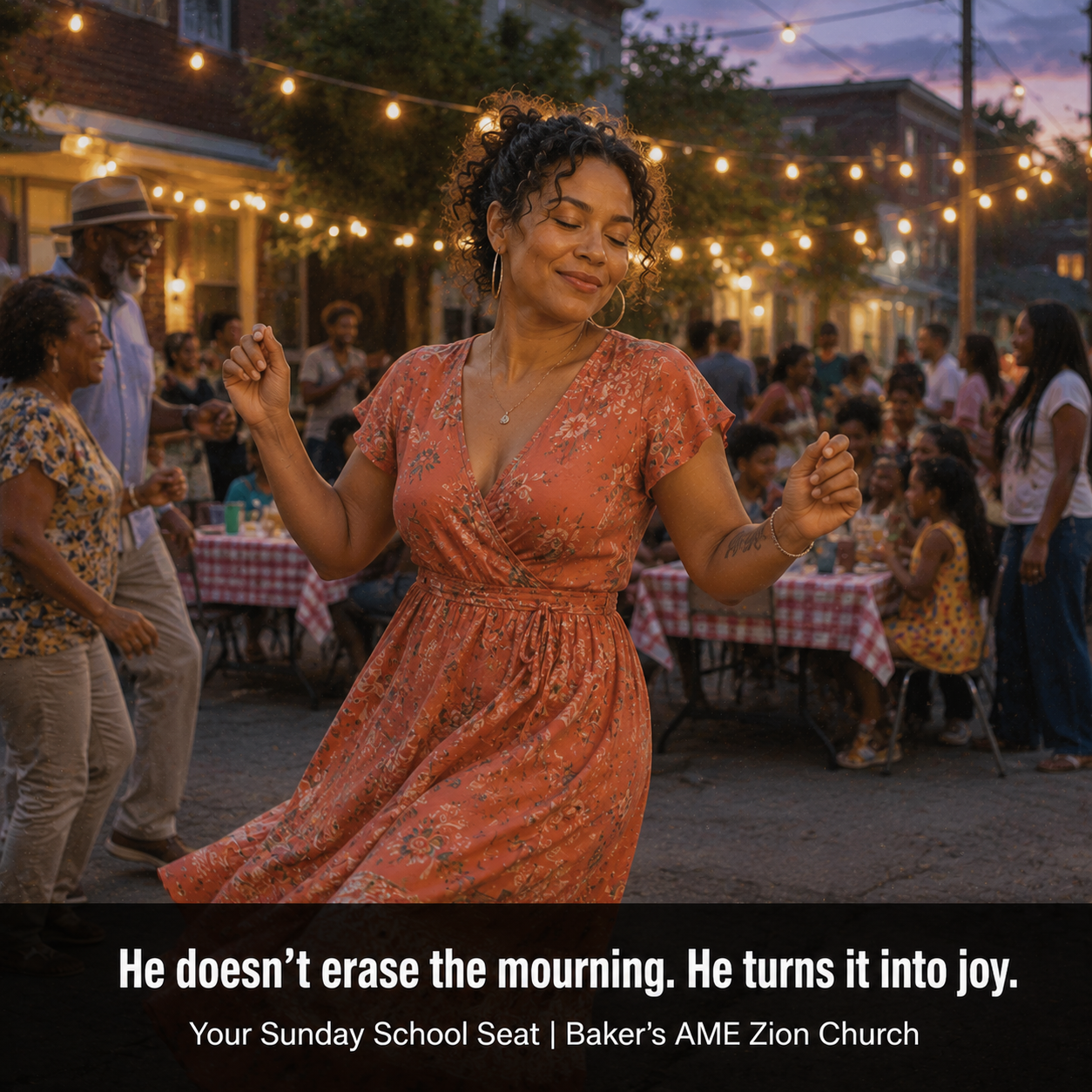
Jeremiah is writing to people whose world has been broken. And in the middle of the wreckage, God sends a song. The mourning is not the last word.
Jeremiah 31:10-14 — KJV 10 Hear the word of the LORD, O ye nations, and declare it in the isles afar off, and say, He that scattered Israel will gather him, and keep him, as a shepherd doth his flock. 11 For the LORD hath redeemed Jacob, and ransomed him from the hand of him that was stronger than he. 12 Therefore they shall come and sing in the height of Zion, and shall flow together to the goodness of the LORD, for wheat, and for wine, and for oil, and for the young of the flock and of the herd: and their soul shall be as a watered garden; and they shall not sorrow any more at all. 13 Then shall the virgin rejoice in the dance, both young men and old together: for I will turn their mourning into joy, and will comfort them, and make them rejoice from their sorrow. 14 And I will satiate the soul of the priests with fatness, and my people shall be satisfied with my goodness, saith the LORD.
Jeremiah 31:10-14 — WEB 10 "Hear Yahweh's word, you nations, and declare it in the distant islands. Say, 'He who scattered Israel will gather him, and keep him, as a shepherd does his flock.' 11 For Yahweh has ransomed Jacob, and redeemed him from the hand of him who was stronger than he. 12 They will come and sing in the height of Zion, and will flow to the goodness of Yahweh, to the grain, to the new wine, to the oil, and to the young of the flock and of the herd. Their soul will be as a watered garden. They will not sorrow any more at all. 13 Then the virgin will rejoice in the dance; the young men and the old together; for I will turn their mourning into joy, and will comfort them, and make them rejoice from their sorrow. 14 I will satiate the soul of the priests with abundance, and my people will be satisfied with my goodness," says Yahweh.
Explanation
Jeremiah is the prophet we don't always want to read. He's known as the weeping prophet for a reason. He spent decades watching his country fall apart. He warned Judah that exile was coming, and they didn't listen, and then it came, and his warnings were vindicated in the worst possible way. He saw Jerusalem burn. He saw children die. He grieved like few prophets ever grieved.
And then, somewhere in the middle of his book, you turn the page to chapter 31, and the tone shifts. The man who has been weeping for chapters starts to sing.
What does the song sound like? Not abstract theology. Not dry hope. The song is concrete. People will come back to Zion. They will sing. They will eat — wheat, wine, oil. The herds will be young and the gardens will be watered. Young women will dance. Young men and old men will dance together. The priests will be satisfied with abundance. And — here's the line that has comforted believers for twenty-six centuries — I will turn their mourning into joy, and will comfort them, and make them rejoice from their sorrow.
Notice what restoration looks like in God's hands. It looks like a community gathering to feast and dance. It looks like generations celebrating in the same space. It looks like work and produce and wine and oil. It looks like the ordinary good things of human life, returning, and being received with joy.
This is the Christian view of recreation in seed form. Jeremiah is telling a wounded people: God is not finished with you. The mourning is real, but it is not the last word. There is dancing on the other side. There is feasting on the other side. There is togetherness on the other side, where the young and the old aren't isolated by their grief but united in their joy.
You may be reading this on a Saturday morning in a season that feels a lot like Jeremiah's earlier chapters. A loved one has died. A marriage has cracked. A career has come apart. A child is far away. And God says: I will turn it.
Notice he doesn't say he will erase it. The mourning was real. The exile was real. The losses you carry are real. He says he will turn it — that he will take the very stuff of your sorrow and weave it into a different garment. The same heart that learned to mourn will learn to dance. The same community that buried each other will gather to feast.
If you're tired today, hear this: the dancing is on the way. He has not forgotten his promise.
Thought for the Day He doesn't erase the mourning. He turns it into joy.
Reflection Question What sorrow are you carrying that you've stopped believing God can turn into anything else?
Prayer Faithful God, you who saw Jeremiah weep and gave him a song anyway, see us where we sit today. We bring you our mourning — the losses, the disappointments, the heaviness we don't always name. We trust you to do what only you can do: not erase our grief, but transform it. Teach us to wait for the dancing, and give us the courage to take the first step when it comes. Amen.
This week we walk toward Sunday's lesson: The Christian View of Recreation.