
Saturday, June 27 — Jesus Is the Good Shepherd
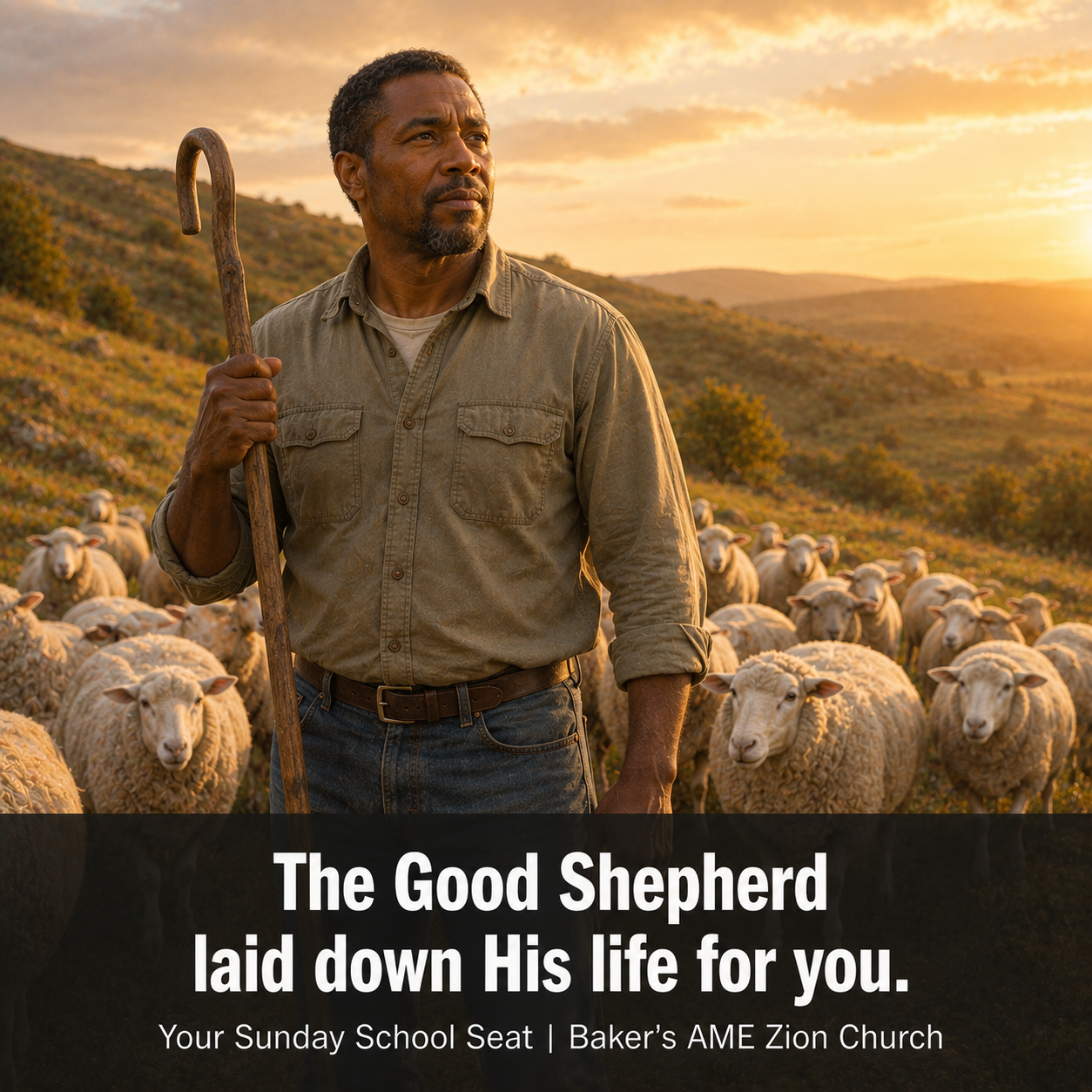
Yesterday Jesus said He was the door. Today He goes further and tells us what it costs Him to be our Shepherd. This is where shepherd language stops being gentle and becomes the whole gospel.
John 10:10-18 — KJV 10 The thief cometh not, but for to steal, and to kill, and to destroy: I am come that they might have life, and that they might have it more abundantly. 11 I am the good shepherd: the good shepherd giveth his life for the sheep. 12 But he that is an hireling, and not the shepherd, whose own the sheep are not, seeth the wolf coming, and leaveth the sheep, and fleeth: and the wolf catcheth them, and scattereth the sheep. 13 The hireling fleeth, because he is an hireling, and careth not for the sheep. 14 I am the good shepherd, and know my sheep, and am known of mine. 15 As the Father knoweth me, even so know I the Father: and I lay down my life for the sheep. 16 And other sheep I have, which are not of this fold: them also I must bring, and they shall hear my voice; and there shall be one fold, and one shepherd. 17 Therefore doth my Father love me, because I lay down my life, that I might take it again. 18 No man taketh it from me, but I lay it down of myself. I have power to lay it down, and I have power to take it again. This commandment have I received of my Father.
John 10:10-18 — WEB 10 The thief only comes to steal, kill, and destroy. I came that they may have life, and may have it abundantly. 11 I am the good shepherd. The good shepherd lays down his life for the sheep. 12 He who is a hired hand, and not a shepherd, who doesn't own the sheep, sees the wolf coming, leaves the sheep, and flees. The wolf snatches the sheep, and scatters them. 13 The hired hand flees because he is a hired hand, and doesn't care for the sheep. 14 I am the good shepherd. I know my own, and I'm known by my own; 15 even as the Father knows me, and I know the Father. I lay down my life for the sheep. 16 I have other sheep, which are not of this fold. I must bring them also, and they will hear my voice. They will become one flock with one shepherd. 17 Therefore the Father loves me, because I lay down my life, that I may take it again. 18 No one takes it away from me, but I lay it down by myself. I have power to lay it down, and I have power to take it again. I received this commandment from my Father.
Explanation
Jesus draws a hard line between two kinds of people who stand near the flock. There's the thief, who comes only "to steal, and to kill, and to destroy," and against that backdrop Jesus announces His own purpose: "I am come that they might have life, and that they might have it more abundantly." Then He sets the good shepherd beside the hireling. The hired hand works for a paycheck, so when the wolf shows up, he calculates the risk and runs — the sheep were never really his. The good shepherd, who owns the sheep and loves them, stands his ground. And the measure of that love is total: "the good shepherd giveth his life for the sheep."
Twice in these verses Jesus says it plainly — He lays down His life. And He insists no one is taking it from Him; He gives it freely. This is the cross spoken in advance, in pasture language. The Shepherd doesn't just lead the sheep to safety from a comfortable distance; He puts His own body between the flock and the wolf. He dies so the sheep can live.
This is the summit of the whole week, the day before Sunday's lesson, and the threads pull together here. Amos was God's voice calling a comfortable people back to justice. But Israel needed more than a warning; it needed a Shepherd willing to do what no prophet could — lay down his life and take it up again. The God who loves justice in Amos is the God who loves you enough to die for you in Jesus. Justice and sacrificial love meet at the same cross.
There's a quiet challenge tucked in here too. Most of us are tempted, somewhere, to be hirelings — to care for people only as long as it's convenient, to flee when the wolf of cost or conflict shows up. A marriage, a friendship, a hard ministry, a difficult child: the hireling does the math and leaves; the shepherd stays. Jesus shows us a love that doesn't run, and then He pours that same love into us so we can begin to love that way ourselves. Tomorrow we'll meet Amos, a man who refused to run from a hard assignment. Today we remember why anyone would have the courage to stay: because the Good Shepherd stayed for us first.
Thought for the Day The Good Shepherd laid down His life for you.
Reflection Question Where are you tempted to be a hireling — to flee when love gets costly — and what would it look like to stay?
Prayer Jesus, my Good Shepherd, thank You for not running when the wolf came for me. You laid down Your life so that I could have life, full and abundant. Where I'm tempted to flee from the people You've given me, give me the courage to stay. Fill me with the love that stays. Amen.
This week we walk toward Sunday's lesson: Amos, A Herdsman Called of God to Be a Prophet.