
Monday, May 18 — Jesus Came to the Party
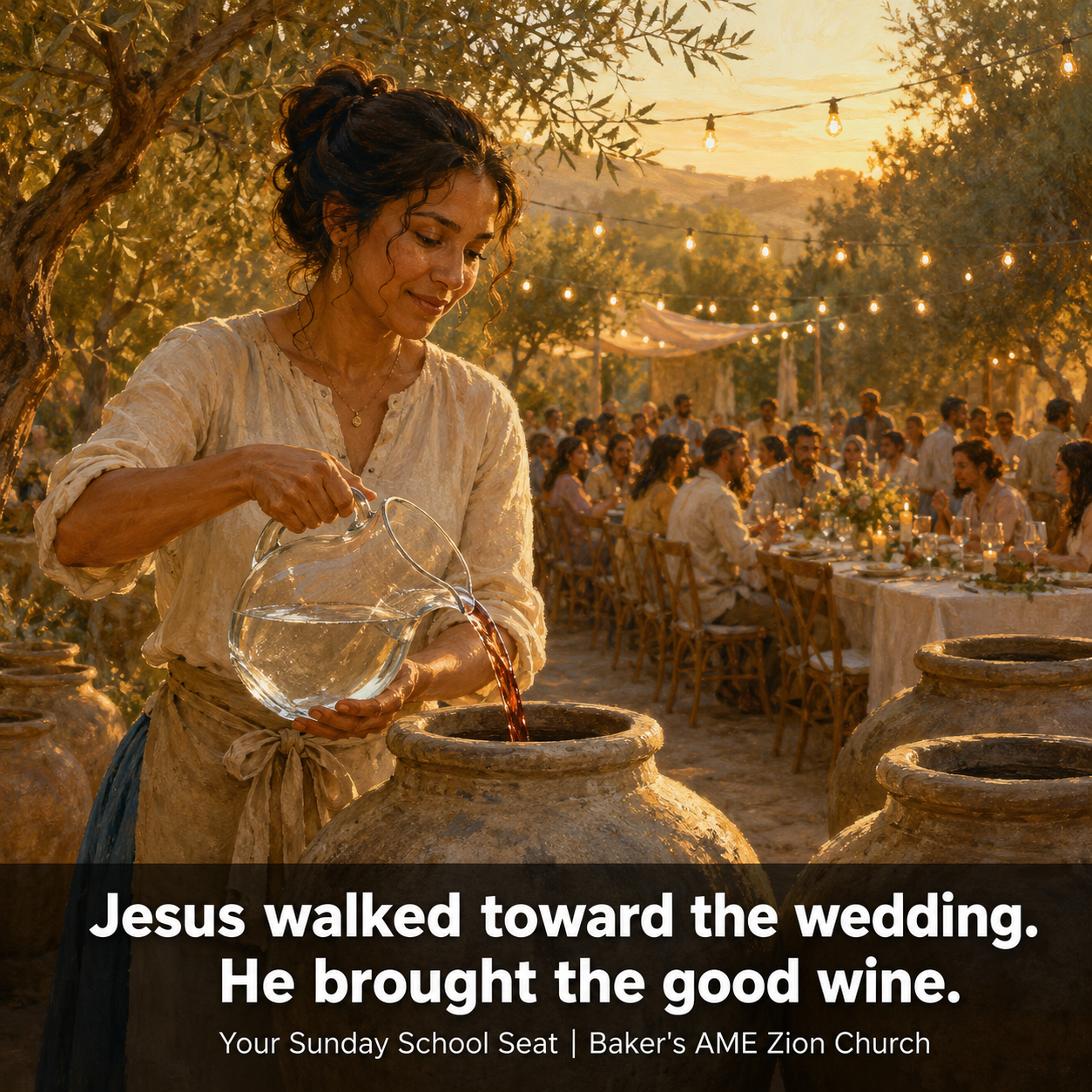
There's a reason the first miracle in John's Gospel happens at a wedding reception and not on a mountaintop. Stay with me — this matters more than you'd think.
John 2:1-11 — KJV 1 And the third day there was a marriage in Cana of Galilee; and the mother of Jesus was there: 2 And both Jesus was called, and his disciples, to the marriage. 3 And when they wanted wine, the mother of Jesus saith unto him, They have no wine. 4 Jesus saith unto her, Woman, what have I to do with thee? mine hour is not yet come. 5 His mother saith unto the servants, Whatsoever he saith unto you, do it. 6 And there were set there six waterpots of stone, after the manner of the purifying of the Jews, containing two or three firkins apiece. 7 Jesus saith unto them, Fill the waterpots with water. And they filled them up to the brim. 8 And he saith unto them, Draw out now, and bear unto the governor of the feast. And they bare it. 9 When the ruler of the feast had tasted the water that was made wine, and knew not whence it was: (but the servants which drew the water knew;) the governor of the feast called the bridegroom, 10 And saith unto him, Every man at the beginning doth set forth good wine; and when men have well drunk, then that which is worse: but thou hast kept the good wine until now. 11 This beginning of miracles did Jesus in Cana of Galilee, and manifested forth his glory; and his disciples believed on him.
John 2:1-11 — WEB 1 The third day, there was a wedding in Cana of Galilee. Jesus' mother was there. 2 Jesus also was invited, with his disciples, to the wedding. 3 When the wine ran out, Jesus' mother said to him, "They have no wine." 4 Jesus said to her, "Woman, what does that have to do with you and me? My hour has not yet come." 5 His mother said to the servants, "Whatever he says to you, do it." 6 Now there were six water pots of stone set there after the Jews' way of purifying, containing two or three metretes apiece. 7 Jesus said to them, "Fill the water pots with water." So they filled them up to the brim. 8 He said to them, "Now draw some out, and take it to the ruler of the feast." So they took it. 9 When the ruler of the feast tasted the water now become wine, and didn't know where it came from (but the servants who had drawn the water knew), the ruler of the feast called the bridegroom 10 and said to him, "Everyone serves the good wine first, and when the guests have drunk freely, then that which is worse. You have kept the good wine until now!" 11 This beginning of his signs Jesus did in Cana of Galilee, and revealed his glory; and his disciples believed in him.
Explanation
The first miracle. People remember that. But notice where it happens. Not in the temple. Not on a mountainside. Not in some dramatic moment of healing or resurrection. The first miracle Jesus performs in John's Gospel happens at a wedding reception.
That should tell us something.
Weddings in first-century Galilee weren't an afternoon affair. They were week-long celebrations. Family came in from miles around. Neighbors pitched in. There was music, dancing, eating, drinking, laughter. The whole village shut down to celebrate. And it was at one of these — somewhere in the middle of the third day — that the wine ran out. In that culture, that was a disaster. Hospitality was sacred. The host would have been humiliated; the family's honor wounded. The party was about to grind to a halt.
And Jesus's mother turns to him and says, "They have no wine."
Notice what Jesus doesn't do. He doesn't lecture anyone. He doesn't pull out a scroll and say, "Well, perhaps this is a good moment to reflect on the dangers of overindulgence." He doesn't suggest the celebration has run its course. He saves the party. He turns six stone jars of water — about 150 gallons — into wine so good the master of the banquet can't believe they served the cheap stuff first.
Here's what I want us to notice this week as we move toward Sunday's lesson on the Christian view of recreation: Jesus didn't just tolerate the celebration. He extended it. He honored it. He blessed it.
We've inherited, somewhere along the way, a strange idea that the holier we get, the more solemn we become. That joy is suspicious. That a good time is something we apologize for. But the first public act of God's Son in John's account is to keep a wedding feast going.
The God who flung galaxies into space and shaped the human heart for love also made wedding feasts and laughter and the kind of music that pulls you out of your chair. Recreation isn't something we squeeze in around the edges of a serious Christian life. It's part of how we were designed to live.
If your week has been heavy — if you've been carrying a lot — hear this: the same Jesus who walked toward the cross also walked toward the wedding. And he showed up smiling. He brought the good wine.
Maybe today, you can let yourself enjoy something small. A meal. A laugh. A walk. A song. Not because you've earned it. But because joy is part of the Kingdom too.
Thought for the Day Jesus walked toward the wedding. He brought the good wine.
Reflection Question What's one ordinary joy you've been treating as a guilty pleasure that God might actually be inviting you into?
Prayer Lord, thank you that you didn't come into this world too holy for laughter. Thank you that you blessed a wedding, multiplied the wine, and kept the celebration going. Loosen the tightness in our shoulders today. Help us receive joy as the gift you intended it to be. Amen.
This week we walk toward Sunday's lesson: The Christian View of Recreation.