
Thursday, June 4 — A Leader Who Listens
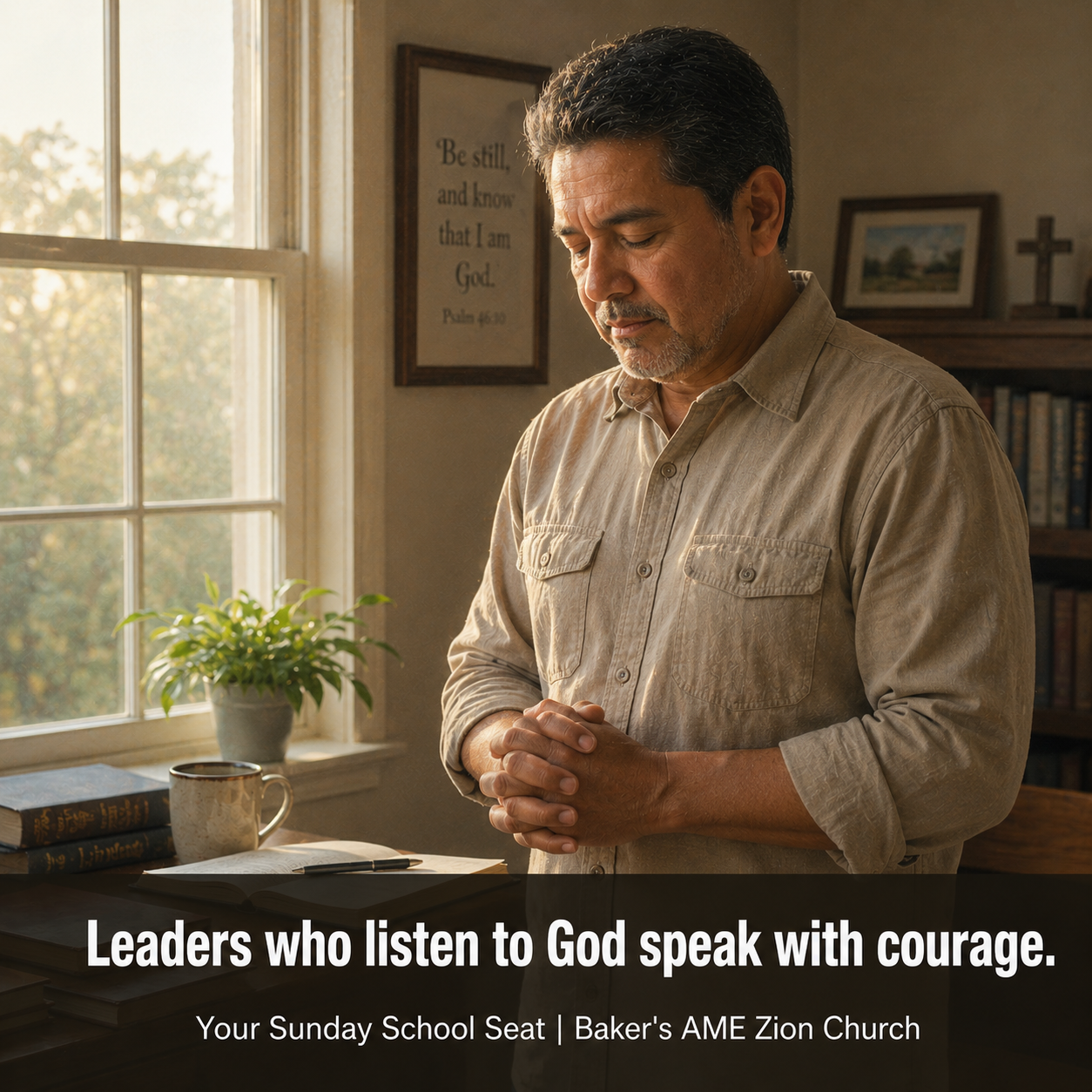
We tend to picture great leaders speaking. But the most important thing Nehemiah does in this passage happens in total silence — between a question and an answer.
Nehemiah 2:1-8 — KJV 1 And it came to pass in the month Nisan, in the twentieth year of Artaxerxes the king, that wine was before him: and I took up the wine, and gave it unto the king. Now I had not been beforetime sad in his presence. 2 Wherefore the king said unto me, Why is thy countenance sad, seeing thou art not sick? this is nothing else but sorrow of heart. Then I was very sore afraid, 3 And said unto the king, Let the king live for ever: why should not my countenance be sad, when the city, the place of my fathers' sepulchres, lieth waste, and the gates thereof are consumed with fire? 4 Then the king said unto me, For what dost thou make request? So I prayed to the God of heaven. 5 And I said unto the king, If it please the king, and if thy servant have found favour in thy sight, that thou wouldest send me unto Judah, unto the city of my fathers' sepulchres, that I may build it. 6 And the king said unto me, (the queen also sitting by him,) For how long shall thy journey be? and when wilt thou return? So it pleased the king to send me; and I set him a time. 7 Moreover I said unto the king, If it please the king, let letters be given me to the governors beyond the river, that they may convey me over till I come into Judah; 8 And a letter unto Asaph the keeper of the king's forest, that he may give me timber to make beams for the gates of the palace which appertained to the house, and for the wall of the city, and for the house that I shall enter into. And the king granted me, according to the good hand of my God upon me.
Nehemiah 2:1-8 — WEB 1 In the month Nisan, in the twentieth year of Artaxerxes the king, when wine was before him, I picked up the wine, and gave it to the king. Now I had not been sad before in his presence. 2 The king said to me, "Why is your face sad, since you are not sick? This is nothing else but sorrow of heart." Then I was very much afraid. 3 I said to the king, "Let the king live forever! Why shouldn't my face be sad, when the city, the place of my fathers' tombs, lies waste, and its gates have been consumed with fire?" 4 Then the king said to me, "What is your request?" So I prayed to the God of heaven. 5 I said to the king, "If it pleases the king, and if your servant has found favor in your sight, I ask that you would send me to Judah, to the city of my fathers' tombs, that I may build it." 6 The king said to me (the queen was also sitting by him), "How long will your journey be? When will you return?" So it pleased the king to send me, and I set him a time. 7 Moreover I said to the king, "If it pleases the king, let letters be given me to the governors beyond the River, that they may let me pass through until I come to Judah; 8 and a letter to Asaph the keeper of the king's forest, that he may give me timber to make beams for the gates of the citadel by the temple, for the wall of the city, and for the house that I will occupy." The king granted my requests, because of the good hand of my God on me.
Explanation
Nehemiah was a cupbearer — a trusted servant in the Persian court, the man who tasted the king's wine to make sure it wasn't poisoned. It was a position of access and danger. You did not bring your private grief to work. So when the king notices Nehemiah's sad face, the text says he was "very sore afraid," and for good reason. A king's mood could end a career or a life.
Then comes verse 4, and it's easy to read right past it. The king asks, "For what dost thou make request?" And before Nehemiah answers, Luke — no, Nehemiah himself — slips in five words: "So I prayed to the God of heaven." There's no time for him to leave the room and kneel. This is a split-second, eyes-open, heart-lifted prayer in the gap between the question and his reply. That tiny pause is the secret of his whole career. Nehemiah had been carrying Jerusalem's ruin in his heart for months, weeping and fasting and listening to God in chapter 1. So when the moment finally came, he wasn't improvising. He had already heard from heaven. The prayer in verse 4 wasn't him scrambling for a plan — it was him checking in with a God he'd been listening to all along.
That's what "a leader who listens" really means. Not a leader who waits politely for you to finish talking, but a leader whose first reflex, even under pressure, is to bend an ear toward God before opening his mouth. Notice how prepared his answer is — he knows exactly what he needs: a timeline, letters for safe passage, timber for the gates. That clarity is the fruit of months of listening. People who pray well in private tend to think clearly in public.
We're building toward Sunday and Deborah, who sits under her palm tree and listens — to disputes, to God, to the moment Israel is ready to move. Before she ever gives a command, she's a woman who hears.
The application for a Thursday is wonderfully practical. Before your hard conversation today — the one with your boss, your kid, your spouse — try Nehemiah's habit. Pray the four-second prayer in the doorway. Then speak. Leaders who listen to God speak with a steadiness the room can feel.
Thought for the Day Leaders who listen to God speak with courage.
Reflection Question What conversation are you dreading this week — and what would change if you breathed a four-second prayer before you opened your mouth?
Prayer God of heaven, teach us to listen before we speak. In the tense doorway, in the unexpected question, in the moment we're "very sore afraid," remind us to lift our hearts to You first. Let the quiet listening of our private hours give us clarity and courage in public ones. Your good hand is enough. Amen.
This week we walk toward Sunday's lesson: Deborah, a Leader in a National Emergency.