
Friday, July 17 — Love With Hands and Feet
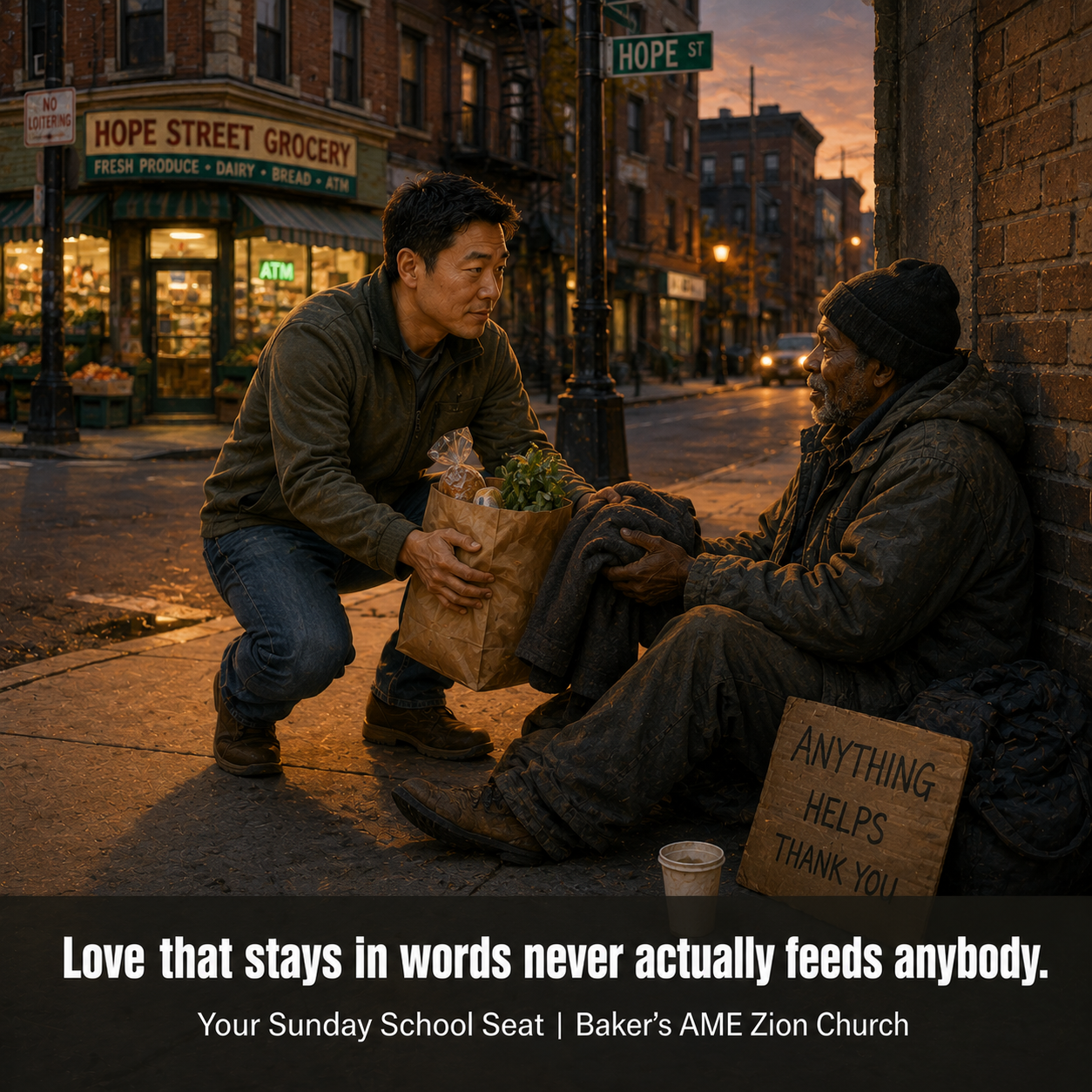
Anybody can say "I love you." John wants to know what your love has actually done lately.
1 John 3:14-18 — KJV
14 We know that we have passed from death unto life, because we love the brethren. He that loveth not his brother abideth in death. 15 Whosoever hateth his brother is a murderer: and ye know that no murderer hath eternal life abiding in him. 16 Hereby perceive we the love of God, because he laid down his life for us: and we ought to lay down our lives for the brethren. 17 But whoso hath this world's good, and seeth his brother have need, and shutteth up his bowels of compassion from him, how dwelleth the love of God in him? 18 My little children, let us not love in word, neither in tongue; but in deed and in truth.
1 John 3:14-18 — WEB
14 We know that we have passed out of death into life, because we love the brothers. He who doesn't love his brother remains in death. 15 Whoever hates his brother is a murderer, and you know that no murderer has eternal life remaining in him. 16 By this we know love, because he laid down his life for us. And we ought to lay down our lives for the brothers. 17 But whoever has the world's goods, and sees his brother in need, and closes his heart of compassion against him, how does God's love remain in him? 18 My little children, let's not love in word only, or with the tongue only, but in deed and truth.
Explanation
John writes this letter to a community wrestling with false teachers who claimed special spiritual knowledge while showing little concern for anyone around them. John's test for genuine faith is refreshingly unspiritual, in the best sense: love is proven in the direction of your wallet and your willingness to be inconvenienced, not in the sophistication of your beliefs. "We know that we have passed from death unto life, because we love the brethren" — assurance of salvation, tied directly to how you treat people.
Verse 17 gets specific and a little uncomfortable: if you have the world's goods, see a brother in need, and close your heart against him, how does God's love live in you? John doesn't ask whether you feel compassion. He asks whether your compassion opened your hand.
This is, again, Zacchaeus's whole story compressed into one verse. He had "this world's good" in abundance — wealth built, in part, on other people's needs going unmet. Salvation, when it reaches him, doesn't just change what he believes; it changes what his hands do the same afternoon. "The half of my goods I give to the poor." No committee meeting, no waiting for the "right time" — deed and truth, immediately, in front of witnesses. That's John's test passed in real time, days before John himself would have ever written it.
We live in a culture fluent in loving language and slower on loving action. We share the post about the cause. We say we'll pray about the need. We feel genuinely moved by a story of someone struggling. And then the moment passes, and our goods stay exactly where they were, and our schedule stays exactly as full as it was before we felt something. John isn't against feeling. He's against feeling that never becomes deed.
This week, pick one place where your compassion has stalled out at the feeling stage — a friend who's struggling, a family stretched thin, a need you've heard about more than once. Then do the unglamorous, practical thing: write the check, make the call, show up with the casserole or the ride to the appointment. Love in deed and truth is rarely dramatic. It looks like showing up with your hands full instead of your mouth.
Thought for the Day
Love that stays in words never actually feeds anybody.
Reflection Question
Where has your compassion stalled at feeling instead of doing?
Prayer
Father, forgive me for the times I've felt moved and done nothing. Show me the need in front of me right now, and give me the courage to love in deed and truth, not just in word. Let my hands prove what my heart says it believes. Amen.
This week we walk toward Sunday's lesson: Zacchaeus, The Publican.