
Wednesday, October 7 — Worship God on God's Terms
Everybody has a spot where they feel closest to God, a pew, a porch swing, a corner of the kitchen. But what happens when the way we like to worship and the way God asks to be worshiped are not the same thing?
Deuteronomy 12:1-14 — KJV
1 These are the statutes and judgments, which ye shall observe to do in the land, which the LORD God of thy fathers giveth thee to possess it, all the days that ye live upon the earth. 2 Ye shall utterly destroy all the places, wherein the nations which ye shall possess served their gods, upon the high mountains, and upon the hills, and under every green tree: 3 And ye shall overthrow their altars, and break their pillars, and burn their groves with fire; and ye shall hew down the graven images of their gods, and destroy the names of them out of that place. 4 Ye shall not do so unto the LORD your God. 5 But unto the place which the LORD your God shall choose out of all your tribes to put his name there, even unto his habitation shall ye seek, and thither thou shalt come: 6 And thither ye shall bring your burnt offerings, and your sacrifices, and your tithes, and heave offerings of your hand, and your vows, and your freewill offerings, and the firstlings of your herds and of your flocks: 7 And there ye shall eat before the LORD your God, and ye shall rejoice in all that ye put your hand unto, ye and your households, wherein the LORD thy God hath blessed thee. 8 Ye shall not do after all the things that we do here this day, every man whatsoever is right in his own eyes. 9 For ye are not as yet come to the rest and to the inheritance, which the LORD your God giveth you. 10 But when ye go over Jordan, and dwell in the land which the LORD your God giveth you to inherit, and when he giveth you rest from all your enemies round about, so that ye dwell in safety; 11 Then there shall be a place which the LORD your God shall choose to cause his name to dwell there; thither shall ye bring all that I command you; your burnt offerings, and your sacrifices, your tithes, and the heave offering of your hand, and all your choice vows which ye vow unto the LORD: 12 And ye shall rejoice before the LORD your God, ye, and your sons, and your daughters, and your menservants, and your maidservants, and the Levite that is within your gates; forasmuch as he hath no part nor inheritance with you. 13 Take heed to thyself that thou offer not thy burnt offerings in every place that thou seest: 14 But in the place which the LORD shall choose in one of thy tribes, there thou shalt offer thy burnt offerings, and there thou shalt do all that I command thee.
Deuteronomy 12:1-14 — WEB
1 These are the statutes and the ordinances which you shall observe to do in the land which Yahweh, the God of your fathers, has given you to possess all the days that you live on the earth. 2 You shall surely destroy all the places in which the nations that you shall dispossess served their gods: on the high mountains, and on the hills, and under every green tree. 3 You shall break down their altars, dash their pillars in pieces, and burn their Asherah poles with fire. You shall cut down the engraved images of their gods. You shall destroy their name out of that place. 4 You shall not do so to Yahweh your God. 5 But to the place which Yahweh your God shall choose out of all your tribes, to put his name there, you shall seek his habitation, and you shall come there. 6 You shall bring your burnt offerings, your sacrifices, your tithes, the wave offering of your hand, your vows, your free will offerings, and the firstborn of your herd and of your flock there. 7 There you shall eat before Yahweh your God, and you shall rejoice in all that you put your hand to, you and your households, in which Yahweh your God has blessed you. 8 You shall not do all the things that we do here today, every man whatever is right in his own eyes; 9 for you haven’t yet come to the rest and to the inheritance which Yahweh your God gives you. 10 But when you go over the Jordan and dwell in the land which Yahweh your God causes you to inherit, and he gives you rest from all your enemies around you, so that you dwell in safety, 11 then it shall happen that to the place which Yahweh your God shall choose, to cause his name to dwell there, there you shall bring all that I command you: your burnt offerings, your sacrifices, your tithes, the wave offering of your hand, and all your choice vows which you vow to Yahweh. 12 You shall rejoice before Yahweh your God—you, and your sons, your daughters, your male servants, your female servants, and the Levite who is within your gates, because he has no portion nor inheritance with you. 13 Be careful that you don’t offer your burnt offerings in every place that you see; 14 but in the place which Yahweh chooses in one of your tribes, there you shall offer your burnt offerings, and there you shall do all that I command you.
Explanation
Deuteronomy is Moses' last long sermon, preached on the plains of Moab with the promised land in sight. Israel is about to cross the Jordan into a country full of other people's religion. Chapter 12 opens the large section of specific instructions, and the very first thing Moses addresses is worship. That is not an accident. If a people is wrong about how to approach God, everything else tends to go wrong with it. The nations in Canaan worshiped wherever it felt spiritual: on the hilltops, under green trees, at altars that sprang up anywhere.
Moses tells Israel to tear those places down and not to worship the Lord the way the nations worship their gods. Instead they are to look for the place the Lord will choose to put His name, and to come there with their offerings. The point is bigger than geography. It is about who sets the terms. God is not a power we summon in whatever way suits us. He reveals Himself and invites us in. And look at what God's design for worship looks like: bringing what you have, eating together before the Lord, and rejoicing in all you have put your hand to, "ye and your households." Worship the way God designs it is full of tables, families, and gladness. Then verse 8 warns against the opposite approach, everyone doing whatever is right in his own eyes.
Keep that phrase in mind, because it echoes straight through the book of Judges, which is where Sunday's lesson lives. Judges 2 tells us Israel "forsook the Lord" and served the Baals. It did not start with a dramatic announcement. It started when worship became shaped by whatever felt right instead of what God had said. The slide toward evil in Judges begins at the altar, and Deuteronomy 12 is Moses' attempt to stop it before it starts.
We no longer have one chosen location; Jesus told the woman at the well that true worshipers will worship in spirit and in truth. But the principle holds. Worship is God's invitation, not our invention. This is not an argument about hymns versus guitars or short services versus long ones. It is a question about whether we come to meet God or to meet ourselves. Do our habits of worship, gathering with God's people, hearing the Word, praying, sharing the table, come from what God has shown us, or from what is convenient and comfortable? And do we leave rejoicing? Moses expected that we would.
Thought for the Day
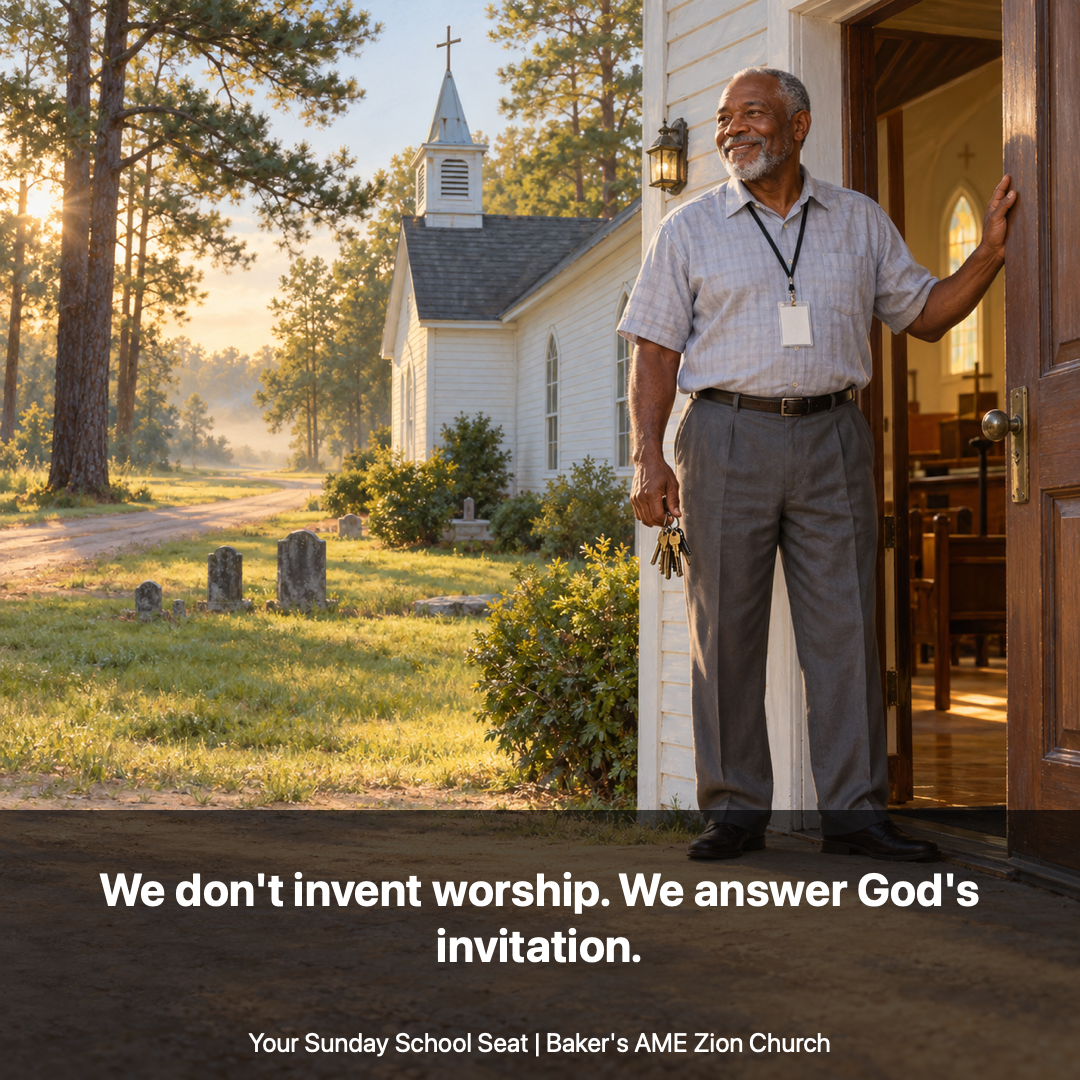
We don't invent worship. We answer God's invitation.
Reflection Question
Is your worship shaped more by what God has asked of us or by what feels comfortable, and what is one small step toward the first?
Prayer
Lord, You are worthy of our worship, and You have shown us how to come to You. Forgive us when we make worship about ourselves. Draw us to Your house, Your Word, and Your people with glad hearts. Let our families leave rejoicing in You. In Jesus' name, Amen.
This week we walk toward Sunday's lesson: God Works Despite Evil.