
Saturday, May 9 — These Hands
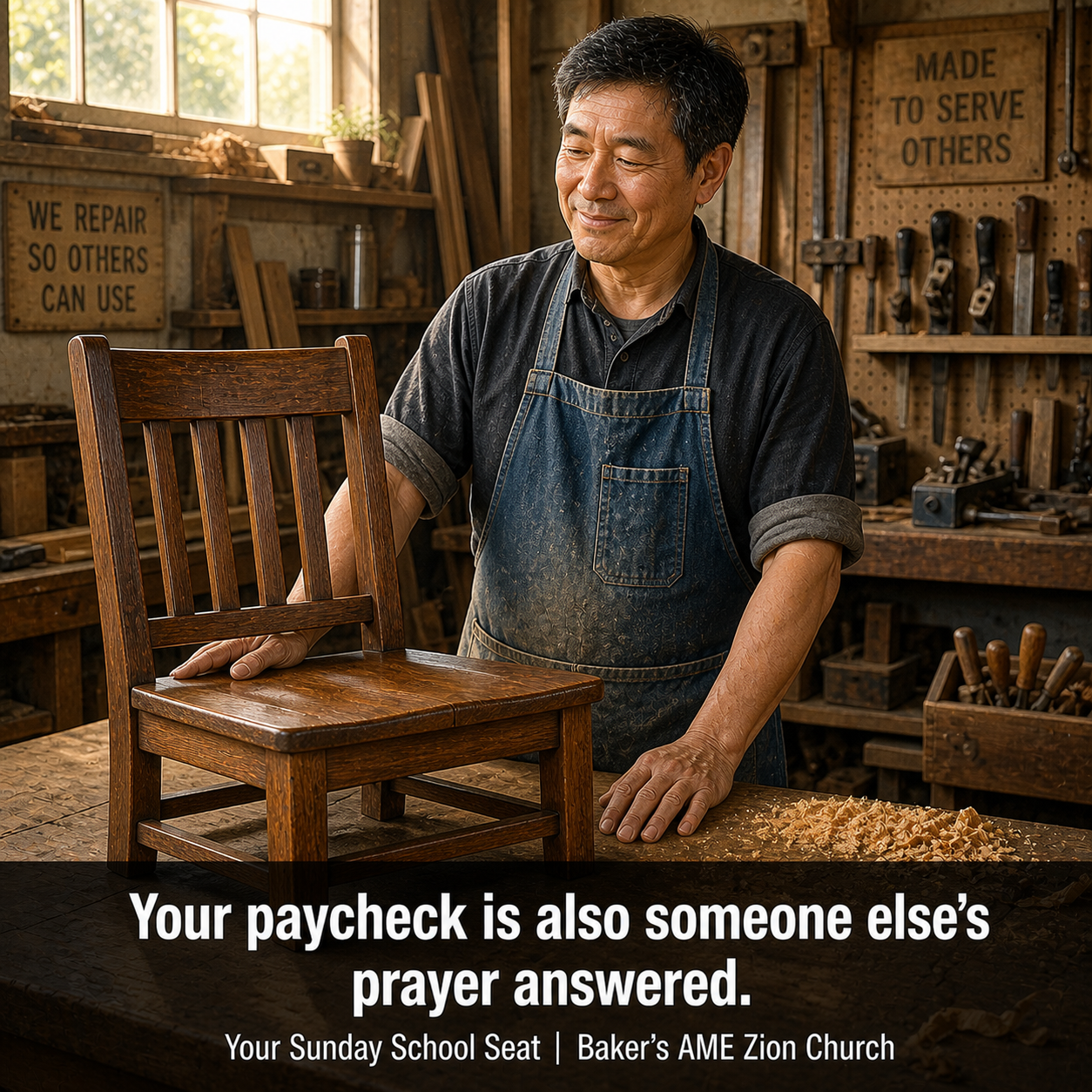
Paul holds up his own hands and says, look. These paid for everything I needed. I never asked you for a dime.
Acts 20:31-35 — KJV
Therefore watch, and remember, that by the space of three years I ceased not to warn every one night and day with tears. And now, brethren, I commend you to God, and to the word of his grace, which is able to build you up, and to give you an inheritance among all them which are sanctified. I have coveted no man's silver, or gold, or apparel. Yea, ye yourselves know, that these hands have ministered unto my necessities, and to them that were with me. I have shewed you all things, how that so labouring ye ought to support the weak, and to remember the words of the Lord Jesus, how he said, It is more blessed to give than to receive.
Acts 20:31-35 — WEB
Therefore watch, remembering that for a period of three years I didn't cease to admonish everyone night and day with tears. Now, brothers, I entrust you to God and to the word of his grace, which is able to build up and to give you the inheritance among all those who are sanctified. I coveted no one's silver, gold, or clothing. You yourselves know that these hands served my necessities, and those who were with me. In all things I gave you an example, that so laboring you ought to help the weak, and to remember the words of the Lord Jesus, that he himself said, "It is more blessed to give than to receive."
Explanation
This is one of the most personal moments in the entire book of Acts. Paul is on his way to Jerusalem, where he believes he will be arrested. He stops in Miletus and sends for the elders of the church at Ephesus, a church he had poured three years of his life into. He knows he will probably never see them again. This is his goodbye speech.
What does he choose to talk about in his last conversation with people he loved? He talks about his hands.
Paul was a tentmaker. He made a living by working with leather and rough cloth, hour after hour, year after year, building tents and patching them. He did this on top of preaching, planting churches, writing letters that would shape the Christian faith for two thousand years. He was, by any measure, one of the most spiritually significant figures in human history. And he refused to let that excuse him from working with his hands.
Notice what he does in verse 34. He raises his hands. You can almost see the gesture. These hands. These rough, calloused, scarred hands. These hands paid the bills. These hands kept me from being a burden on you. These hands also fed the people traveling with me. He is showing them his hands as a sermon.
Paul's logic is worth sitting with. He says it would have been within his rights to receive support from the church. He had a power, an authority, to be funded for his ministry. He chose not to exercise it. Why? So that he could be an example. So that the gospel he preached could not be reduced to a hustle. So that he could practice what Jesus preached: it is more blessed to give than to receive.
This is the second-to-last note in our week, and it is the one that brings us right up to the doorstep of Sunday's lesson. Useful work is not just about earning a paycheck. It is also about generosity. The two are tied together in Paul's mind. He worked, partly so that he would have something to give. He had no patience for Christians who freeloaded off the church. He had less patience for Christians who treated their work as if it were just for themselves.
Look at your own hands today. Maybe they are working hands like Paul's. Maybe they are tired hands, swollen hands, hands that don't look the way they used to. Maybe they are young hands that have not yet learned what hard work feels like. Whatever your hands look like, ask the question Paul is asking. Are these hands serving the weak? Are these hands giving as well as taking? Are these hands witnessing to the Christ who said it is more blessed to give than to receive?
The work of our hands is not just for us. It is so we have something to share. That is the gospel of useful work, and it has been the gospel since Paul stretched out his calloused hands one last time in Miletus and said, look at these.
Thought for the day: Work hard enough to have something to give. Then give it.
Reflection question: If someone watched only your hands for a week — not your words — what would they say your life is about? Earning, or also giving?
Prayer
Father, you gave us hands so that we could love you and love each other. Forgive us when we use our work only to take care of ourselves. Make our hands generous hands. Whatever you put in them this week, let some of it flow back out toward people who need it. Amen.
This week we walk toward Sunday's lesson: Useful Work as Christian Duty.