
Sunday, May 10 — If You Won't Work, Don't Eat
Paul writes a letter that ends with one of the bluntest verses in the New Testament. And every word still applies.
2 Thessalonians 3:6-12 — KJV
Now we command you, brethren, in the name of our Lord Jesus Christ, that ye withdraw yourselves from every brother that walketh disorderly, and not after the tradition which he received of us. For yourselves know how ye ought to follow us: for we behaved not ourselves disorderly among you; neither did we eat any man's bread for nought; but wrought with labour and travail night and day, that we might not be chargeable to any of you: not because we have not power, but to make ourselves an ensample unto you to follow us. For even when we were with you, this we commanded you, that if any would not work, neither should he eat. For we hear that there are some which walk among you disorderly, working not at all, but are busybodies. Now them that are such we command and exhort by our Lord Jesus Christ, that with quietness they work, and eat their own bread.
2 Thessalonians 3:6-12 — WEB
Now we command you, brothers, in the name of our Lord Jesus Christ, that you withdraw yourselves from every brother who walks in rebellion, and not after the tradition which they received from us. For you know how you ought to imitate us. For we didn't behave ourselves rebelliously among you, neither did we eat bread from anyone's hand without paying for it, but in labor and travail worked night and day, that we might not burden any of you; not because we don't have the right, but to make ourselves an example to you, that you should imitate us. For even when we were with you, we commanded you this: "If anyone is not willing to work, don't let him eat." For we hear of some who walk among you in rebellion, who don't work at all, but are busybodies. Now those who are that way, we command and exhort in the Lord Jesus Christ, that they work with quietness and eat their own bread.
Explanation
We have arrived at the lesson the whole week was pointing toward. Useful work as Christian duty. And Paul is not in the mood for soft language.
A little context. The church at Thessalonica was a young, struggling congregation. Some of the believers had become convinced that Jesus was returning so soon there was no point in working. They had quit their jobs. They were hanging around the church, sponging off other believers, and making themselves nuisances in everyone else's business. Paul calls them what they were. Busybodies. People who would not work but had plenty of time to comment on everyone else who did.
His instruction to the church is sharp. If anyone is not willing to work, don't let him eat. Read that verse carefully. It does not say "if anyone cannot work." It does not say "if anyone has fallen on hard times." The Bible is full of generosity for those genuinely in need. This verse is talking about people who are able-bodied and unwilling. People who could work and refuse to. Paul says: do not subsidize that. It is not love. It is enabling.
But Paul does not stop there. He turns and looks at himself. He reminds the church that when he and his team were among them, they earned their own bread. They worked night and day. They could have demanded support — Paul actually had the right to be supported as an apostle — but they chose not to. They wanted to model what Christian work looks like. They wanted to leave a pattern.
Put all of this together with the week we have just walked. Work was God's first gift to humanity, planted in Eden before the curse. Work is to be committed to the Lord, not held in our own white-knuckled grip. Work is part of the dignity of being human, crowned by God with glory and honor. Work has to be punctuated by Sabbath, or it will eat you. Work is healing, not crushing. Work is so we have something to give, not just so we have something to keep. And finally, work is a Christian duty, owed to God and to neighbor.
This is a pastoral word for our church and our culture. We live in a time when work is often a status symbol, a source of identity, a treadmill, or a thing avoided. The Bible holds up a different picture. Work is honest. Work is quiet. Work is faithful. Work feeds your family and feeds your neighbor. Work keeps you out of other people's business and in your own callings. Work is one of the ways you say thank you to the God who made you a worker in his image.
Whether you are a teacher, a janitor, a CEO, a stay-at-home parent, a retiree volunteering at the food pantry, a student, or someone between jobs trying hard to find one, this lesson is for you. Quietness. Faithfulness. Useful labor. Generosity with what your hands produce. That is the rhythm of a Christian life.
May we walk it together this week, and the next, and the one after that.
Thought for the day: Work quietly. Eat what you have earned. Share the rest. That is the whole sermon.
Reflection question: Has my work this past week been a witness to the gospel — quiet, faithful, generous — or has it been something else? What is one change I can make starting tomorrow?
Prayer
Father, you have walked us through your Word this week and shown us that work is your idea, not the world's. Thank you for hands to use, for minds to think, for energy you renew each morning. Bless the workers among us today. Bless the mothers whose work often goes unnoticed and unpaid. Bless those without work who long for it. Make us a church of quiet, faithful, generous laborers, in the name of the One who said his Father is still working. Amen.
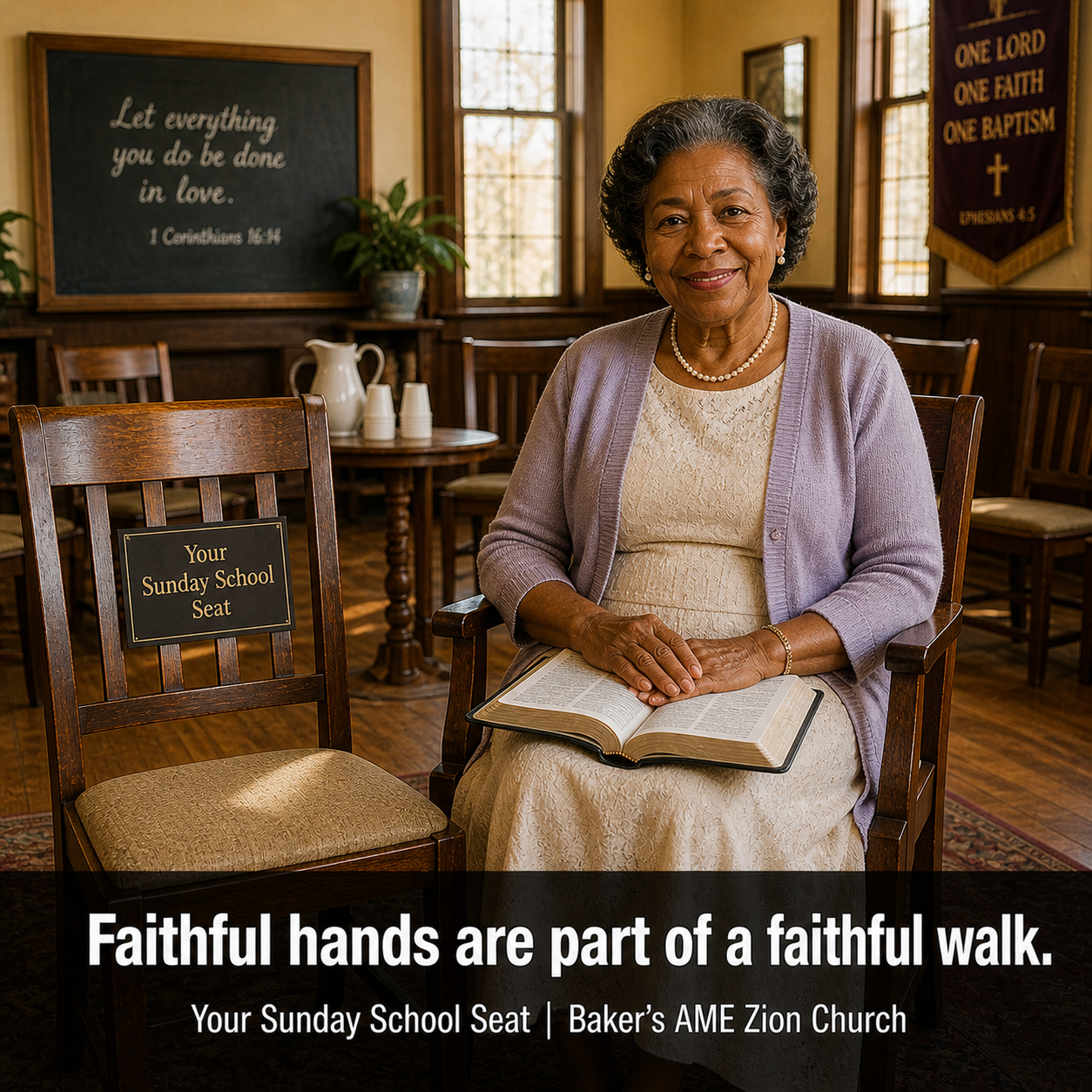
Today is Sunday school. We save you a seat.