

A daily walk through Scripture, preparing our hearts for Sunday.
Sunday, June 14 — Seeking God's Blessing

We've walked all week toward this woman. Today we kneel beside her in the temple, close enough to see her lips move.
1 Samuel 1:9-20, 25 — KJV 9 So Hannah rose up after they had eaten in Shiloh, and after they had drunk. Now Eli the priest sat upon a seat by a post of the temple of the LORD. 10 And she was in bitterness of soul, and prayed unto the LORD, and wept sore. 11 And she vowed a vow, and said, O LORD of hosts, if thou wilt indeed look on the affliction of thine handmaid, and remember me, and not forget thine handmaid, but wilt give unto thine handmaid a man child, then I will give him unto the LORD all the days of his life, and there shall no razor come upon his head. 12 And it came to pass, as she continued praying before the LORD, that Eli marked her mouth. 13 Now Hannah, she spake in her heart; only her lips moved, but her voice was not heard: therefore Eli thought she had been drunken. 14 And Eli said unto her, How long wilt thou be drunken? put away thy wine from thee. 15 And Hannah answered and said, No, my lord, I am a woman of a sorrowful spirit: I have drunk neither wine nor strong drink, but have poured out my soul before the LORD. 16 Count not thine handmaid for a daughter of Belial: for out of the abundance of my complaint and grief have I spoken hitherto. 17 Then Eli answered and said, Go in peace: and the God of Israel grant thee thy petition that thou hast asked of him. 18 And she said, Let thine handmaid find grace in thy sight. So the woman went her way, and did eat, and her countenance was no more sad. 19 And they rose up in the morning early, and worshipped before the LORD, and returned, and came to their house to Ramah: and Elkanah knew Hannah his wife; and the LORD remembered her. 20 Wherefore it came to pass, when the time was come about after Hannah had conceived, that she bare a son, and called his name Samuel, saying, Because I have asked him of the LORD. 25 And they slew a bullock, and brought the child to Eli.
1 Samuel 1:9-20, 25 — WEB 9 So Hannah rose up after they had eaten in Shiloh, and after they had drunk. Now Eli the priest was sitting on his seat by the doorpost of Yahweh's temple. 10 She was in bitterness of soul, and prayed to Yahweh, weeping bitterly. 11 She vowed a vow, and said, "Yahweh of Armies, if you will indeed look at the affliction of your servant, and remember me, and not forget your servant, but will give to your servant a boy, then I will give him to Yahweh all the days of his life, and no razor shall come on his head." 12 As she continued praying before Yahweh, Eli saw her mouth. 13 Now Hannah spoke in her heart. Only her lips moved, but her voice was not heard. Therefore Eli thought she was drunk. 14 Eli said to her, "How long will you be drunk? Get rid of your wine!" 15 Hannah answered, "No, my lord, I am a woman of a sorrowful spirit. I have not been drinking wine or strong drink, but I poured out my soul before Yahweh. 16 Don't consider your servant a wicked woman; for I have been speaking out of the abundance of my complaint and my provocation." 17 Then Eli answered, "Go in peace; and may the God of Israel grant your petition that you have asked of him." 18 She said, "Let your servant find favor in your sight." So the woman went her way and ate; and her facial expression wasn't sad any more. 19 They rose up in the morning early and worshiped before Yahweh, then returned and came to their house to Ramah. Then Elkanah knew Hannah his wife; and Yahweh remembered her. 20 When the time had come, Hannah conceived, and bore a son; and she named him Samuel, saying, "Because I have asked him of Yahweh." 25 They killed the bull, and brought the child to Eli.
Here she is at last. Hannah has carried years of disappointment and the cruelty of a rival who taunted her for being childless. She comes to the temple at Shiloh and does something so raw it gets mistaken for drunkenness: she prays without words, lips moving, soul pouring out. Eli the priest, watching from his seat by the doorpost, assumes the worst — until Hannah explains. I am a woman of a sorrowful spirit. I have poured out my soul before the LORD. That single line is one of the truest descriptions of prayer in all of Scripture. Sometimes prayer isn't eloquent. It's just emptying the whole aching contents of your heart in front of God.
Notice the arc this week has built. Monday's righteous life. Tuesday's God who sees the afflicted. Wednesday's mother's teaching that shapes a child. Thursday's psalm of the barren woman made a joyful mother. Friday's mother-comfort of God. Saturday's song of the lowly lifted up. It all converges right here. Hannah is the woman God saw. She becomes the joyful mother. And the son she's praying for — Samuel, whose name means asked of God — will grow up shaped by her teaching into the prophet who anoints Israel's kings.
But don't miss the most stunning part. Hannah asks for a child, and in the same breath vows to give him back: I will give him to the LORD all the days of his life. By verse 25, she's keeping that promise, walking little Samuel to the temple. She sought God's blessing not to hoard it, but to hand it over. Her prayer was never give me something to keep. It was let my deepest longing become something offered back to You.
That reframes how we seek God's blessing. We tend to pray for things we can clutch. Hannah teaches us to pray with open hands — to ask boldly, and then to hold loosely. Her bitterness became a boy, and that boy became a prophet, and that prophet shaped a nation, all because one woman poured out her soul and gave back what she received.
Maybe you've been praying a long prayer with no answer yet. Hannah doesn't promise you a quick yes. She shows you a faithful posture: keep coming, keep pouring it out, and trust the God who sees and remembers. And if the answer comes, hold it with open hands.
There's a seat by the doorpost where Eli watched a woman pray. There's a seat saved for you, too — in the room where we learn together what it means to seek God and be remembered by Him.
Thought for the Day: Hannah prayed her grief into a name: God has heard.
Reflection Question: What have you been clutching that God is inviting you to hold with open hands?
Prayer: Lord of Hosts, You saw Hannah, and You see us. Teach us to pour out our souls before You honestly, without performance or shame. Give us the faith to ask boldly and the trust to hold loosely. Remember us, as You remembered her, and let whatever You give us be offered back to You. Amen.
Today is Sunday school. We save you a seat.
Saturday, June 13 — Rejoicing in God's Deliverance

When something finally breaks open after a long, hard wait, the heart doesn't just feel relief — it sings. Today we listen to one of the most famous songs in all of Scripture.
Luke 1:46-56 — KJV 46 And Mary said, My soul doth magnify the Lord, 47 And my spirit hath rejoiced in God my Saviour. 48 For he hath regarded the low estate of his handmaiden: for, behold, from henceforth all generations shall call me blessed. 49 For he that is mighty hath done to me great things; and holy is his name. 50 And his mercy is on them that fear him from generation to generation. 51 He hath shewed strength with his arm; he hath scattered the proud in the imagination of their hearts. 52 He hath put down the mighty from their seats, and exalted them of low degree. 53 He hath filled the hungry with good things; and the rich he hath sent empty away. 54 He hath holpen his servant Israel, in remembrance of his mercy; 55 As he spake to our fathers, to Abraham, and to his seed for ever. 56 And Mary abode with her about three months, and returned to her own house.
Luke 1:46-56 — WEB 46 Mary said, "My soul magnifies the Lord. 47 My spirit has rejoiced in God my Savior, 48 for he has looked at the humble state of his servant. For behold, from now on, all generations will call me blessed. 49 For he who is mighty has done great things for me. Holy is his name. 50 His mercy is for generations of generations on those who fear him. 51 He has shown strength with his arm. He has scattered the proud in the imagination of their hearts. 52 He has put down princes from their thrones, and has exalted the lowly. 53 He has filled the hungry with good things. He has sent the rich away empty. 54 He has given help to Israel, his servant, that he might remember mercy, 55 as he spoke to our fathers, to Abraham and his offspring forever." 56 Mary stayed with her about three months, and then returned to her house.
We call this the Magnificat, from the Latin for magnifies — the first word out of Mary's mouth. A young, poor, unmarried woman from a forgotten town has just been told she'll carry the Messiah, and her response isn't fear. It's a song. And what a song. It's not sweet and small; it's revolutionary. God scatters the proud, pulls down the powerful from their thrones, fills the hungry, and sends the rich away empty. Mary sings about a God who turns the world's order upside down for the sake of the lowly.
Now — here's the connection worth noticing as we stand on the doorstep of Sunday. Mary's song is built on an older one. Many centuries before, another woman who had received an impossible blessing sang almost the same notes. That woman was Hannah, and her song in 1 Samuel 2 also celebrates a God who raises the poor from the dust, brings down the mighty, and remembers the lowly. Mary, full of grace, reaches back and borrows Hannah's melody. Two mothers, generations apart, singing the same truth: God lifts the lowly.
That tells us something about deliverance. When God comes through, the faithful response isn't quiet relief — it's praise loud enough to echo across centuries. Hannah sang it. Mary sang it again. And the song is still ours to sing.
So before we sit in Sunday's lesson, take this Saturday to rehearse the song. Look back at the deliverances you've already lived through — the bill that got paid, the door that opened, the night you didn't think you'd survive but did. Magnify the Lord for it. Naming God's faithfulness out loud is how we get ready to trust Him with what's still unfinished. The proud may still strut and the powerful may still scheme, but Mary and Hannah both knew the ending: God lifts the lowly, and that calls for a song.
Thought for the Day: When God lifts the lowly, the only answer is a song.
Reflection Question: What deliverance in your life deserves a song of praise today?
Prayer: Our souls magnify You, Lord. You have looked on the lowly and done great things. Thank You for every deliverance we can name and the ones we've forgotten. Put a song in our mouths like the one Hannah and Mary sang, and let our rejoicing be loud enough to give someone else hope. Amen.
This week we walk toward Sunday's lesson: Hannah, A Godly Mother.
Friday, June 12 — A Mother Who Comforts Her Child

We know the picture instantly: a child crying, a mother gathering them up, the sobbing slowing against her shoulder. God reaches for that exact image to describe how He loves us.
Isaiah 66:9-13 — KJV 9 Shall I bring to the birth, and not cause to bring forth? saith the LORD: shall I cause to bring forth, and shut the womb? saith thy God. 10 Rejoice ye with Jerusalem, and be glad with her, all ye that love her: rejoice for joy with her, all ye that mourn for her: 11 That ye may suck, and be satisfied with the breasts of her consolations; that ye may milk out, and be delighted with the abundance of her glory. 12 For thus saith the LORD, Behold, I will extend peace to her like a river, and the glory of the Gentiles like a flowing stream: then shall ye suck, ye shall be borne upon her sides, and be dandled upon her knees. 13 As one whom his mother comforteth, so will I comfort you; and ye shall be comforted in Jerusalem.
Isaiah 66:9-13 — WEB 9 Shall I bring to the point of birth, and not cause to be delivered?" says Yahweh. "Shall I who cause to give birth shut the womb?" says your God. 10 "Rejoice with Jerusalem, and be glad for her, all you who love her. Rejoice for joy with her, all you who mourn over her; 11 that you may nurse and be satisfied at the comforting breasts; that you may drink deeply, and be delighted with the abundance of her glory." 12 For Yahweh says, "Behold, I will extend peace to her like a river, and the glory of the nations like an overflowing stream, and you will nurse. You will be carried on her side, and will be dandled on her knees. 13 As one whom his mother comforts, so will I comfort you. You will be comforted in Jerusalem."
The closing chapters of Isaiah were written to a people coming home from exile to a city in ruins. They needed more than logistics; they needed comfort. And so God gives them a promise wrapped in maternal tenderness. He's just asked a question that answers itself: would I bring a baby right up to the moment of birth and then refuse to deliver it? Of course not. God doesn't start what He won't finish.
Then comes the image that lingers. As one whom his mother comforts, so will I comfort you. God — who elsewhere is fortress, king, shepherd — here takes the posture of a mother soothing a frightened child. Carried on the hip. Bounced gently on the knee. The same God whose glory is above the heavens describes Himself bending to wipe a child's tears. There's a peace promised here that flows like a river — steady, abundant, not a trickle you have to fight for.
This is the gentlest stop on our walk toward Sunday, and it belongs in the week of Hannah. Before Hannah ever held Samuel, she carried a grief that wept like an inconsolable child. The God of Isaiah 66 is the One who comforted her — not by scolding her for crying, but by hearing her and answering. The comfort came before the cradle.
Maybe you need that word today. Comfort gets a bad reputation, as if needing it means you're weak. But Scripture says the strongest thing in the universe leans down to comfort the worn-out. You don't have to perform for it. A child being held doesn't earn the embrace; they just stop running long enough to be gathered up. Whatever has you running ragged this Friday — the diagnosis, the bill, the worry that wakes you at 3 a.m. — there's an invitation to stop, lean back, and be comforted by the One whose love feels like a mother's arms. And then, comforted ourselves, we become people who can comfort others.
Thought for the Day: God comforts you the way a mother comforts her child.
Reflection Question: Where do you most need comfort right now — and can you let God simply hold it with you?
Prayer: Lord, You comfort us like a mother gathers up a crying child. We bring You the worries we've been carrying alone all week. Hold them, and hold us. Let Your peace flow over us like a river. And when we're steadied again, send us out to comfort someone else who is weary. Amen.
This week we walk toward Sunday's lesson: Hannah, A Godly Mother.
Thursday, June 11 — Praising God for Home and Family
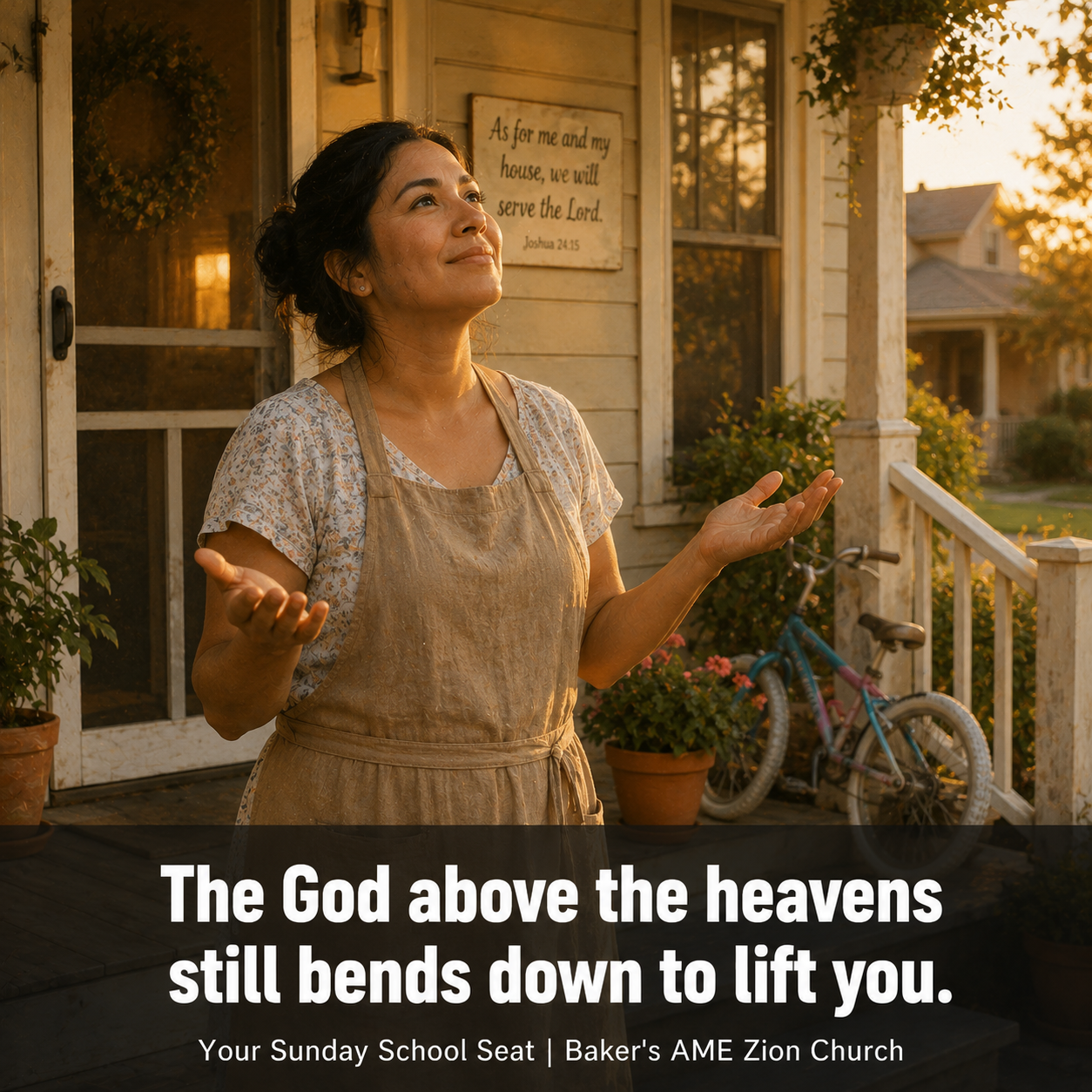
Some mornings the praise comes easy. Other mornings you have to choose it before the coffee even kicks in. Today's psalm gives us a reason that holds either way.
Psalm 113 — KJV 1 Praise ye the LORD. Praise, O ye servants of the LORD, praise the name of the LORD. 2 Blessed be the name of the LORD from this time forth and for evermore. 3 From the rising of the sun unto the going down of the same the LORD's name is to be praised. 4 The LORD is high above all nations, and his glory above the heavens. 5 Who is like unto the LORD our God, who dwelleth on high, 6 Who humbleth himself to behold the things that are in heaven, and in the earth! 7 He raiseth up the poor out of the dust, and lifteth the needy out of the dunghill; 8 That he may set him with princes, even with the princes of his people. 9 He maketh the barren woman to keep house, and to be a joyful mother of children. Praise ye the LORD.
Psalm 113 — WEB 1 Praise Yah! Praise, you servants of Yahweh, praise Yahweh's name. 2 Blessed be Yahweh's name, from this time forward and forever more. 3 From the rising of the sun to its going down, Yahweh's name is to be praised. 4 Yahweh is high above all nations, his glory above the heavens. 5 Who is like Yahweh, our God, who has his seat on high, 6 who stoops down to see in heaven and in the earth? 7 He raises up the poor out of the dust, and lifts up the needy from the ash heap, 8 that he may set him with princes, even with the princes of his people. 9 He settles the barren woman in her home as a joyful mother of children. Praise Yah!
Psalm 113 opens the section of psalms Jewish families have sung at Passover for centuries. It begins way up high — the LORD is above all nations, His glory above the heavens — and then it does something unexpected. The God who sits enthroned over galaxies stoops down. He bends low to look at the earth. And what does this high and holy God notice when He bends? The poor in the dust. The needy on the ash heap. And — the psalm's final, tender image — the barren woman, whom He settles in her home and makes a joyful mother of children.
That's a stunning move. The psalm could have ended with thrones and stars. Instead it ends in a household, with a woman who once knew only emptiness now laughing in a home full of children. The greatness of God isn't measured only by how high He sits, but by how low He'll reach.
You can probably already feel Sunday coming. Verse 9 reads almost like a caption under Hannah's photo. She was the barren woman; God made her the joyful mother. The psalm Israel sang generation after generation turns out to be Hannah's testimony in advance.
For us, today, the invitation is to praise God for home and family — and to define both generously. Family isn't only the picture-perfect kind. It's the people around your table, the church folks who became kin, the home you've patched together through hard seasons. If God lifts the needy from the ash heap and turns emptiness into joy, then your address, your kitchen, the people who answer when you call — these are worth a praise. And if your home is hurting right now, this psalm says the God enthroned above the heavens is not too high to bend down to your front door. Praise isn't pretending everything's fine. It's remembering who's still on the throne — and how low He's willing to reach.
Thought for the Day: The God above the heavens still bends down to lift you.
Reflection Question: What in your home or family — even something small — can you genuinely praise God for today?
Prayer: We praise You, Lord, from the rising of the sun to its setting. You are high above all things, yet You stoop down to notice us. Thank You for our homes, our families, and the people You've made our own. Lift what is low in our households, and let our gratitude rise to meet Your greatness. Amen.
This week we walk toward Sunday's lesson: Hannah, A Godly Mother.
Wednesday, June 10 — Do Not Forsake Your Mother's Teaching

There's a voice many of us still hear in our heads — a mother's, a grandmother's — saying the thing she said a thousand times until it became part of how we walk.
Proverbs 6:20-22 — KJV 20 My son, keep thy father's commandment, and forsake not the law of thy mother: 21 Bind them continually upon thine heart, and tie them about thy neck. 22 When thou goest, it shall lead thee; when thou sleepest, it shall keep thee; and when thou awakest, it shall talk with thee.
Proverbs 6:20-22 — WEB 20 My son, keep your father's commandment, and don't forsake your mother's teaching. 21 Bind them continually on your heart. Tie them around your neck. 22 When you walk, it will lead you. When you sleep, it will watch over you. When you awake, it will talk with you.
Proverbs is wisdom literature — a father (and, notably here, a mother) passing hard-won understanding to a child who's about to step into the world's pressures. What I love about this little passage is that it gives the mother's teaching equal weight with the father's. In a culture that often counted only the father's word, the proverb insists: don't forsake your mother's teaching. Her instruction isn't lesser. It's a lamp.
And look at what wisdom does once you've internalized it. It travels with you. When you walk, it leads you — out in the world, in the decisions of the day. When you sleep, it watches over you — even your rest is shaped by what's settled deep inside. When you awake, it talks with you — it's the first voice in your morning. That's not memorization for a test. That's teaching that's become character. The image of binding it on your heart and around your neck means: make it part of you, where you can't take it off.
This points us straight toward Sunday. We're going to meet Hannah, whose greatest act of faith wasn't only her prayer — it was raising a son she would give back to God, pouring into Samuel the kind of teaching that would steady him for a lifetime of listening to God's voice. The prophet Samuel didn't appear out of nowhere. Behind him stood a mother's teaching, bound on his heart.
So today is a day to honor the teachers who shaped us — and to take the assignment seriously if we're the ones doing the shaping. Maybe it's your child at the kitchen table. Maybe it's a niece, a student, a younger coworker, a kid in the neighborhood who watches how you handle yourself. The lessons we pass on rarely feel momentous in the moment. We say them while making dinner, on the drive to school, folding laundry. But that's exactly how they get bound — repeated until they lead, keep, and talk. If a faithful word once led you, thank God for it. And then go be that voice for someone else.
Thought for the Day: A mother's teaching follows you long after you leave her table.
Reflection Question: Whose teaching still leads you — and who is learning from the way you live?
Prayer: Lord, thank You for the mothers, grandmothers, and faithful teachers whose words still walk with us. Help us not to forsake what they planted. And where we are now the teachers, give us patience and wisdom to pass on truth that will lead, keep, and speak long after we're gone. Amen.
This week we walk toward Sunday's lesson: Hannah, A Godly Mother.
Tuesday, June 9 — Trusting in a God Who Sees

There is a particular loneliness in feeling overlooked — used by people, unseen by everyone. Today we meet a woman who knew that loneliness, and the name she gave God after He found her.
Genesis 16:1, 4-16 — KJV 1 Now Sarai Abram's wife bare him no children: and she had an handmaid, an Egyptian, whose name was Hagar. 4 And he went in unto Hagar, and she conceived: and when she saw that she had conceived, her mistress was despised in her eyes. 5 And Sarai said unto Abram, My wrong be upon thee: I have given my maid into thy bosom; and when she saw that she had conceived, I was despised in her eyes: the LORD judge between me and thee. 6 But Abram said unto Sarai, Behold, thy maid is in thy hand; do to her as it pleaseth thee. And when Sarai dealt hardly with her, she fled from her face. 7 And the angel of the LORD found her by a fountain of water in the wilderness, by the fountain in the way to Shur. 8 And he said, Hagar, Sarai's maid, whence camest thou? and whither wilt thou go? And she said, I flee from the face of my mistress Sarai. 9 And the angel of the LORD said unto her, Return to thy mistress, and submit thyself under her hands. 10 And the angel of the LORD said unto her, I will multiply thy seed exceedingly, that it shall not be numbered for multitude. 11 And the angel of the LORD said unto her, Behold, thou art with child, and shalt bear a son, and shalt call his name Ishmael; because the LORD hath heard thy affliction. 12 And he will be a wild man; his hand will be against every man, and every man's hand against him; and he shall dwell in the presence of all his brethren. 13 And she called the name of the LORD that spake unto her, Thou God seest me: for she said, Have I also here looked after him that seeth me? 14 Wherefore the well was called Beerlahairoi; behold, it is between Kadesh and Bered. 15 And Hagar bare Abram a son: and Abram called his son's name, which Hagar bare, Ishmael. 16 And Abram was fourscore and six years old, when Hagar bare Ishmael to Abram.
Genesis 16:1, 4-16 — WEB 1 Now Sarai, Abram's wife, bore him no children. She had a servant, an Egyptian, whose name was Hagar. 4 He went in to Hagar, and she conceived. When she saw that she had conceived, her mistress was despised in her eyes. 5 Sarai said to Abram, "This wrong is your fault. I gave my servant into your bosom, and when she saw that she had conceived, I was despised in her eyes. May Yahweh judge between me and you." 6 But Abram said to Sarai, "Behold, your maid is in your hand. Do to her whatever is good in your eyes." Sarai dealt harshly with her, and she fled from her face. 7 Yahweh's angel found her by a fountain of water in the wilderness, by the fountain on the way to Shur. 8 He said, "Hagar, Sarai's servant, where did you come from? Where are you going?" She said, "I am fleeing from the face of my mistress Sarai." 9 Yahweh's angel said to her, "Return to your mistress, and submit yourself under her hands." 10 Yahweh's angel said to her, "I will greatly multiply your offspring, that they will not be counted for multitude." 11 Yahweh's angel said to her, "Behold, you are with child, and will bear a son. You shall call his name Ishmael, because Yahweh has heard your affliction. 12 He will be like a wild donkey among men. His hand will be against every man, and every man's hand against him. He will live opposed to all of his brothers." 13 She called the name of Yahweh who spoke to her, "You are a God who sees," for she said, "Have I even stayed alive after seeing him?" 14 Therefore the well was called Beer Lahai Roi. Behold, it is between Kadesh and Bered. 15 Hagar bore a son for Abram. Abram called the name of his son, whom Hagar bore, Ishmael. 16 Abram was eighty-six years old when Hagar bore Ishmael to Abram.
Hagar is one of Scripture's most quietly remarkable figures. She's a foreign servant, with no power and no voice in her own future. She's handed off, used, resented, and finally mistreated until she runs into the desert — pregnant, alone, with nowhere to go. By every measure of her world, she is nobody. And it is precisely there, at a lonely spring in the wilderness, that God finds her. Not Abram. Not Sarai. Her.
What strikes me most is that God calls her by name. Hagar, Sarai's servant. He asks where she's coming from and where she's going — not because He doesn't know, but because being asked is itself a dignity. And then Hagar does something no one else in the Bible does up to this point: she gives God a name. El Roi — You are the God who sees me. She is the first person in Scripture to name God, and she names Him out of her wound.
That's the thread pulling us toward Sunday. Hannah, too, will pour out her grief where she thinks no one understands — and discover she was seen all along. The God who finds runaway servants at desert wells is the same God who hears barren women whispering in a temple.
Here's the part that meets us right where we live: most of us know the ache of being overlooked. The coworker passed over again. The caregiver no one thanks. The single parent holding it all together while feeling invisible. The Bible's answer isn't a pep talk. It's a name. El Roi. You are not lost in the crowd. You are not background scenery in someone else's story. The God of heaven knows your face, your name, and the exact spring in the wilderness where you sat down to cry.
Thought for the Day: You are not invisible. The God who sees you knows your name.
Reflection Question: When have you felt unseen — and what would it change to believe God was watching with love?
Prayer: God who sees, thank You for finding us in the wilderness places we thought were private. You know our names. You know what we carry. When we feel invisible to everyone else, remind us that we are fully known and fully loved by You. Help us, in turn, to see the overlooked people around us. Amen.
This week we walk toward Sunday's lesson: Hannah, A Godly Mother.
Monday, June 8 — Leading a Life of Righteousness
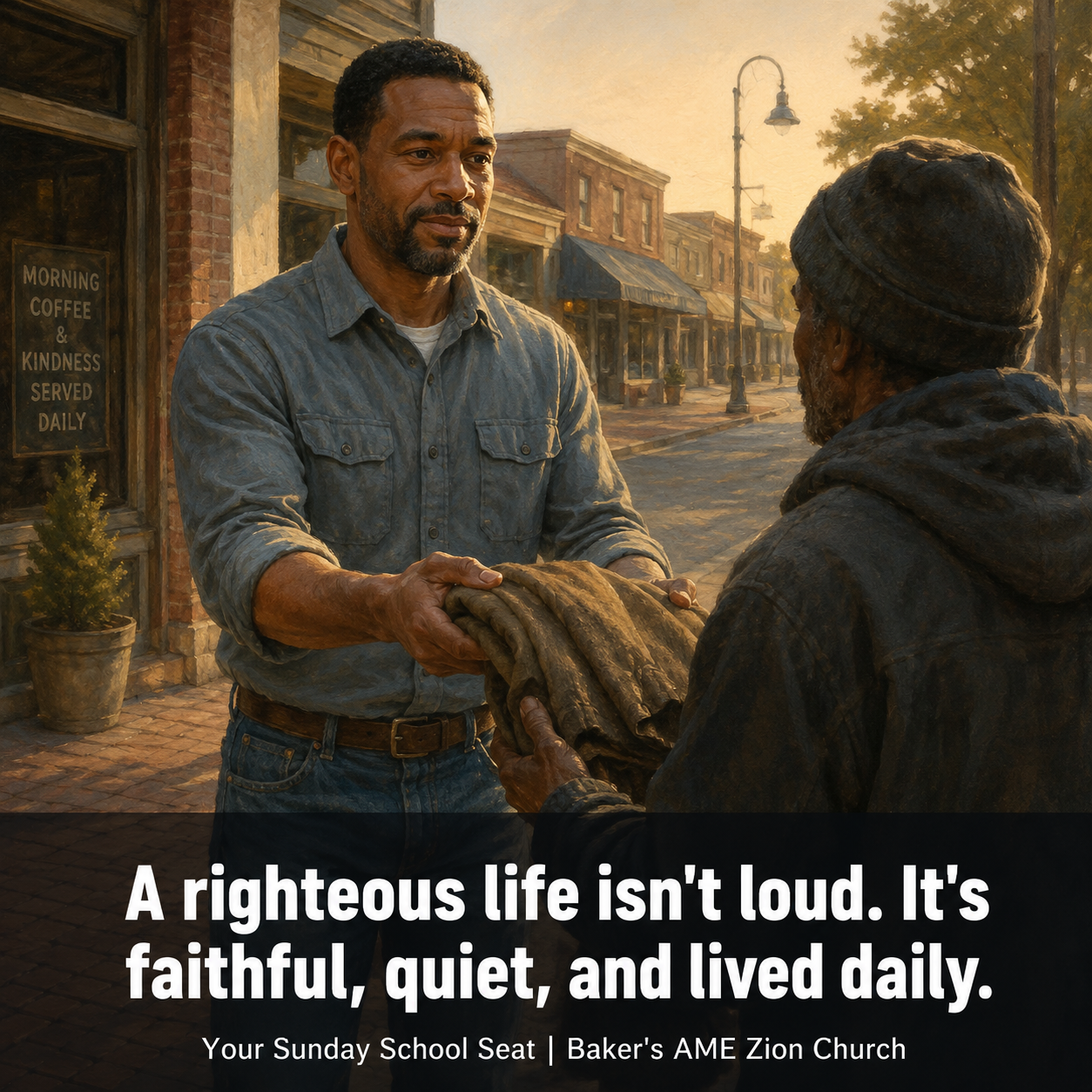
Most of us aren't trying to be heroes. We're just trying to do the next right thing — pay what we owe, treat people fairly, keep our word when nobody's checking.
Ezekiel 18:5-9 — KJV 5 But if a man be just, and do that which is lawful and right, 6 And hath not eaten upon the mountains, neither hath lifted up his eyes to the idols of the house of Israel, neither hath defiled his neighbour's wife, neither hath come near to a menstruous woman, 7 And hath not oppressed any, but hath restored to the debtor his pledge, hath spoiled none by violence, hath given his bread to the hungry, and hath covered the naked with a garment; 8 He that hath not given forth upon usury, neither hath taken any increase, that hath withdrawn his hand from iniquity, hath executed true judgment between man and man, 9 Hath walked in my statutes, and hath kept my judgments, to deal truly; he is just, he shall surely live, saith the Lord GOD.
Ezekiel 18:5-9 — WEB 5 But if a man is just, and does that which is lawful and right, 6 and has not eaten on the mountains, hasn't lifted up his eyes to the idols of the house of Israel, hasn't defiled his neighbor's wife, hasn't come near to a woman in her impurity, 7 and has not wronged any, but has restored to the debtor his pledge, has taken nothing by robbery, has given his bread to the hungry, and has covered the naked with a garment; 8 he who hasn't lent to them with interest, hasn't taken any increase from them, who has withdrawn his hand from iniquity, has executed true justice between man and man, 9 has walked in my statutes, and has kept my ordinances, to deal truly; he is just, he shall surely live, says the Lord Yahweh.
Ezekiel wrote to a people in exile who were convinced their fate had been sealed by their parents' sins. There was a proverb going around — the fathers ate sour grapes, and the children's teeth are set on edge. In other words: we're doomed by what came before us. God answers that fatalism with a long, specific portrait of a righteous person, and the striking thing is how ordinary it is. No grand gestures. The righteous person simply doesn't cheat the vulnerable, doesn't take advantage of a borrower, feeds the hungry, clothes the cold, and tells the truth in disputes. Righteousness here isn't a feeling. It's a pattern of small, repeated, accountable choices.
That's worth sitting with, because we tend to imagine holiness as something dramatic. But God describes it as returning a man's coat that you took as collateral. As not padding the interest. As judging fairly between two neighbors when it would be easier to take a side. Righteousness lives at the level of the paycheck, the handshake, the text you almost didn't send back.
This is where our week begins, and it's no accident. We're walking toward Sunday's portrait of Hannah, a woman whose faithfulness wasn't loud or public — it was a steady, integrity-soaked life that God could entrust with something precious. Before Hannah ever prayed her famous prayer, she was already a woman who walked uprightly. The blessing didn't make her righteous. Her righteousness was the soil the blessing grew in.
So here's the encouragement for a Monday: your quiet integrity counts. The honest hour you put in, the bill you paid even though it stung, the kindness you showed when no one would have known the difference — God sees the pattern. He is just; he shall surely live. That's not just an ancient verdict. It's an invitation to begin the week walking the same way.
Thought for the Day: A righteous life isn't loud. It's faithful, quiet, and lived daily.
Reflection Question: Where is God inviting you to do the right thing this week, even though no one is watching?
Prayer: Lord, we don't always feel righteous — we feel tired, stretched, tempted to cut corners. Steady our hands and our hearts today. Help us deal truly with the people in front of us, to be honest in small things, and to trust that You see what no one else does. Make our quiet faithfulness count. Amen.
This week we walk toward Sunday's lesson: Hannah, A Godly Mother.
Sunday, June 7 — A Leader Who Inspires

All week we've gathered the pieces of godly leadership. This morning they come together in one woman, sitting under a palm tree, when her whole nation has lost its nerve.
Judges 4:4-10, 14, 21-22 — KJV 4 And Deborah, a prophetess, the wife of Lapidoth, she judged Israel at that time. 5 And she dwelt under the palm tree of Deborah between Ramah and Bethel in mount Ephraim: and the children of Israel came up to her for judgment. 6 And she sent and called Barak the son of Abinoam out of Kedeshnaphtali, and said unto him, Hath not the LORD God of Israel commanded, saying, Go and draw toward mount Tabor, and take with thee ten thousand men of the children of Naphtali and of the children of Zebulun? 7 And I will draw unto thee to the river Kishon Sisera, the captain of Jabin's army, with his chariots and his multitude; and I will deliver him into thine hand. 8 And Barak said unto her, If thou wilt go with me, then I will go: but if thou wilt not go with me, then I will not go. 9 And she said, I will surely go with thee: notwithstanding the journey that thou takest shall not be for thine honour; for the LORD shall sell Sisera into the hand of a woman. And Deborah arose, and went with Barak to Kedesh. 10 And Barak called Zebulun and Naphtali to Kedesh; and he went up with ten thousand men at his feet: and Deborah went up with him. 14 And Deborah said unto Barak, Up; for this is the day in which the LORD hath delivered Sisera into thine hand: is not the LORD gone out before thee? So Barak went down from mount Tabor, and ten thousand men after him. 21 Then Jael Heber's wife took a nail of the tent, and took an hammer in her hand, and went softly unto him, and smote the nail into his temples, and fastened it into the ground: for he was fast asleep and weary. So he died. 22 And, behold, as Barak pursued Sisera, Jael came out to meet him, and said unto him, Come, and I will shew thee the man whom thou seekest. And when he came into her tent, behold, Sisera lay dead, and the nail was in his temples.
Judges 4:4-10, 14, 21-22 — WEB 4 Now Deborah, a prophetess, the wife of Lappidoth, judged Israel at that time. 5 She lived under Deborah's palm tree between Ramah and Bethel in the hill country of Ephraim; and the children of Israel came up to her for judgment. 6 She sent and called Barak the son of Abinoam out of Kedesh Naphtali, and said to him, "Hasn't Yahweh, the God of Israel, commanded, 'Go and lead the way to Mount Tabor, and take with you ten thousand men of the children of Naphtali and of the children of Zebulun? 7 I will draw to you, to the river Kishon, Sisera, the captain of Jabin's army, with his chariots and his multitude; and I will deliver him into your hand.'" 8 Barak said to her, "If you will go with me, then I will go; but if you will not go with me, I will not go." 9 She said, "I will surely go with you. Nevertheless, the journey that you take won't be for your honor; for Yahweh will sell Sisera into a woman's hand." Deborah arose, and went with Barak to Kedesh. 10 Barak called Zebulun and Naphtali together to Kedesh, and ten thousand men followed him; and Deborah went up with him. 14 Deborah said to Barak, "Go up; for this is the day in which Yahweh has delivered Sisera into your hand. Hasn't Yahweh gone out before you?" So Barak went down from Mount Tabor, and ten thousand men after him. 21 Then Jael Heber's wife took a tent peg, and took a hammer in her hand, and went softly to him, and struck the pin into his temples, and it pierced through into the ground, for he was in a deep sleep; so he fainted and died. 22 Behold, as Barak pursued Sisera, Jael came out to meet him, and said to him, "Come, and I will show you the man whom you are looking for." He came to her; and behold, Sisera lay dead, and the tent peg was in his temples.
Explanation
Israel was in a national emergency. For twenty years Jabin's general, Sisera, had ground them down with nine hundred iron chariots — the tanks of the ancient world. The people were demoralized, afraid, paralyzed. And the leader God raised up was Deborah: prophetess, judge, the one person everyone already trusted to tell them the truth. They came up to her palm tree for judgment because she was known for clear hearing and clean dealing. Before she ever inspired an army, she had earned credibility one fair verdict at a time.
Now look at how she leads. She doesn't grab the sword herself. She calls Barak — names him, sends for him, hands him the assignment and the promise: God has already commanded this; go to Mount Tabor; the victory is given. That's everything we saw this week. She sets an example, she's spent years caring for her people, she's building up another leader, she's listened to God, and she's interceding for a nation on its knees.
And then comes the moment every reluctant leader knows. Barak says, in effect, I'll go — but only if you come with me.He needs her presence to find his courage. Deborah doesn't shame him and she doesn't refuse. She goes. "I will surely go with thee." But she tells him the honest truth: because of his hesitation, the honor of the kill will go to a woman — and sure enough, it's Jael, in her tent, who ends the war. The point isn't to embarrass Barak. The point is that God's victory doesn't depend on the boldest man in the room; it can come through the most unexpected hands.
That's what a leader who inspires actually does. She doesn't make people dependent on her. She speaks God's word with such conviction that fearful people find they can move. Verse 14 is the whole lesson in one breath: "Up; for this is the day... is not the LORD gone out before thee?" She doesn't say, "I think we can do this." She says, "God has already gone ahead — now move." Inspiration isn't hype. It's pointing terrified people to a God who's already out in front of them.
Courage, it turns out, is contagious. One person who truly believes God has gone before them can pull ten thousand off the sidelines and into the fight. That's true in a battle, and it's true at a kitchen table, a hospital bedside, a struggling church, a frightened family. The world is full of Baraks waiting for one Deborah to say, Up. This is the day. God has gone before you. Maybe today, that voice is yours.
Thought for the Day Courage is contagious. Lead, and others will follow.
Reflection Question Where is God calling you to stop waiting for someone braver — and to be the one who says "Up, this is the day"?
Prayer Lord, You raised up Deborah when Your people had lost heart, and through one faithful voice You moved a whole nation. Give us her clarity, her courage, and her refusal to make people depend on her instead of on You. When others are afraid, let us be the ones who point to the God who has already gone before. And make us willing to go with the hesitant, as she went with Barak. Amen.
Today is Sunday school. We save you a seat.
Saturday, June 6 — Jesus, the Pattern for Leaders

If you wanted to define greatness for all time, you might pick a throne. Jesus picked a towel and a basin of dirty water.
John 13:3-17 — KJV 3 Jesus knowing that the Father had given all things into his hands, and that he was come from God, and went to God; 4 He riseth from supper, and laid aside his garments; and took a towel, and girded himself. 5 After that he poureth water into a bason, and began to wash the disciples' feet, and to wipe them with the towel wherewith he was girded. 6 Then cometh he to Simon Peter: and Peter saith unto him, Lord, dost thou wash my feet? 7 Jesus answered and said unto him, What I do thou knowest not now; but thou shalt know hereafter. 8 Peter saith unto him, Thou shalt never wash my feet. Jesus answered him, If I wash thee not, thou hast no part with me. 9 Simon Peter saith unto him, Lord, not my feet only, but also my hands and my head. 10 Jesus saith to him, He that is washed needeth not save to wash his feet, but is clean every whit: and ye are clean, but not all. 11 For he knew who should betray him; therefore said he, Ye are not all clean. 12 So after he had washed their feet, and had taken his garments, and was set down again, he said unto them, Know ye what I have done to you? 13 Ye call me Master and Lord: and ye say well; for so I am. 14 If I then, your Lord and Master, have washed your feet; ye also ought to wash one another's feet. 15 For I have given you an example, that ye should do as I have done to you. 16 Verily, verily, I say unto you, The servant is not greater than his lord; neither he that is sent greater than he that sent him. 17 If ye know these things, happy are ye if ye do them.
John 13:3-17 — WEB 3 Jesus, knowing that the Father had given all things into his hands, and that he came from God, and was going to God, 4 arose from supper, and laid aside his outer garments. He took a towel and wrapped a towel around his waist. 5 Then he poured water into the basin, and began to wash the disciples' feet, and to wipe them with the towel that was wrapped around him. 6 Then he came to Simon Peter. He said to him, "Lord, do you wash my feet?" 7 Jesus answered him, "You don't know what I am doing now, but you will understand later." 8 Peter said to him, "You will never wash my feet!" Jesus answered him, "If I don't wash you, you have no part with me." 9 Simon Peter said to him, "Lord, not my feet only, but also my hands and my head!" 10 Jesus said to him, "Someone who has bathed only needs to have his feet washed, but is completely clean. You are clean, but not all of you." 11 For he knew him who would betray him, therefore he said, "You are not all clean." 12 So when he had washed their feet, put his outer garment back on, and sat down again, he said to them, "Do you know what I have done to you? 13 You call me, 'Teacher' and 'Lord.' You say so correctly, for so I am. 14 If I then, the Lord and the Teacher, have washed your feet, you also ought to wash one another's feet. 15 For I have given you an example, that you should also do as I have done to you. 16 Most certainly I tell you, a servant is not greater than his lord, neither is one who is sent greater than he who sent him. 17 If you know these things, blessed are you if you do them."
Explanation
All week we've watched leaders set an example, care, build others up, listen, and intercede. On Saturday we arrive at the pattern beneath all of them — the night Jesus knelt on the floor.
John frames the scene with a deliberate detail in verse 3: Jesus does this knowing the Father had given all things into His hands. He wasn't washing feet because He'd forgotten who He was. He did it precisely because He knew exactly who He was. Security, not insecurity, is what frees a person to serve. Foot-washing was the job of the lowest household servant — feet caked with the dust and worse of unpaved roads. The disciples had walked right past the basin, every one of them too important to stoop. So Jesus, the one Person in the room with a real claim to be served, laid aside His garments, wrapped a towel around His waist, and did the dirty work nobody else would touch.
Peter can't stand it. "Thou shalt never wash my feet." It feels like reverence, but it's really resistance — Peter wants a Messiah he can salute, not one who kneels in front of him with a basin. And Jesus is firm: if you won't let me serve you, you have no part with me. You can't follow this Lord and refuse the towel.
Then verse 14 turns the whole thing into a marching order: "If I then, your Lord and Master, have washed your feet; ye also ought to wash one another's feet." This isn't a suggestion for spiritual specialists. It's the job description for everyone who claims His name. And verse 17 closes with the only kind of happiness that lasts: blessed are you if you do them — not if you merely admire them.
Tomorrow we meet Deborah, who leads not by lording over Israel but by stepping into the danger alongside Barak. Today we see where that courage comes from. The greatest leader in history measured greatness downward — toward the floor, toward the feet, toward the need no one else would meet.
For a Saturday, with the week's chores and the people in your house, this is bracingly concrete. Whose "feet" are in front of you? The dishes nobody else will do. The hard apology. The errand for an aging parent. The text to someone you'd rather avoid. Leadership in the kingdom of God always smells a little like dishwater. Pick up the towel.
Thought for the Day The greatest leader knelt with a towel.
Reflection Question What's the most "beneath you" task in your home or workplace right now — and what would it mean to do it the way Jesus did?
Prayer Lord Jesus, You knew exactly who You were and You knelt anyway. Free us from the insecurity that has to be served, and give us the security that's free to serve. Show us the towel within our reach today, and make us happy not just to know Your example, but to live it. Amen.
This week we walk toward Sunday's lesson: Deborah, a Leader in a National Emergency.
Friday, June 5 — A Leader Who Intercedes
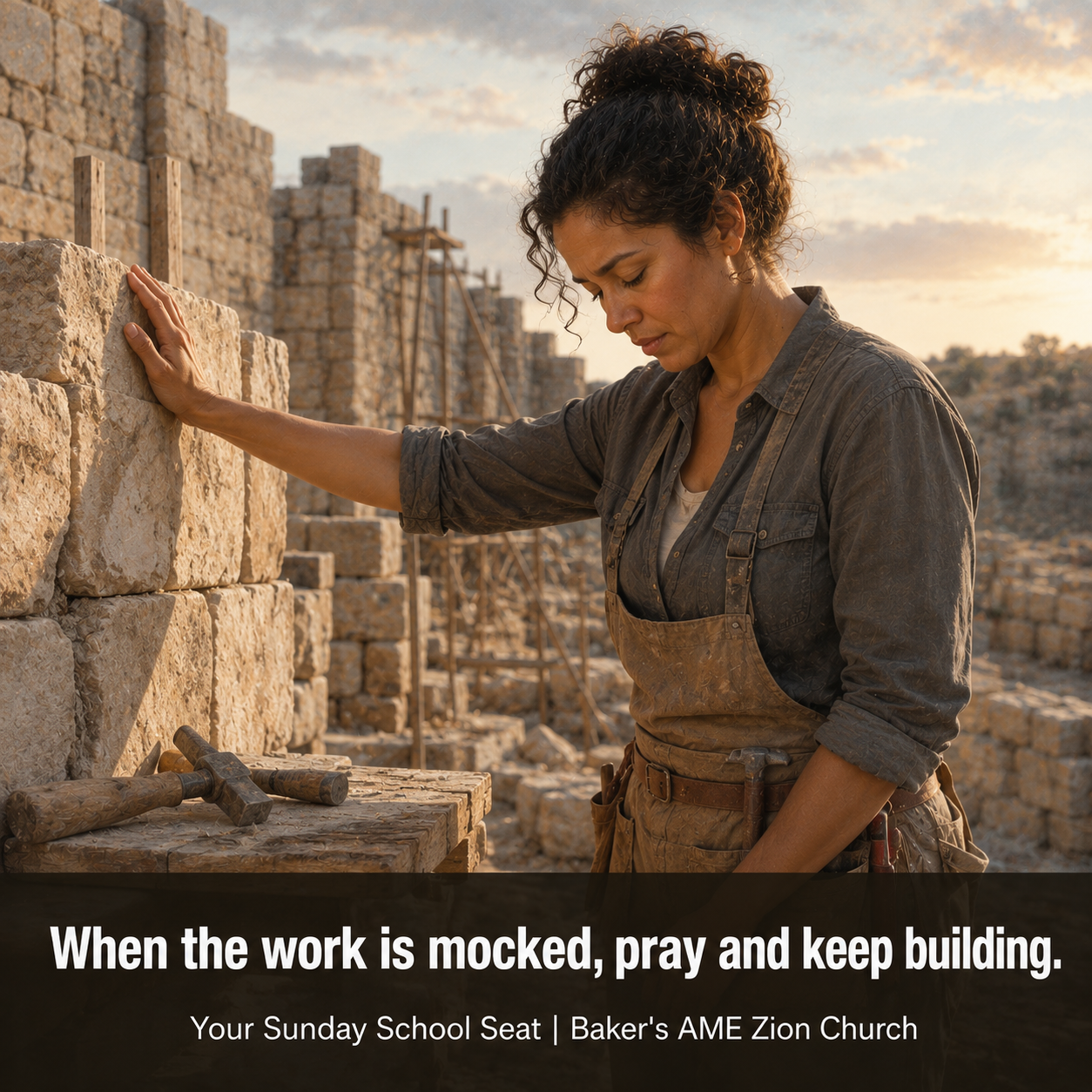
Every worthwhile work eventually meets a mocker. The question isn't whether opposition comes. It's what you do with it.
Nehemiah 4:1-6 — KJV 1 But it came to pass, that when Sanballat heard that we builded the wall, he was wroth, and took great indignation, and mocked the Jews. 2 And he spake before his brethren and the army of Samaria, and said, What do these feeble Jews? will they fortify themselves? will they sacrifice? will they make an end in a day? will they revive the stones out of the heaps of the rubbish which are burned? 3 Now Tobiah the Ammonite was by him, and he said, Even that which they build, if a fox go up, he shall even break down their stone wall. 4 Hear, O our God; for we are despised: and turn their reproach upon their own head, and give them for a prey in the land of captivity: 5 And cover not their iniquity, and let not their sin be blotted out from before thee: for they have provoked thee to anger before the builders. 6 So built we the wall; and all the wall was joined together unto the half thereof: for the people had a mind to work.
Nehemiah 4:1-6 — WEB 1 But when Sanballat heard that we were building the wall, he was angry, and was very indignant, and mocked the Jews. 2 He spoke before his brothers and the army of Samaria, and said, "What are these feeble Jews doing? Will they fortify themselves? Will they sacrifice? Will they finish in a day? Will they revive the stones out of the heaps of rubbish, since they are burned?" 3 Now Tobiah the Ammonite was by him, and he said, "What they are building, if a fox climbed up on it, he would break down their stone wall." 4 "Hear, our God, for we are despised. Turn back their reproach on their own head. Give them up for a plunder in a land of captivity. 5 Don't cover their iniquity. Don't let their sin be blotted out from before you; for they have insulted the builders." 6 So we built the wall; and all the wall was joined together to half its height; for the people had a mind to work.
Explanation
Yesterday Nehemiah got the king's permission and the timber. Today reality sets in. The moment the work actually starts, Sanballat shows up — and notice that his weapon isn't a sword. It's ridicule. He gathers an audience and turns the rebuilders into a punchline: These feeble Jews! Will they finish in a day? Can they bring burnt stones back to life? His sidekick Tobiah lands the cheap shot — even a fox could knock that wall down. It's the oldest discouragement tactic in the world: make the work look pathetic so the workers lose heart.
Here's what's striking about Nehemiah's response. He's a man of action — he could have organized a guard, fired back an insult, called for the army he had letters to summon. Instead, his very first move is verse 4: "Hear, O our God; for we are despised." He takes the mockery straight to God in prayer. Now, this is a hard, raw prayer — he asks God to turn the reproach back on his enemies' heads. It's the kind of honest, uncomfortable prayer the Psalms are full of. We may flinch at it, and we live on this side of "love your enemies." But don't miss the leadership instinct underneath it: when attacked, Nehemiah intercedes before he retaliates. He hands his hurt to God instead of carrying it into the next conversation.
And then comes the quiet triumph of verse 6: "So built we the wall... for the people had a mind to work." Prayer didn't replace effort — it fueled it. He prayed and kept building. The wall reached half its height not because the mockery stopped, but because the builders refused to stop. A leader who intercedes is a leader who refuses to let the loudest critic set the agenda.
This is the bridge to Deborah on Sunday. Israel's national emergency wasn't just military; it was a crisis of nerve. The people had been beaten down so long they'd lost the "mind to work," the will to resist. A leader who intercedes is exactly who you need in that moment — someone who takes the people's fear to God and then says, now, let's build.
For a Friday, here's the takeaway. Somebody is mocking something good you're trying to do — a habit, a calling, a marriage, a recovery, a dream. Don't argue it out in your head all day. Pray it out. Hand the critic to God. And then pick your tools back up. Pray and keep building.
Thought for the Day When the work is mocked, pray and keep building.
Reflection Question What good work in your life is being mocked right now — and are you spending more energy defending it or actually doing it?
Prayer Lord, the critics are loud and the work is hard, and some days we're tempted to quit just to make the mocking stop. Teach us Nehemiah's order: bring the hurt to You first, then put our hands back to the wall. Give us a mind to work and a heart that won't be ruled by ridicule. Amen.
This week we walk toward Sunday's lesson: Deborah, a Leader in a National Emergency.
Thursday, June 4 — A Leader Who Listens
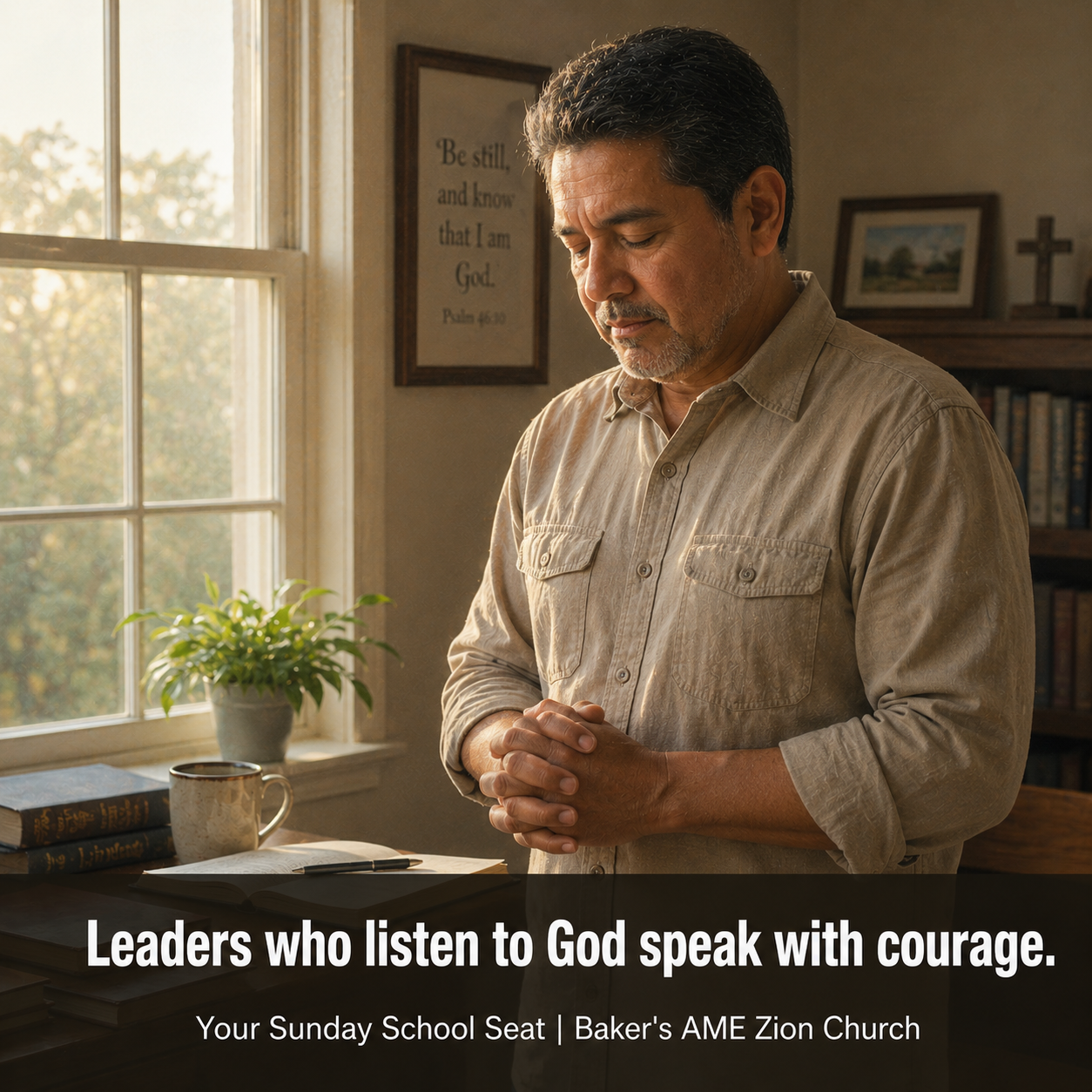
We tend to picture great leaders speaking. But the most important thing Nehemiah does in this passage happens in total silence — between a question and an answer.
Nehemiah 2:1-8 — KJV 1 And it came to pass in the month Nisan, in the twentieth year of Artaxerxes the king, that wine was before him: and I took up the wine, and gave it unto the king. Now I had not been beforetime sad in his presence. 2 Wherefore the king said unto me, Why is thy countenance sad, seeing thou art not sick? this is nothing else but sorrow of heart. Then I was very sore afraid, 3 And said unto the king, Let the king live for ever: why should not my countenance be sad, when the city, the place of my fathers' sepulchres, lieth waste, and the gates thereof are consumed with fire? 4 Then the king said unto me, For what dost thou make request? So I prayed to the God of heaven. 5 And I said unto the king, If it please the king, and if thy servant have found favour in thy sight, that thou wouldest send me unto Judah, unto the city of my fathers' sepulchres, that I may build it. 6 And the king said unto me, (the queen also sitting by him,) For how long shall thy journey be? and when wilt thou return? So it pleased the king to send me; and I set him a time. 7 Moreover I said unto the king, If it please the king, let letters be given me to the governors beyond the river, that they may convey me over till I come into Judah; 8 And a letter unto Asaph the keeper of the king's forest, that he may give me timber to make beams for the gates of the palace which appertained to the house, and for the wall of the city, and for the house that I shall enter into. And the king granted me, according to the good hand of my God upon me.
Nehemiah 2:1-8 — WEB 1 In the month Nisan, in the twentieth year of Artaxerxes the king, when wine was before him, I picked up the wine, and gave it to the king. Now I had not been sad before in his presence. 2 The king said to me, "Why is your face sad, since you are not sick? This is nothing else but sorrow of heart." Then I was very much afraid. 3 I said to the king, "Let the king live forever! Why shouldn't my face be sad, when the city, the place of my fathers' tombs, lies waste, and its gates have been consumed with fire?" 4 Then the king said to me, "What is your request?" So I prayed to the God of heaven. 5 I said to the king, "If it pleases the king, and if your servant has found favor in your sight, I ask that you would send me to Judah, to the city of my fathers' tombs, that I may build it." 6 The king said to me (the queen was also sitting by him), "How long will your journey be? When will you return?" So it pleased the king to send me, and I set him a time. 7 Moreover I said to the king, "If it pleases the king, let letters be given me to the governors beyond the River, that they may let me pass through until I come to Judah; 8 and a letter to Asaph the keeper of the king's forest, that he may give me timber to make beams for the gates of the citadel by the temple, for the wall of the city, and for the house that I will occupy." The king granted my requests, because of the good hand of my God on me.
Explanation
Nehemiah was a cupbearer — a trusted servant in the Persian court, the man who tasted the king's wine to make sure it wasn't poisoned. It was a position of access and danger. You did not bring your private grief to work. So when the king notices Nehemiah's sad face, the text says he was "very sore afraid," and for good reason. A king's mood could end a career or a life.
Then comes verse 4, and it's easy to read right past it. The king asks, "For what dost thou make request?" And before Nehemiah answers, Luke — no, Nehemiah himself — slips in five words: "So I prayed to the God of heaven." There's no time for him to leave the room and kneel. This is a split-second, eyes-open, heart-lifted prayer in the gap between the question and his reply. That tiny pause is the secret of his whole career. Nehemiah had been carrying Jerusalem's ruin in his heart for months, weeping and fasting and listening to God in chapter 1. So when the moment finally came, he wasn't improvising. He had already heard from heaven. The prayer in verse 4 wasn't him scrambling for a plan — it was him checking in with a God he'd been listening to all along.
That's what "a leader who listens" really means. Not a leader who waits politely for you to finish talking, but a leader whose first reflex, even under pressure, is to bend an ear toward God before opening his mouth. Notice how prepared his answer is — he knows exactly what he needs: a timeline, letters for safe passage, timber for the gates. That clarity is the fruit of months of listening. People who pray well in private tend to think clearly in public.
We're building toward Sunday and Deborah, who sits under her palm tree and listens — to disputes, to God, to the moment Israel is ready to move. Before she ever gives a command, she's a woman who hears.
The application for a Thursday is wonderfully practical. Before your hard conversation today — the one with your boss, your kid, your spouse — try Nehemiah's habit. Pray the four-second prayer in the doorway. Then speak. Leaders who listen to God speak with a steadiness the room can feel.
Thought for the Day Leaders who listen to God speak with courage.
Reflection Question What conversation are you dreading this week — and what would change if you breathed a four-second prayer before you opened your mouth?
Prayer God of heaven, teach us to listen before we speak. In the tense doorway, in the unexpected question, in the moment we're "very sore afraid," remind us to lift our hearts to You first. Let the quiet listening of our private hours give us clarity and courage in public ones. Your good hand is enough. Amen.
This week we walk toward Sunday's lesson: Deborah, a Leader in a National Emergency.
Wednesday, June 3 — Leaders Who Build Other Leaders
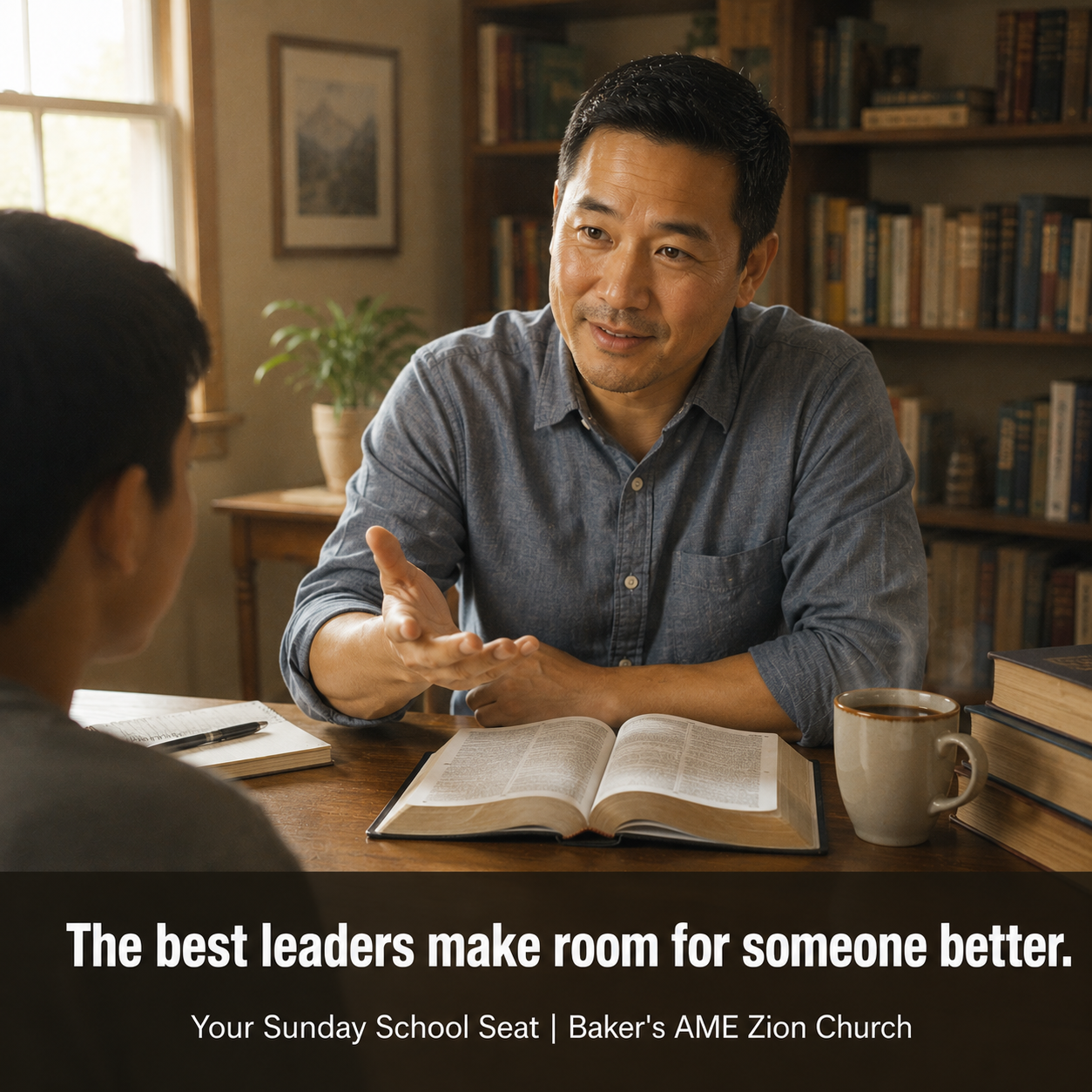
The best gift a leader gives isn't what they do themselves. It's who they make ready to go further than they ever did.
Acts 18:24-28 — KJV 24 And a certain Jew named Apollos, born at Alexandria, an eloquent man, and mighty in the scriptures, came to Ephesus. 25 This man was instructed in the way of the Lord; and being fervent in the spirit, he spake and taught diligently the things of the Lord, knowing only the baptism of John. 26 And he began to speak boldly in the synagogue: whom when Aquila and Priscilla had heard, they took him unto them, and expounded unto him the way of God more perfectly. 27 And when he was disposed to pass into Achaia, the brethren wrote, exhorting the disciples to receive him: who, when he was come, helped them much which had believed through grace: 28 For he mightily convinced the Jews, and that publickly, shewing by the scriptures that Jesus was Christ.
Acts 18:24-28 — WEB 24 Now a certain Jew named Apollos, an Alexandrian by race, an eloquent man, came to Ephesus. He was mighty in the Scriptures. 25 This man had been instructed in the way of the Lord; and being fervent in spirit, he spoke and taught accurately the things concerning Jesus, although he knew only the baptism of John. 26 He began to speak boldly in the synagogue. But when Priscilla and Aquila heard him, they took him aside, and explained to him the way of God more accurately. 27 When he had determined to pass over into Achaia, the brothers encouraged him, and wrote to the disciples to receive him. When he had come, he greatly helped those who had believed through grace; 28 for he powerfully refuted the Jews, publicly showing by the Scriptures that Jesus was the Christ.
Explanation
Apollos was the kind of man who walks into a room and changes the temperature — eloquent, well-educated (Alexandria was a center of learning), and on fire for God. He was already preaching boldly. But there was a gap. He only knew "the baptism of John." Somewhere along the way his understanding had stalled before the full message about Jesus had reached him. He was gifted and incomplete at the same time — which, if we're honest, describes most of us.
Now watch what Priscilla and Aquila do, because it's a clinic in building other leaders. First, they don't correct him publicly. They "took him unto them" — pulled him aside, into their home, into relationship. They didn't humiliate a talented man in front of the crowd; they invested in him in private. Second, they didn't shut him down. They knew real talent when they saw it, and instead of feeling threatened, they poured into it. Third — and this is the beautiful part — when Apollos was ready to move on to Achaia, they didn't cling. They blessed him and sent him with a letter of recommendation. He went on to become one of the most effective teachers in the early church, "mightily" proving from Scripture that Jesus was the Christ.
Priscilla and Aquila were tentmakers, not celebrities. History remembers Apollos's preaching, but it was their quiet mentorship that made it possible. That's the kind of leadership this week keeps circling back to: the kind that multiplies. A caring leader meets a need once. A multiplying leader raises up someone who'll meet that need a thousand times after they're gone.
On Sunday we'll meet Deborah, who refuses to keep the spotlight — she pulls Barak forward and insists he lead the army, even when he's hesitant. That's the same instinct. Great leaders are not collectors of credit. They're developers of people.
So here's the Wednesday challenge. Is there an "Apollos" near you — someone gifted but unfinished, talented but stalled? Maybe a younger coworker, a new believer, your own teenager. The temptation is to compete with rising talent or to correct it loudly. The better way is the Priscilla-and-Aquila way: take them aside, fill in the gap with patience and respect, and then — hardest of all — let them surpass you and send them out with your blessing.
Thought for the Day The best leaders make room for someone better.
Reflection Question Who has more potential than they realize — and how could you privately invest in them this week instead of correcting them publicly?
Prayer Father, free us from the insecurity that competes with the people we're supposed to be building. Give us the humility of Priscilla and Aquila — to mentor in private, to honor the gifts in others, and to send people out further than we ourselves have gone. Make us multipliers, not hoarders. Amen.
This week we walk toward Sunday's lesson: Deborah, a Leader in a National Emergency.
Tuesday, June 2 — A Leader Who Cares
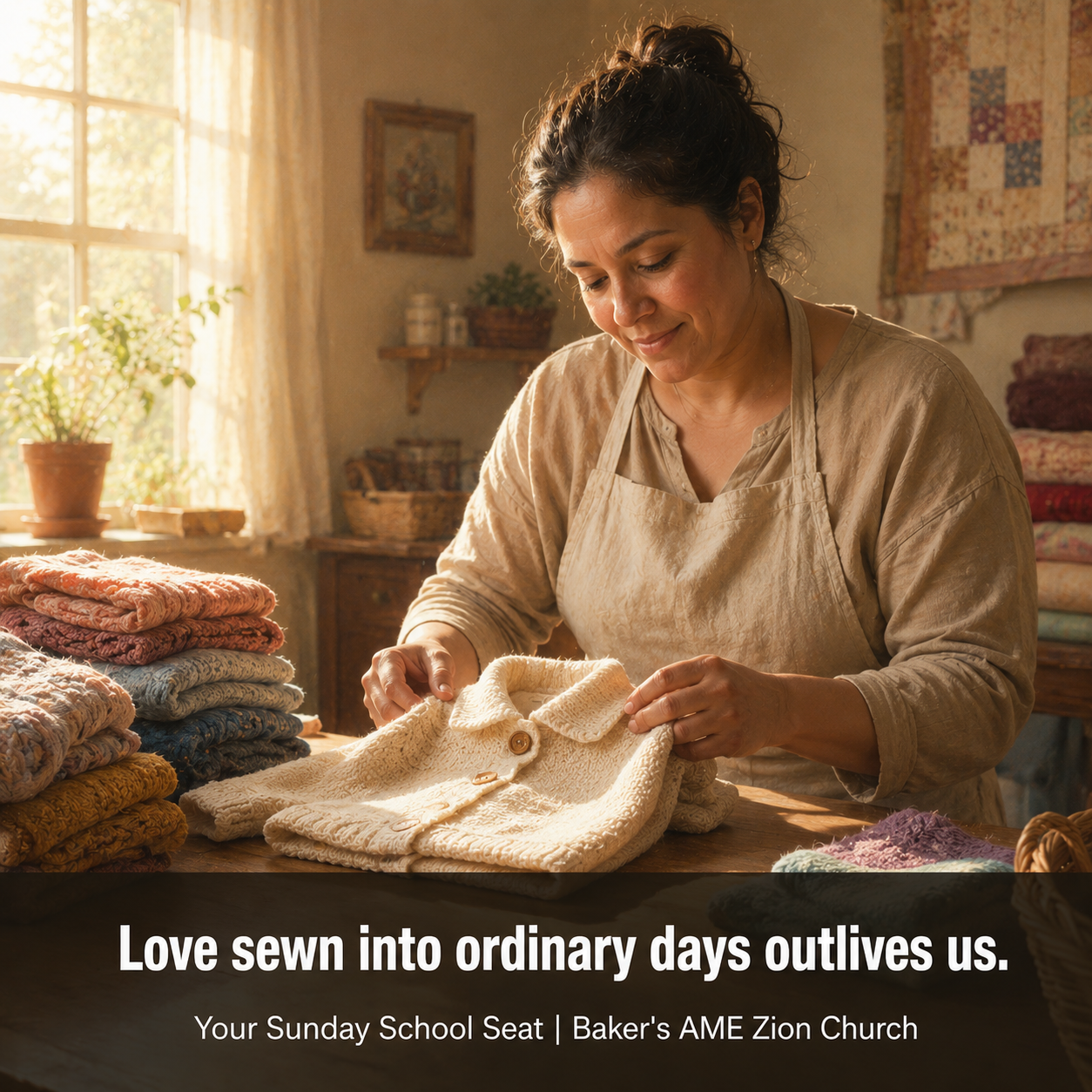
Some of the most important leadership in the world never gets a microphone. It happens with a needle and thread, a casserole dish, a quiet phone call to someone who's hurting.
Acts 9:36-42 — KJV 36 Now there was at Joppa a certain disciple named Tabitha, which by interpretation is called Dorcas: this woman was full of good works and almsdeeds which she did. 37 And it came to pass in those days, that she was sick, and died: whom when they had washed, they laid her in an upper chamber. 38 And forasmuch as Lydda was nigh to Joppa, and the disciples had heard that Peter was there, they sent unto him two men, desiring him that he would not delay to come to them. 39 Then Peter arose and went with them. When he was come, they brought him into the upper chamber: and all the widows stood by him weeping, and shewing the coats and garments which Dorcas made, while she was with them. 40 But Peter put them all forth, and kneeled down, and prayed; and turning him to the body said, Tabitha, arise. And she opened her eyes: and when she saw Peter, she sat up. 41 And he gave her his hand, and lifted her up, and when he had called the saints and widows, presented her alive. 42 And it was known throughout all Joppa; and many believed in the Lord.
Acts 9:36-42 — WEB 36 Now there was at Joppa a certain disciple named Tabitha, which when translated, means Dorcas. This woman was full of good works and acts of mercy which she did. 37 In those days, she became sick, and died. When they had washed her, they laid her in an upper room. 38 As Lydda was near Joppa, the disciples, hearing that Peter was there, sent two men to him, imploring him not to delay in coming to them. 39 Peter got up and went with them. When he had come, they brought him into the upper room. All the widows stood by him weeping, and showing the coats and garments which Dorcas had made while she was with them. 40 Peter put them all out, and kneeled down and prayed. Turning to the body, he said, "Tabitha, get up!" She opened her eyes, and when she saw Peter, she sat up. 41 He gave her his hand, and raised her up. Calling the saints and widows, he presented her alive. 42 This became known throughout all Joppa, and many believed in the Lord.
Explanation
Joppa was a working seaport, and Tabitha — Dorcas in Greek — was the kind of woman who held a neighborhood together. Luke tells us she was "full of good works and almsdeeds," and then he gives us the evidence: when she died, the widows didn't just weep, they held up clothing. "Look — she made this. And this. She made mine." You can feel the room. These weren't expensive garments. They were the everyday coats and tunics of poor women who, in that economy, had nowhere to turn when a husband died. Dorcas saw them. And she sewed for them.
Notice the church's instinct in the crisis. They didn't form a committee. They sent two men running to Lydda for Peter — "come quickly." That urgency tells you what Dorcas meant to them. A leader who cares creates a community that can't imagine carrying on without her.
So why does this story land in a week about leadership, building toward Deborah? Because we tend to define leadership as the loud, visible, out-front kind — and Dorcas reminds us there's another kind that's just as essential. She led from a sewing room. She led by noticing exactly who was about to fall through the cracks and quietly making sure they didn't. Before God raises up a Deborah to rally an army, He raises up a thousand Dorcases who keep the vulnerable clothed and fed and seen. One kind of leadership gets the headline. The other kind makes the community worth saving.
The practical question for a Tuesday is uncomfortable in the best way: who needs what you already know how to make?Maybe it's not sewing. Maybe it's the friend who always has the right verse, the neighbor who shows up with soup, the coworker who quietly trains the nervous new hire. Dorcas didn't wait to be impressive. She used the gift in her hands on the people in front of her.
And here's the tender part: when she was gone, her work spoke. The coats preached. That's the legacy of a leader who cares — long after the noise of bigger names fades, somebody is still warm because you bothered. Care isn't a lesser calling. In God's economy, it's leadership of the highest order.
Thought for the Day Love sewn into ordinary days outlives us.
Reflection Question Who in your life is quietly slipping through the cracks — and what small, practical thing could you make or do for them this week?
Prayer Lord, thank You for the Dorcas-hearts who serve where no one's watching. Open our eyes to the people right in front of us — the overlooked, the grieving, the barely-hanging-on. Show us the small thing we can actually do, and give us the love to do it without applause. Make our care a kind of leadership. Amen.
This week we walk toward Sunday's lesson: Deborah, a Leader in a National Emergency.
Monday, June 1 — A Leader Who Sets an Example
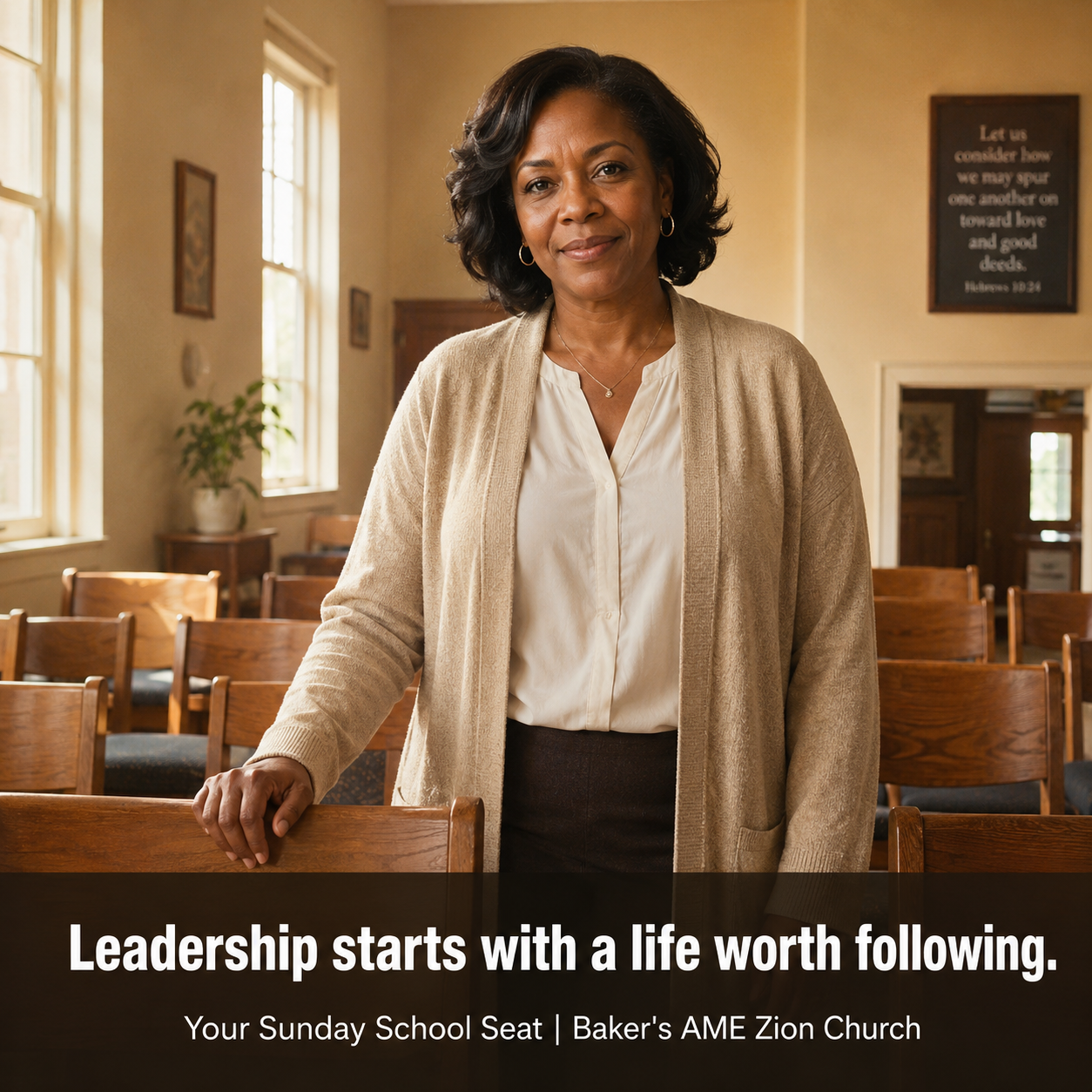
Most of us have worked for someone we'd never want to become — and someone we'd follow anywhere. The difference usually isn't talent. It's character.
1 Timothy 3:1-7 — KJV 1 This is a true saying, If a man desire the office of a bishop, he desireth a good work. 2 A bishop then must be blameless, the husband of one wife, vigilant, sober, of good behaviour, given to hospitality, apt to teach; 3 Not given to wine, no striker, not greedy of filthy lucre; but patient, not a brawler, not covetous; 4 One that ruleth well his own house, having his children in subjection with all gravity; 5 (For if a man know not how to rule his own house, how shall he take care of the church of God?) 6 Not a novice, lest being lifted up with pride he fall into the condemnation of the devil. 7 Moreover he must have a good report of them which are without; lest he fall into reproach and the snare of the devil.
1 Timothy 3:1-7 — WEB 1 This is a faithful saying: someone who seeks to be an overseer desires a good work. 2 The overseer therefore must be without reproach, the husband of one wife, temperate, sensible, modest, hospitable, good at teaching; 3 not a drinker, not violent, not greedy for money, but gentle, not quarrelsome, not covetous; 4 one who rules his own house well, having children in subjection with all reverence; 5 (but how could someone who doesn't know how to rule his own house take care of God's assembly?) 6 not a new convert, lest being puffed up he fall into the same condemnation as the devil. 7 Moreover he must have good testimony from those who are outside, to avoid falling into reproach and the snare of the devil.
Explanation
Paul is writing to Timothy, a young pastor he left behind in Ephesus to steady a church full of strong personalities and competing teachers. So when Paul lays out the qualifications for an overseer, notice what he leaves off the list. He doesn't say "must be charismatic." He doesn't say "must be a gifted speaker" or "must grow the crowd." Almost every item is about character, not flash — self-controlled, hospitable, not a heavy drinker, not money-hungry, gentle, not quick to fight. The one skill mentioned, "apt to teach," sits in a long row of traits that describe a life before they describe a résumé.
That ordering is the whole point of this week. We're walking toward Sunday's lesson on Deborah, a woman who held Israel together in a national crisis. Before we get to her courage, Paul reminds us where real leadership starts: with someone whose private life can bear public weight. Verse 5 is the hinge — if a man can't lead his own household with patience, how will he carry the household of God? The home isn't a warm-up act for "real" leadership. The home is the proving ground.
This cuts against the way we usually rank leaders. We promote people for what they produce and forget to ask who they are when no one's clapping. But the people closest to us — a spouse, a kid, a roommate, the coworker in the next cubicle — already know the answer. They've seen us tired, cornered, and out of patience. Verse 7 even brings in the neighbors: a leader needs "a good report of them which are without," the people outside the church who watch how we drive, how we tip, how we talk about folks who aren't in the room.
Here's the practical edge for a Monday. You may never carry a title. But somebody is watching how you handle a long week — your kids, the new hire, the younger believer in your row at church. Leadership isn't reserved for the front of the room. It leaks out of an ordinary life. The question isn't whether you'll set an example today. You will. The only question is what kind.
Thought for the Day Leadership starts with a life worth following.
Reflection Question If the people who live with you described your character honestly, what's the one word you'd most want — and most fear — they'd use?
Prayer Father, we want to lead well, but more than that we want to be well — to be people whose lives match our words. Search our private corners and make us trustworthy there first. Give us patience at our own kitchen tables. And let the watching world see something of You in how we carry ourselves today. Amen.
This week we walk toward Sunday's lesson: Deborah, a Leader in a National Emergency.
Sunday, May 31 — Don't Worship Alone
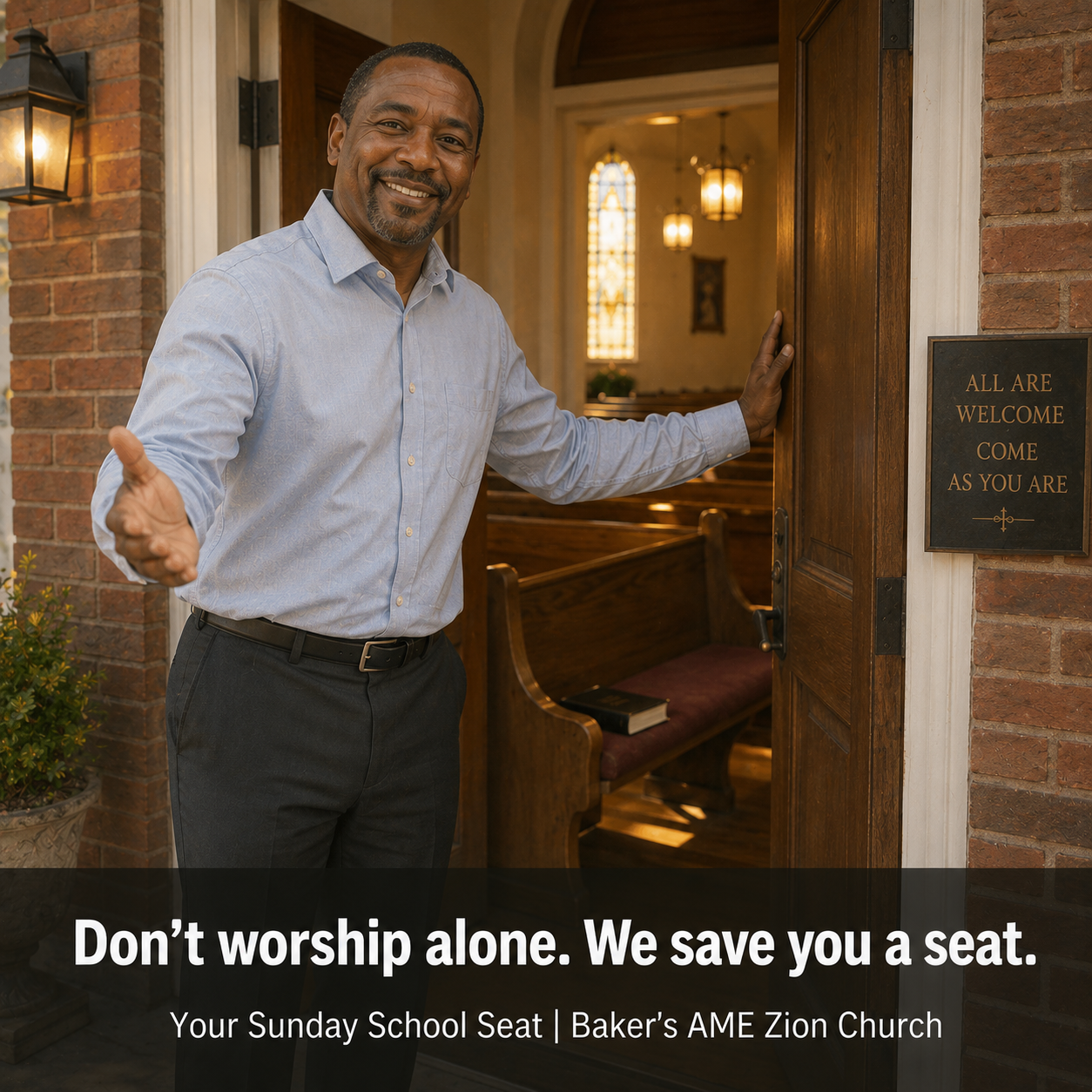
We have walked all week toward this moment. Hebrews 10 will not let us miss the point.
Hebrews 10:19-25 — KJV 19 Having therefore, brethren, boldness to enter into the holiest by the blood of Jesus, 20 By a new and living way, which he hath consecrated for us, through the veil, that is to say, his flesh; 21 And having an high priest over the house of God; 22 Let us draw near with a true heart in full assurance of faith, having our hearts sprinkled from an evil conscience, and our bodies washed with pure water. 23 Let us hold fast the profession of our faith without wavering; (for he is faithful that promised;) 24 And let us consider one another to provoke unto love and to good works: 25 Not forsaking the assembling of ourselves together, as the manner of some is; but exhorting one another: and so much the more, as ye see the day approaching.
Hebrews 10:19-25 — WEB 19 Having therefore, brothers, boldness to enter into the holy place by the blood of Jesus, 20 by the way which he dedicated for us, a new and living way, through the veil, that is to say, his flesh, 21 and having a great priest over the house of God, 22 let's draw near with a true heart in fullness of faith, having our hearts sprinkled from an evil conscience, and having our body washed with pure water, 23 let's hold fast the confession of our hope without wavering; for he who promised is faithful. 24 Let's consider how to provoke one another to love and good works, 25 not forsaking our own assembling together, as the custom of some is, but exhorting one another, and so much the more as you see the Day approaching.
The book of Hebrews was written to a community that was getting tired. Some of them had suffered for their faith. Some had drifted. Many were tempted to step quietly back into the religious lives they had left behind. The writer of Hebrews spends most of the letter showing them, in careful detail, what Jesus has done — how His sacrifice is greater than the old temple sacrifices, how His priesthood is greater than the old priesthood, how His new covenant fulfills what the old covenant had only promised. Then in chapter 10, the argument turns into an exhortation. Having therefore — given all of this — let us.
The writer issues three "let us" statements that anchor the whole Christian life. Let us draw near. Let us hold fast. Let us consider one another. Together they describe a life of worship that is intimate with God, settled in hope, and built around community.
Notice they don't end with let us draw near. The writer knows we cannot survive a long faith alone. So he adds: let us consider one another to provoke unto love and to good works. That word "provoke" sounds harsh in English, but the Greek means something closer to stir up or spur on. Think of how good a friend's encouragement feels when you have been wobbling. Think of the way one person showing up reliably can hold up another person through a year they didn't think they'd survive. That is what the writer is asking us to be for each other.
And then the line. Not forsaking the assembling of ourselves together, as the manner of some is. The writer acknowledges with quiet honesty that some had already stopped coming. He doesn't shame them. He just names what happens. Faith left alone gets thin. Hope left alone gets quiet. Love left alone forgets how to act. The remedy he prescribes is gathering. Not because the building is magic. Because being in the room with other believers does something to a soul that nothing else can do.
This is the whole point of the week. Fellowship through worship is not optional Christianity. It is the design. Psalm 95 called us to come and sing. Psalm 122 made us glad to go. Romans 12 invited us to bring our whole selves. Nehemiah 8 promised that joy would become our strength. Matthew 18 taught us to have the hard conversations that keep us together. Acts 4 showed us a community whose worship spilled over into shared lives. And Hebrews 10 ties the whole week together with one simple plea: keep showing up.
If you are reading this on Sunday morning, the rest of the day is an answer to a question this week has been quietly asking you. Will you go? Will you walk in? Will you sit beside somebody? Will you sing — even soft? The Lord who entered the holy place by His own blood has opened the way for you to come near. And He has given you a family to come near with.
We save you a seat. Not as a slogan. As a promise. The door is open. Your spot is waiting. Come on in.
Thought for the Day: Don't worship alone. We save you a seat.
Reflection: What is one thing keeping me from showing up — and is it bigger than what Christ has done?
Prayer: Lord Jesus, You opened the way to the Father by Your own body and Your own blood. We come near today with hearts full of faith and need. Hold us fast when we are tempted to drift. Stir us up to love and good works. Set us beside other believers who will spur us on, and make us the kind of friends who do that for somebody else. We thank You for the church You have given us. We thank You for the seat that is always saved. Amen.
Today is Sunday school. We save you a seat.
Saturday, May 30 — Worship Spills Over
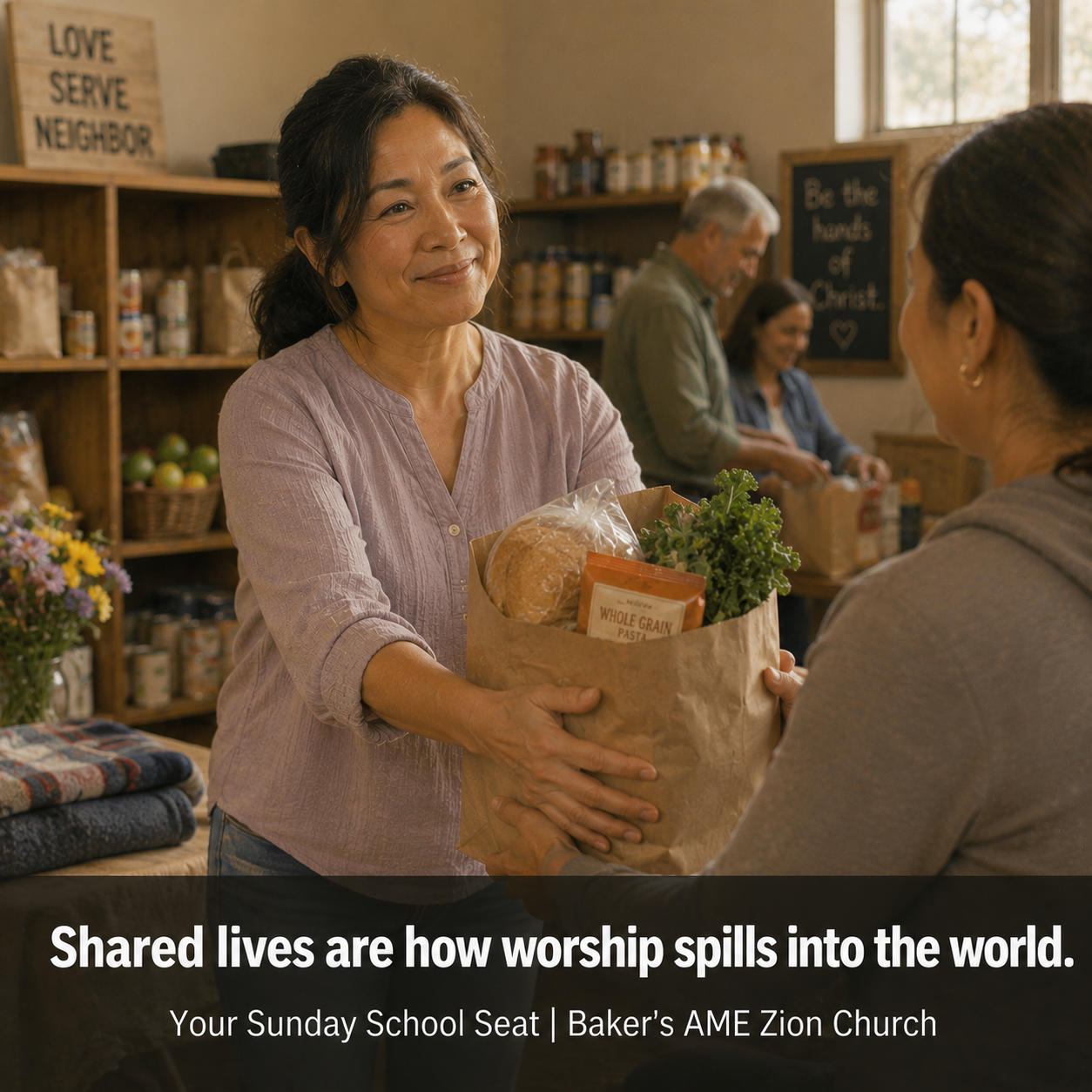
When worship has done its work in a community, you can find the evidence in their wallets, their pantries, and their guest rooms.
Acts 4:32-37 — KJV 32 And the multitude of them that believed were of one heart and of one soul: neither said any of them that ought of the things which he possessed was his own; but they had all things common. 33 And with great power gave the apostles witness of the resurrection of the Lord Jesus: and great grace was upon them all. 34 Neither was there any among them that lacked: for as many as were possessors of lands or houses sold them, and brought the prices of the things that were sold, 35 And laid them down at the apostles' feet: and distribution was made unto every man according as he had need. 36 And Joses, who by the apostles was surnamed Barnabas, (which is, being interpreted, The son of consolation,) a Levite, and of the country of Cyprus, 37 Having land, sold it, and brought the money, and laid it at the apostles' feet.
Acts 4:32-37 — WEB 32 The multitude of those who believed were of one heart and soul. Not one of them claimed that anything of the things which he possessed was his own, but they had all things in common. 33 With great power, the apostles gave their testimony of the resurrection of the Lord Jesus. Great grace was on them all. 34 For neither was there among them any who lacked, for as many as were owners of lands or houses sold them, and brought the proceeds of the things that were sold, 35 and laid them at the apostles' feet, and distribution was made to each, according as anyone had need. 36 Joses, who by the apostles was also called Barnabas (which is, being interpreted, Son of Encouragement), a Levite, a man of Cyprus by race, 37 having a field, sold it, and brought the money and laid it at the apostles' feet.
Luke pulls back the curtain on the earliest church and gives us a snapshot we cannot look away from. One heart and one soul. Nobody calling their possessions their own. Nobody lacking anything. The resurrection of Jesus being proclaimed with great power, and great grace settling on everyone who believed it. This is what happened when the Spirit fell on a community of people who had recently been frightened disciples behind locked doors. Their worship reorganized their economy.
That is worth sitting with. Real worship is never private for long. If it is real, it leaks. Into your bank account. Into your calendar. Into the way you think about what is yours. The Jerusalem church wasn't following a program. They weren't running a capital campaign. They had been so changed by what Jesus had done that they couldn't quite remember why they had ever held on so tightly.
Then Luke does something only Luke would do. He gives us a name. Joses, who by the apostles was surnamed Barnabas, which is, being interpreted, The son of consolation. Out of a whole crowd of generous people, Luke pauses to introduce one of them. He'll mention Barnabas many more times in Acts. Barnabas will be the one who vouches for the brand-new convert Paul when nobody else trusts him. Barnabas will be the one who takes a chance on young John Mark after Paul gives up on him. The pattern in his life is already showing up here in chapter 4. He sees what is needed and brings what he has, and he keeps doing it for the rest of his life.
This is fellowship through worship at its fullest. Worship in the Spirit had so reshaped that community that the resurrection wasn't just a doctrine they affirmed on Sundays. It was a practice that showed up Monday through Saturday. Need was met. People without were brought in. The line between "mine" and "ours" got blurry on purpose.
We don't all need to sell our houses this morning. But none of us are exempt from the question Acts 4 is asking. What in our lives still has too tight a grip on us? Where could we loosen our fingers a little? Whose need have we noticed and quietly walked past? Worship that never makes it past the parking lot isn't worship that has finished its work.
Tomorrow is Sunday. The week has been an invitation: come and sing, walk together, bring your whole self, let joy become strength, have the hard conversation, share what you have. Today is the day to do the smallest version of any of those that we can manage. The Barnabas in the story didn't start by selling the field. He started by paying attention. So can we.
Thought for the Day: Shared lives are how worship spills into the world.
Reflection: What is one thing I am holding too tightly that the body around me needs?
Prayer: Spirit of God, the same Spirit who shook a room and rearranged a community in Jerusalem, do that same work in us. Loosen our grip. Open our eyes to the people around us who are quietly in need. Make us the kind of believers whose worship doesn't end at the door. Raise up Barnabases in our church and let us be one of them. Amen.
This week we walk toward Sunday's lesson: Fellowship Through Worship.
Friday, May 29 — The Hard Conversation

Real fellowship is not the absence of conflict. According to Jesus, it is the willingness to walk into it.
Matthew 18:15-20 — KJV 15 Moreover if thy brother shall trespass against thee, go and tell him his fault between thee and him alone: if he shall hear thee, thou hast gained thy brother. 16 But if he will not hear thee, then take with thee one or two more, that in the mouth of two or three witnesses every word may be established. 17 And if he shall neglect to hear them, tell it unto the church: but if he neglect to hear the church, let him be unto thee as an heathen man and a publican. 18 Verily I say unto you, Whatsoever ye shall bind on earth shall be bound in heaven: and whatsoever ye shall loose on earth shall be loosed in heaven. 19 Again I say unto you, That if two of you shall agree on earth as touching any thing that they shall ask, it shall be done for them of my Father which is in heaven. 20 For where two or three are gathered together in my name, there am I in the midst of them.
Matthew 18:15-20 — WEB 15 "If your brother sins against you, go, show him his fault between you and him alone. If he listens to you, you have gained back your brother. 16 But if he doesn't listen, take one or two more with you, that at the mouth of two or three witnesses every word may be established. 17 If he refuses to listen to them, tell it to the assembly. If he refuses to hear the assembly also, let him be to you as a Gentile or a tax collector. 18 Most certainly I tell you, whatever things you bind on earth will have been bound in heaven, and whatever things you release on earth will have been released in heaven. 19 Again, assuredly I tell you, that if two of you will agree on earth concerning anything that they will ask, it will be done for them by my Father who is in heaven. 20 For where two or three are gathered together in my name, there I am in the middle of them."
We tend to remember verse 20 — where two or three are gathered together in my name, there am I in the midst of them — as a sweet promise for prayer meetings. And it is. But Jesus did not say it in a context of cozy fellowship. He said it at the end of a teaching about church conflict. The "two or three" He was talking about were the witnesses you might bring along when a hard conversation with a fellow believer could not be avoided.
That changes the whole feel of the passage. Jesus is not naive about the church. He knows people will hurt each other. Promises will be broken. Words will land wrong. Sins, small and large, will leak into the most loving congregations. So He gives us a process. Not a hotline to gossip. Not a system to embarrass anybody. A process designed to keep relationships alive.
Notice the first step. Go and tell him his fault between thee and him alone. You don't go to your cousin first. You don't post about it. You don't bring it up in the choir room. You go directly to the person, privately, and you have the conversation. The goal — Jesus says it plainly — is to gain your brother. The point is restoration, not victory.
If that doesn't work, Jesus says, bring one or two others. Not a crowd. A small circle of witnesses to help you both hear each other clearly. Only if that fails do you involve the wider church. And even then, the goal is still the same. The aim, at every step, is to keep this person inside the family.
This is some of the hardest teaching in the Bible to actually obey. Most of us would rather avoid the conversation. We would rather complain to a friend, or quietly back away from the person, or post something vague online. Jesus is asking for something braver and rarer. Show up. Sit down. Tell the truth in love. Listen back.
And then — and here is the part that fits our week — Jesus promises His presence in the middle of that hard work. Where two or three are gathered in His name, He is there. Fellowship through worship is not just singing the same songs in the same room. It is also the costly love that refuses to let a relationship quietly die. The church is not a building where people are nice to each other. The church is a community where people are honest enough to stay.
If there is somebody you have been avoiding this week, today might be the day. Not to win. Not to vent. To gain a brother. To gain a sister. Christ promised to be in the room with you.
Thought for the Day: Real fellowship requires honest conversations and open doors.
Reflection: Is there one person I have been avoiding instead of speaking to honestly?
Prayer: Lord Jesus, You have not asked us to be a church of polite strangers. You have asked us to be a family that knows how to come back together. Give us the courage for the conversations we have been putting off. Keep our hearts gentle and our motives clean. Be in the middle of the room when we sit down. Amen.
This week we walk toward Sunday's lesson: Fellowship Through Worship.
Thursday, May 28 — Joy Is Your Strength

If you have ever cried in church for reasons you couldn't quite name, Nehemiah 8 will sound familiar.
Nehemiah 8:9-12 — KJV 9 And Nehemiah, which is the Tirshatha, and Ezra the priest the scribe, and the Levites that taught the people, said unto all the people, This day is holy unto the LORD your God; mourn not, nor weep. For all the people wept, when they heard the words of the law. 10 Then he said unto them, Go your way, eat the fat, and drink the sweet, and send portions unto them for whom nothing is prepared: for this day is holy unto our Lord: neither be ye sorry; for the joy of the LORD is your strength. 11 So the Levites stilled all the people, saying, Hold your peace, for the day is holy; neither be ye grieved. 12 And all the people went their way to eat, and to drink, and to send portions, and to make great mirth, because they had understood the words that were declared unto them.
Nehemiah 8:9-12 — WEB 9 Nehemiah, who was the governor, Ezra the priest the scribe, and the Levites who taught the people, said to all the people, "Today is holy to Yahweh your God. Don't mourn, nor weep." For all the people wept, when they heard the words of the law. 10 Then he said to them, "Go your way. Eat the fat, drink the sweet, and send portions to him for whom nothing is prepared, for today is holy to our Lord. Don't be grieved, for the joy of Yahweh is your strength." 11 So the Levites stilled all the people, saying, "Hold your peace, for the day is holy; don't be grieved." 12 All the people went their way to eat, to drink, to send portions, and to celebrate, because they had understood the words that were declared to them.
To feel the weight of this scene, you have to know what came before it. The people of Judah had spent decades in exile in Babylon. Their temple was destroyed. Their city was rubble. A whole generation grew up without ever standing on the ground their grandparents had loved. Then a remnant returned, slowly rebuilt the walls under Nehemiah's leadership, and on this particular day, gathered together at the Water Gate in Jerusalem to hear Ezra read aloud from the Book of the Law.
And they wept. Of course they did. They were hearing words their grandparents had taught them, words they had recited in exile when they wondered if any of it still applied to them. They were hearing what they had lost and what God had not let go of. The tears were repentance and homesickness and gratitude all tangled together. Anyone who has sat in a pew and felt something old break loose in their chest knows what that moment was.
What is striking is the response from their leaders. Nehemiah and Ezra do not tell the people to keep weeping. They don't double down on grief. They say stop. This day is holy. Go your way, eat the fat, drink the sweet — and here is the line that has carried God's people ever since — the joy of the LORD is your strength.
Two things to notice. The first is that worship moves us. Real encounters with God's word produce real emotion, and that is not weakness. The people wept because they finally understood. The tears were honest. But the second thing is that God doesn't leave His people in lament. The aim of worship is not to feel bad about yourself. The aim of worship is joy that becomes strength for the road ahead. Strength to rebuild walls. Strength to raise children in a city that had forgotten how to be a city. Strength to wait for the next thing God was going to do.
Then notice what verse 10 says about how that joy is expressed: send portions unto them for whom nothing is prepared.The very first thing Ezra tells them to do with their joy is feed somebody who couldn't afford the feast. Fellowship through worship is not just a feeling in your chest. It is a casserole in somebody else's kitchen. It is a paid-off light bill nobody else knows about. It is making sure the table has room for the person who almost didn't come.
If you have come into this Thursday tired, hear the word again. The joy of the Lord is your strength. Not your performance. Not your willpower. His joy. And it shows up in your hands long before it shows up on your face.
Thought for the Day: The joy of the Lord is your strength today.
Reflection: Who in my life this week needs a portion from my table — and have I noticed?
Prayer: Lord, You meet us where the tears are honest and You do not leave us there. Fill us with the kind of joy that becomes strength for the long week ahead. Then turn that joy outward. Show us the neighbor for whom nothing is prepared. Let our worship reach their kitchen table. Amen.
This week we walk toward Sunday's lesson: Fellowship Through Worship.
Wednesday, May 27 — Bring Your Whole Self

Worship isn't a song you sing for an hour on Sunday. According to Paul, it's a whole life laid on the table.
Romans 12:1-8 — KJV 1 I beseech you therefore, brethren, by the mercies of God, that ye present your bodies a living sacrifice, holy, acceptable unto God, which is your reasonable service. 2 And be not conformed to this world: but be ye transformed by the renewing of your mind, that ye may prove what is that good, and acceptable, and perfect, will of God. 3 For I say, through the grace given unto me, to every man that is among you, not to think of himself more highly than he ought to think; but to think soberly, according as God hath dealt to every man the measure of faith. 4 For as we have many members in one body, and all members have not the same office: 5 So we, being many, are one body in Christ, and every one members one of another. 6 Having then gifts differing according to the grace that is given to us, whether prophecy, let us prophesy according to the proportion of faith; 7 Or ministry, let us wait on our ministering: or he that teacheth, on teaching; 8 Or he that exhorteth, on exhortation: he that giveth, let him do it with simplicity; he that ruleth, with diligence; he that sheweth mercy, with cheerfulness.
Romans 12:1-8 — WEB 1 Therefore I urge you, brothers, by the mercies of God, to present your bodies a living sacrifice, holy, acceptable to God, which is your spiritual service. 2 Don't be conformed to this world, but be transformed by the renewing of your mind, so that you may prove what is the good, well-pleasing, and perfect will of God. 3 For I say through the grace that was given me, to every man who is among you, not to think of himself more highly than he ought to think; but to think reasonably, as God has apportioned to each person a measure of faith. 4 For even as we have many members in one body, and all the members don't have the same function, 5 so we, who are many, are one body in Christ, and individually members of one another. 6 Having gifts differing according to the grace that was given to us: if prophecy, let's prophesy according to the proportion of our faith; 7 or service, let's give ourselves to service; or he who teaches, to his teaching; 8 or he who exhorts, to his exhorting; he who gives, let him do it with generosity; he who rules, with diligence; he who shows mercy, with cheerfulness.
Romans 12 sits at a pivot point in Paul's longest letter. The first eleven chapters are a careful argument about what God has done in Christ — sin, grace, faith, the long mystery of how Jew and Gentile come together at one table. Then chapter 12 begins with that small but enormous word: therefore. In light of everything God has done, here is what now happens to us. The doctrine ends. The shape of a life begins.
And the first thing Paul names is worship. Not church attendance. Worship as the offering of an entire body. The Greek word translated "reasonable" (KJV) or "spiritual" (WEB) carries the sense of logical, fitting, what makes sense. Paul is saying: given who God is and what God has done, the only sensible response is to hand your whole self over. Not just your Sunday morning. Your hands. Your schedule. Your money. Your phone. Your appetites. Your time after dinner. All of it, on the altar, alive.
Then in verses 3 through 8, Paul does something beautiful. He moves immediately from individual surrender to community life. The body language is not accidental. Paul will not let us imagine that worship is a solo project. The moment you give yourself to God, you discover you have been joined to other people who are doing the same thing. We are members of one body, and — here is the line that always stops me — members one of another. You don't belong only to God. You belong to the people God has placed beside you.
And we don't all carry the same gifts. Some teach. Some give. Some show up early and stack chairs. Some make a casserole for a family that just lost somebody. Some pray quietly for a congregation that will never hear about it. Paul lists these gifts side by side without ranking them. He wants us to understand that the body needs all of them. The teacher needs the giver. The leader needs the merciful. The loud-voiced needs the quiet. Nobody is bringing too little. Everybody is bringing something.
This is the heart of fellowship through worship. You bring your whole self, and so does the person next to you, and somehow what gets offered together is more than what any of us could have carried alone. Don't shrink your gift. Don't envy somebody else's. Don't sit out. The body needs you exactly the way God made you.
Thought for the Day: Bring your whole self. The body needs every part.
Reflection: What gift have I been holding back because it doesn't look like somebody else's?
Prayer: God of mercies, we lay ourselves down again today — not in pieces, but whole. Take our hands and our hours and our quiet strengths. Show us where we belong in the body. Free us from the foolishness of thinking we have nothing to offer. Free us also from the pride of thinking our gift is the only one that matters. Amen.
This week we walk toward Sunday's lesson: Fellowship Through Worship.
Tuesday, May 26 — Glad to Go

There is a kind of joy that shows up in your feet before it ever reaches your face. Psalm 122 is a song about that.
Psalm 122 — KJV 1 I was glad when they said unto me, Let us go into the house of the LORD. 2 Our feet shall stand within thy gates, O Jerusalem. 3 Jerusalem is builded as a city that is compact together: 4 Whither the tribes go up, the tribes of the LORD, unto the testimony of Israel, to give thanks unto the name of the LORD. 5 For there are set thrones of judgment, the thrones of the house of David. 6 Pray for the peace of Jerusalem: they shall prosper that love thee. 7 Peace be within thy walls, and prosperity within thy palaces. 8 For my brethren and companions' sakes, I will now say, Peace be within thee. 9 Because of the house of the LORD our God I will seek thy good.
Psalm 122 — WEB 1 I was glad when they said to me, "Let's go to Yahweh's house!" 2 Our feet are standing within your gates, Jerusalem! 3 Jerusalem is built as a city that is compact together, 4 where the tribes go up, even Yah's tribes, according to an ordinance for Israel, to give thanks to Yahweh's name. 5 For there are set thrones for judgment, the thrones of David's house. 6 Pray for the peace of Jerusalem. Those who love you will prosper. 7 Peace be within your walls, and prosperity within your palaces. 8 For my brothers' and companions' sakes, I will now say, "Peace be within you." 9 For the sake of the house of Yahweh our God, I will seek your good.
Psalm 122 is one of the "Songs of Ascents" — a small collection of psalms (120 through 134) that Israelites sang as they walked up to Jerusalem for the great pilgrimage feasts. Three times a year they left their villages, gathered their families and provisions, and made the journey to the temple together. These songs were the music of the road. You can almost picture it: dust on sandals, kids riding on shoulders, conversation rising and falling, the whole crowd singing the same line as the city walls come into view.
What grabs me about this psalm is the very first word. "Glad." Not dutiful. Not punctual. Glad. The psalmist remembers the moment somebody said, "Let's go," and his whole spirit lifted. That's a feeling worth holding onto in a week about fellowship through worship. Worship was never meant to be the thing you have to drag yourself toward. It was meant to be the thing you can't quite wait for.
The psalm also makes a quiet point we should not miss. The pilgrim isn't going up by himself. The whole psalm is plural — let us go, our feet, my brethren and companions. Worship in Israel was a community act. The tribes went up together. They prayed for the peace of the city not just because they liked the architecture but because they loved the people who would be inside those walls with them. Fellowship through worship is not a phrase the psalmist would have needed explained to him. It was just how worship worked.
Now think about your own week. Most of us live in a culture that has done a thorough job convincing us we can do everything alone. Spiritual practice has been quietly rebranded as a private hobby — a podcast on the commute, a verse on the phone, a quiet moment with coffee. Those things are good. None of them are the whole thing. There is something Psalm 122 knows that we forget. Joy multiplies when you walk toward God with other people. The body remembers being in a room with other voices. The soul remembers being known.
If gathering has gotten hard lately — and for a lot of us it has, since the pandemic years rearranged habits we didn't know were that fragile — Psalm 122 is an invitation back. Not a guilt trip. An invitation. Someone is saying, "Let's go." May we be glad to hear it.
Thought for the Day: Joy walks with us toward the house of God.
Reflection: When was the last time I felt glad — not just willing — to gather with God's people?
Prayer: God, You have planted a longing in us to come home to You with others. Forgive the seasons we have let that longing go quiet. Stir up gladness in our feet again. Make us the kind of friend who says, "Let's go," and the kind of soul who is glad to hear it. Amen.
This week we walk toward Sunday's lesson: Fellowship Through Worship.