
A daily walk through Scripture, preparing our hearts for Sunday.
Wednesday, August 12 — Willing to Lose the Résumé
Most of us keep a mental list of what makes us worth something — the title, the degree, the name people know us by. Paul had a list like that too, and he tore it up.
Philippians 3:3-9 — KJV
3 For we are the circumcision, which worship God in the spirit, and rejoice in Christ Jesus, and have no confidence in the flesh. 4 Though I might also have confidence in the flesh. If any other man thinketh that he hath whereof he might trust in the flesh, I more: 5 Circumcised the eighth day, of the stock of Israel, of the tribe of Benjamin, an Hebrew of the Hebrews; as touching the law, a Pharisee; 6 Concerning zeal, persecuting the church; touching the righteousness which is in the law, blameless. 7 But what things were gain to me, those I counted loss for Christ. 8 Yea doubtless, and I count all things but loss for the excellency of the knowledge of Christ Jesus my Lord: for whom I have suffered the loss of all things, and do count them but dung, that I may win Christ, 9 And be found in him, not having mine own righteousness, which is of the law, but that which is through the faith of Christ, the righteousness which is of God by faith:
Philippians 3:3-9 — WEB
3 For we are the circumcision, who worship God in the Spirit, and rejoice in Christ Jesus, and have no confidence in the flesh; 4 though I myself might have confidence even in the flesh. If any other man thinks that he has confidence in the flesh, I yet more: 5 circumcised the eighth day, of the stock of Israel, of the tribe of Benjamin, a Hebrew of Hebrews; concerning the law, a Pharisee; 6 concerning zeal, persecuting the assembly; concerning the righteousness which is in the law, found blameless. 7 However, I consider those things that were gain to me as a loss for Christ. 8 Yes most certainly, and I count all things to be a loss for the excellency of the knowledge of Christ Jesus, my Lord, for whom I suffered the loss of all things, and count them nothing but refuse, that I may gain Christ 9 and be found in him, not having a righteousness of my own, that which is of the law, but that which is through faith in Christ, the righteousness which is from God by faith,
Explanation
Philippians was written from a prison cell, which makes what Paul says here even more striking. He's not talking about his accomplishments from a comfortable armchair. He's chained up, and still he says his old credentials are worth nothing next to Christ.
And what credentials they were. In verses 5 and 6 Paul lists them like a man reading off his own trophy shelf: the right family, the right tribe, the right training, flawless in keeping the law. If anyone could have earned God's approval by pedigree and performance, it was him. This is the same man we've been reading about all week — the Pharisee, the zealot, the one who was so sure of his standing that he persecuted the church.
Then verse 7 lands like a hammer: "But what things were gain to me, those I counted loss for Christ." He does the math and comes out the opposite of what you'd expect. The very things that made him somebody, he now moves to the loss column. In verse 8 the older English is blunt — he calls his old glory "dung," garbage, the stuff you scrape off and throw out. Not because those things were evil, but because he found something so much better that they stopped being the point.
Here's the deep thing Paul is after. He no longer wants a righteousness he built himself, "mine own righteousness, which is of the law." He wants the righteousness that comes from God through faith in Christ. That's the difference between a Pharisee and a Christian, and it's the exact turn our Sunday lesson traces. Saul the Pharisee trusted his own record. Paul the Christian trusted Christ's.
For us, this cuts close. We may not have Paul's religious résumé, but we all have something we quietly lean on to feel acceptable — how hard we work, how we look on paper, how much better we are than "those people." Paul isn't telling you your work or your family or your effort is worthless. He's telling you they make a terrible savior. The freedom in this passage is that you can finally stop auditioning. You don't have to earn your way into God's good graces by stacking up a perfect record. Christ already has the record; faith receives it. Loosen your grip on the list you've been trusting, and you may find your hands are finally free to hold on to Him.
Thought for the Day
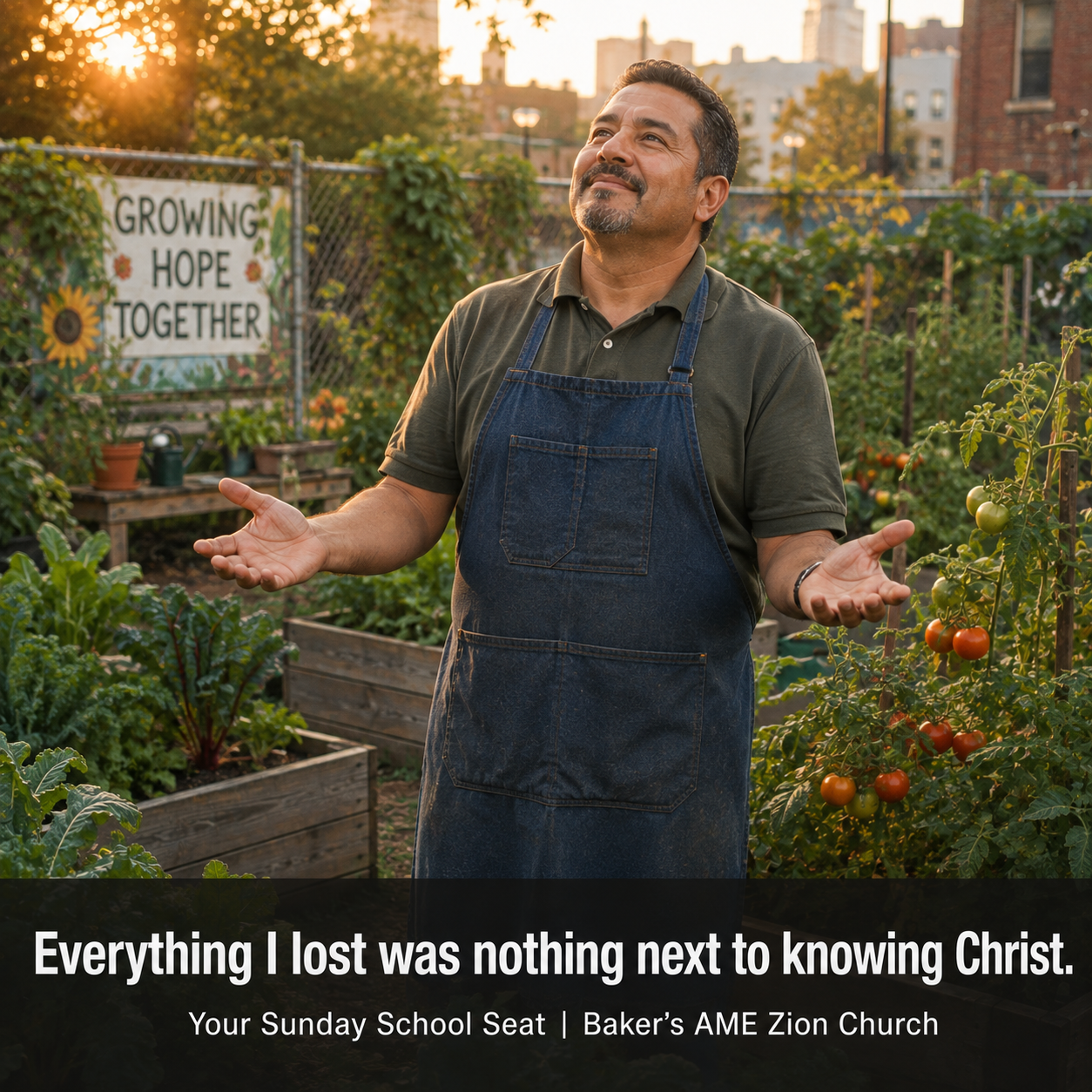
Everything I lost was nothing next to knowing Christ.
Reflection Question
What are you still trusting to make you acceptable — and could you set it down?
Prayer
Lord Jesus, I've spent a lot of energy building a record I hoped would be enough. Today I lay it down. I don't want a righteousness I made; I want the one You give. Help me to count all of it loss next to knowing You, and to rest in what You've already done. Be my confidence today. Amen.
This week we walk toward Sunday's lesson: Saul of Tarsus, How a Pharisee Became a Christian.
Tuesday, August 11 — When the Chaser Becomes the Preacher
We all know someone we've quietly written off — the one we're sure will never change. Today's passage is about a man everybody had written off, until God did the writing.
Galatians 1:13-24 — KJV
13 For ye have heard of my conversation in time past in the Jews' religion, how that beyond measure I persecuted the church of God, and wasted it: 14 And profited in the Jews' religion above many my equals in mine own nation, being more exceedingly zealous of the traditions of my fathers. 15 But when it pleased God, who separated me from my mother's womb, and called me by his grace, 16 To reveal his Son in me, that I might preach him among the heathen; immediately I conferred not with flesh and blood: 17 Neither went I up to Jerusalem to them which were apostles before me; but I went into Arabia, and returned again unto Damascus. 18 Then after three years I went up to Jerusalem to see Peter, and abode with him fifteen days. 19 But other of the apostles saw I none, save James the Lord's brother. 20 Now the things which I write unto you, behold, before God, I lie not. 21 Afterwards I came into the regions of Syria and Cilicia; 22 And was unknown by face unto the churches of Judaea which were in Christ: 23 But they had heard only, That he which persecuted us in times past now preacheth the faith which once he destroyed. 24 And they glorified God in me.
Galatians 1:13-24 — WEB
13 For you have heard of my way of living in time past in the Jews' religion, how that beyond measure I persecuted the assembly of God and ravaged it. 14 I advanced in the Jews' religion beyond many of my own age among my countrymen, being more exceedingly zealous for the traditions of my fathers. 15 But when it was the good pleasure of God, who separated me from my mother's womb and called me through his grace, 16 to reveal his Son in me, that I might preach him among the Gentiles, I didn't immediately confer with flesh and blood, 17 nor did I go up to Jerusalem to those who were apostles before me, but I went away into Arabia. Then I returned to Damascus. 18 Then after three years I went up to Jerusalem to visit Peter, and stayed with him fifteen days. 19 But of the other apostles I saw no one, except James, the Lord's brother. 20 Now about the things which I write to you, behold, before God, I'm not lying. 21 Then I came to the regions of Syria and Cilicia. 22 I was still unknown by face to the assemblies of Judea which were in Christ, 23 but they only heard: "He who once persecuted us now preaches the faith that he once tried to destroy." 24 And they glorified God in me.
Explanation
Paul is writing this letter to churches in Galatia who are being told he isn't a real apostle. So he tells them his story plainly, and he doesn't clean it up. He names who he used to be: a man so zealous for the traditions of his fathers that he hunted down believers and tried to wipe the church off the map. He was, in his own words, out ahead of everyone his age — the star student, the enforcer, the one going places. And he was using all of it against God's people.
Then comes the hinge of the whole passage in verse 15: "But when it pleased God." Notice Paul doesn't say "when I got my act together" or "when I finally saw reason." The turnaround wasn't something he engineered. It pleased God to separate him, to call him by grace, to reveal His Son in him. Paul's entire résumé — his zeal, his brilliance, his religion — did not save him. Grace interrupted him.
And look at how the neighbors responded. The churches of Judea didn't even know his face. All they knew was the report going around: "The one who used to hunt us down is now preaching the very faith he tried to destroy." Their reaction is worth sitting with. They didn't get suspicious. They didn't demand he prove himself for years first. Verse 24 says simply, "they glorified God in me." They saw a changed man and gave God the credit.
This is the heart of where our week is heading. On Sunday we study how a Pharisee became a Christian, and today we get it told in Paul's own hand. The takeaway is not "try harder to be good." It's that God's grace can reach a person we'd consider a lost cause — including, some days, the person in our own mirror.
So here's the practical question this passage presses on us. First, is there someone you've decided is beyond changing? Paul's life says be careful; grace has a longer reach than your judgment. Second, when God does something new in you, don't let embarrassment about your past silence you. Paul's testimony wasn't "look how good I've always been." It was "look what grace did with someone like me." That's a story people still need to hear across the kitchen table and the checkout line.
Thought for the Day
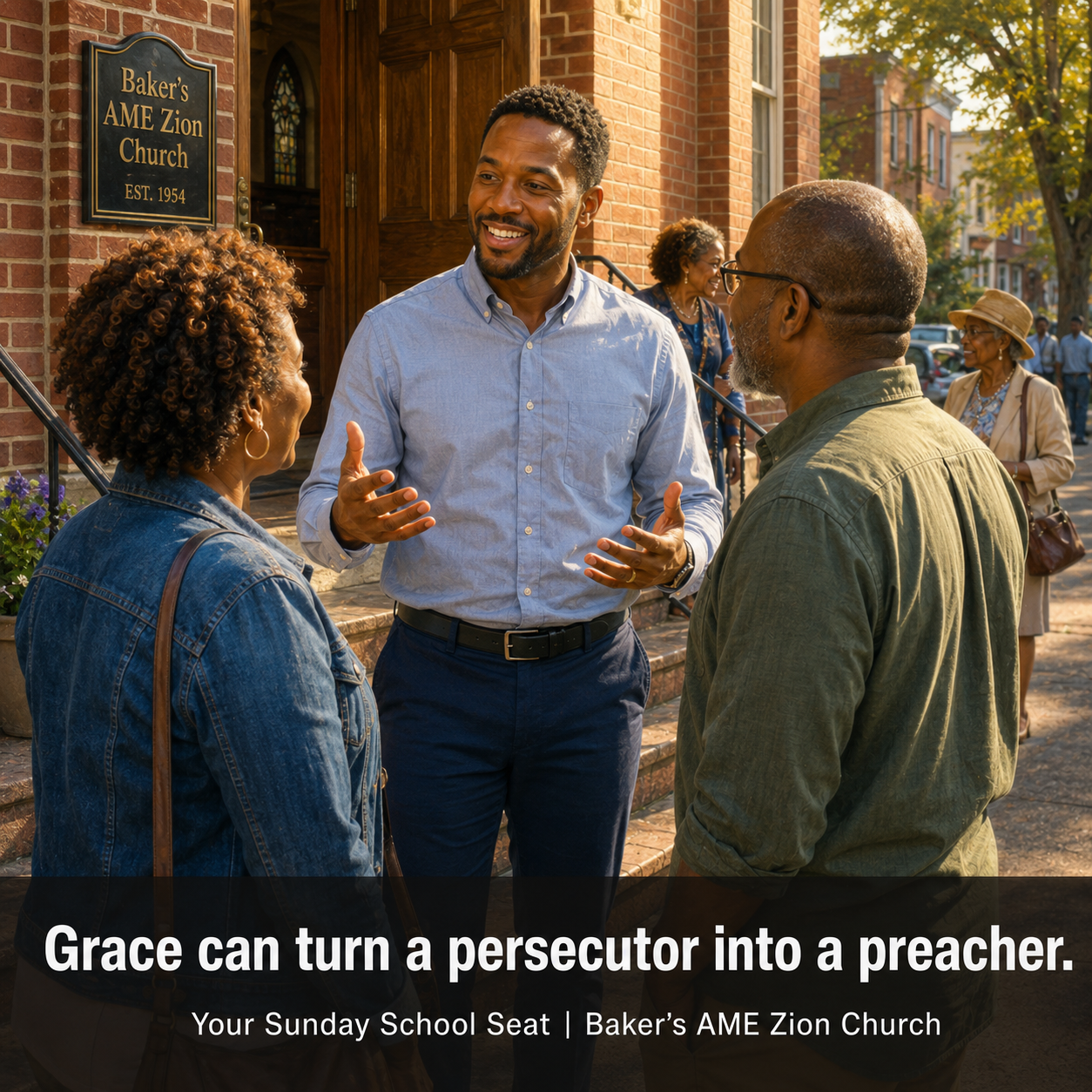
Grace can turn a persecutor into a preacher.
Reflection Question
Who have you written off that God may not be finished with yet?
Prayer
Father, thank You that Your grace reached the last person anyone expected, and that it can reach me too. Forgive me for writing people off as if I know the end of their story. Give me eyes to see what You're doing in people, and the courage to tell what You've done in me. When others see the change, let them glorify You. Amen.
This week we walk toward Sunday's lesson: Saul of Tarsus, How a Pharisee Became a Christian.
Monday, August 10 — Where the Real Fountain Is

Some mornings you wake up already tired, reaching for coffee before your feet hit the floor, wondering where you're supposed to get the strength for another full day.
Psalm 36:1-9 — KJV
1 The transgression of the wicked saith within my heart, that there is no fear of God before his eyes. 2 For he flattereth himself in his own eyes, until his iniquity be found to be hateful. 3 The words of his mouth are iniquity and deceit: he hath left off to be wise, and to do good. 4 He deviseth mischief upon his bed; he setteth himself in a way that is not good; he abhorreth not evil. 5 Thy mercy, O LORD, is in the heavens; and thy faithfulness reacheth unto the clouds. 6 Thy righteousness is like the great mountains; thy judgments are a great deep: O LORD, thou preservest man and beast. 7 How excellent is thy lovingkindness, O God! therefore the children of men put their trust under the shadow of thy wings. 8 They shall be abundantly satisfied with the fatness of thy house; and thou shalt make them drink of the river of thy pleasures. 9 For with thee is the fountain of life: in thy light shall we see light.
Psalm 36:1-9 — WEB
1 An oracle is within my heart about the disobedience of the wicked: "There is no fear of God before his eyes." 2 For he flatters himself in his own eyes, too much to detect and hate his sin. 3 The words of his mouth are iniquity and deceit. He has ceased to be wise and to do good. 4 He plots iniquity on his bed. He sets himself in a way that is not good. He doesn't abhor evil. 5 Your loving kindness, LORD, is in the heavens. Your faithfulness reaches to the skies. 6 Your righteousness is like the mountains of God. Your judgments are like a great deep. LORD, you preserve man and animal. 7 How precious is your loving kindness, God! The children of men take refuge under the shadow of your wings. 8 They shall be abundantly satisfied with the abundance of your house. You will make them drink of the river of your pleasures. 9 For with you is the spring of life. In your light we will see light.
Explanation
David opens this psalm by staring straight at a hard truth: there is a way of living that shuts God out entirely. The person he describes has stopped listening to conscience. He flatters himself, talks himself into whatever he wants, and lies awake at night not wrestling with guilt but planning his next move. It's a portrait of a life turned completely inward, running on its own fumes.
Then, right in the middle of verse 5, the psalm pivots hard. David lifts his eyes off that dead-end life and looks up. Suddenly the language opens wide: mercy in the heavens, faithfulness reaching the clouds, righteousness tall as mountains, justice deep as the sea. He's contrasting two water sources. The wicked drink from themselves and stay thirsty. God's people drink from a river that never runs dry.
That's the phrase to carry today: "with thee is the fountain of life." Not a cup God hands you once. A fountain. A spring that keeps coming up from underneath, whether the day went your way or not.
This is exactly where our week begins, because this Sunday we study Saul of Tarsus. Here was a man who, for years, drank only from himself — his pedigree, his zeal, his certainty that he was right. He was a walking picture of Psalm 36's first four verses, so sure of his own righteousness that he persecuted the very people of God. And still, the fountain of God's mercy was higher than his sin. That same mercy is what reached down and stopped him on the Damascus road.
So what does the fountain look like on a Monday? It looks like admitting you can't manufacture your own strength. You've tried self-talk, hustle, and pretending you're fine, and none of it fills the tank. The invitation here is simple and almost embarrassingly gentle: come and drink. Before the emails, before the school drop-off, before the shift, put yourself for one honest minute under the shadow of God's wings and let Him be the source. The people who last in this life aren't the ones with the most willpower. They're the ones who keep going back to the spring.
Thought for the Day
With God is the fountain of life.
Reflection Question
What have you been drinking from lately to get through — and is it actually filling you?
Prayer
Lord, I'm tired before the day even starts, and I've been trying to be my own source for too long. Thank You that Your mercy is higher than the heavens and Your love never runs dry. Teach me to come to You first this morning instead of last. Let me drink from the fountain of life today, and share that water with someone else. Amen.
This week we walk toward Sunday's lesson: Saul of Tarsus, How a Pharisee Became a Christian.
August 10 - 16, 2026 - Saul of Tarsus, How a Pharisee Became a Christian
This week on Your Sunday School Seat, we trace one road all the way to Damascus. Across seven daily readings — from the fountain of life in Psalm 36 to the conversion of Saul in Acts 22 — we watch God's mercy take a self-righteous, self-reliant heart and make it brand new. It's the story of how the church's worst enemy became its boldest witness, and it's an invitation to anyone who's ever felt too far gone. Watch, then come join us Sunday for the lesson, "Saul of Tarsus, How a Pharisee Became a Christian."
Monday — The Fountain of Life (Psalm 36:1-9)
Tuesday — Proclaiming the Faith (Galatians 1:13-24)
Wednesday — Losing All to Gain Christ (Philippians 3:3-9)
Thursday — A Merciful and Gracious God (Exodus 34:5-9)
Friday — A New Creation in Christ (2 Corinthians 5:17-21)
Saturday — Rejoicing in God's Forgiveness (Psalm 32)
Sunday — Sent to All the World (Acts 22:3-15)
Your Sunday School Seat | Baker's AME Zion Church — We Save You a Seat
#YourSundaySchoolSeat #AMEZion #DailyDevotional #Faith #BlackChurch #Conversion
Sunday, August 9 — He Forgave From the Ground
Today we arrive at the moment the whole week has been building toward — and it is not what anyone would call a happy ending. And yet it may be the bravest, most Christlike scene in the book of Acts.
Acts 7:54-60 — KJV
54 When they heard these things, they were cut to the heart, and they gnashed on him with their teeth. 55 But he, being full of the Holy Ghost, looked up stedfastly into heaven, and saw the glory of God, and Jesus standing on the right hand of God, 56 And said, Behold, I see the heavens opened, and the Son of man standing on the right hand of God. 57 Then they cried out with a loud voice, and stopped their ears, and ran upon him with one accord, 58 And cast him out of the city, and stoned him: and the witnesses laid down their clothes at a young man's feet, whose name was Saul. 59 And they stoned Stephen, calling upon God, and saying, Lord Jesus, receive my spirit. 60 And he kneeled down, and cried with a loud voice, Lord, lay not this sin to their charge. And when he had said this, he fell asleep.
Acts 7:54-60 — WEB
54 Now when they heard these things, they were cut to the heart, and they gnashed at him with their teeth. 55 But he, being full of the Holy Spirit, looked up steadfastly into heaven and saw the glory of God, and Jesus standing on the right hand of God, 56 and said, "Behold, I see the heavens opened, and the Son of Man standing at the right hand of God!" 57 But they cried out with a loud voice and stopped their ears, then rushed at him with one accord. 58 They threw him out of the city and stoned him. The witnesses placed their garments at the feet of a young man named Saul. 59 They stoned Stephen as he called out, saying, "Lord Jesus, receive my spirit!" 60 He kneeled down and cried with a loud voice, "Lord, don't hold this sin against them!" When he had said this, he fell asleep.
Explanation
Stephen's sermon lands, and the council doesn't repent — they rage. They gnash their teeth, cover their ears, and rush him all at once. But right there, in the worst moment of his life, Stephen looks up and heaven opens. He sees the glory of God and Jesus standing at God's right hand. That detail is worth pausing on. Everywhere else in Scripture, Jesus is seated at the right hand — the posture of finished work and rest. Here He is standing, as if the Lord has risen to His feet to receive His faithful witness home. Stephen dies knowing he is seen and welcomed.
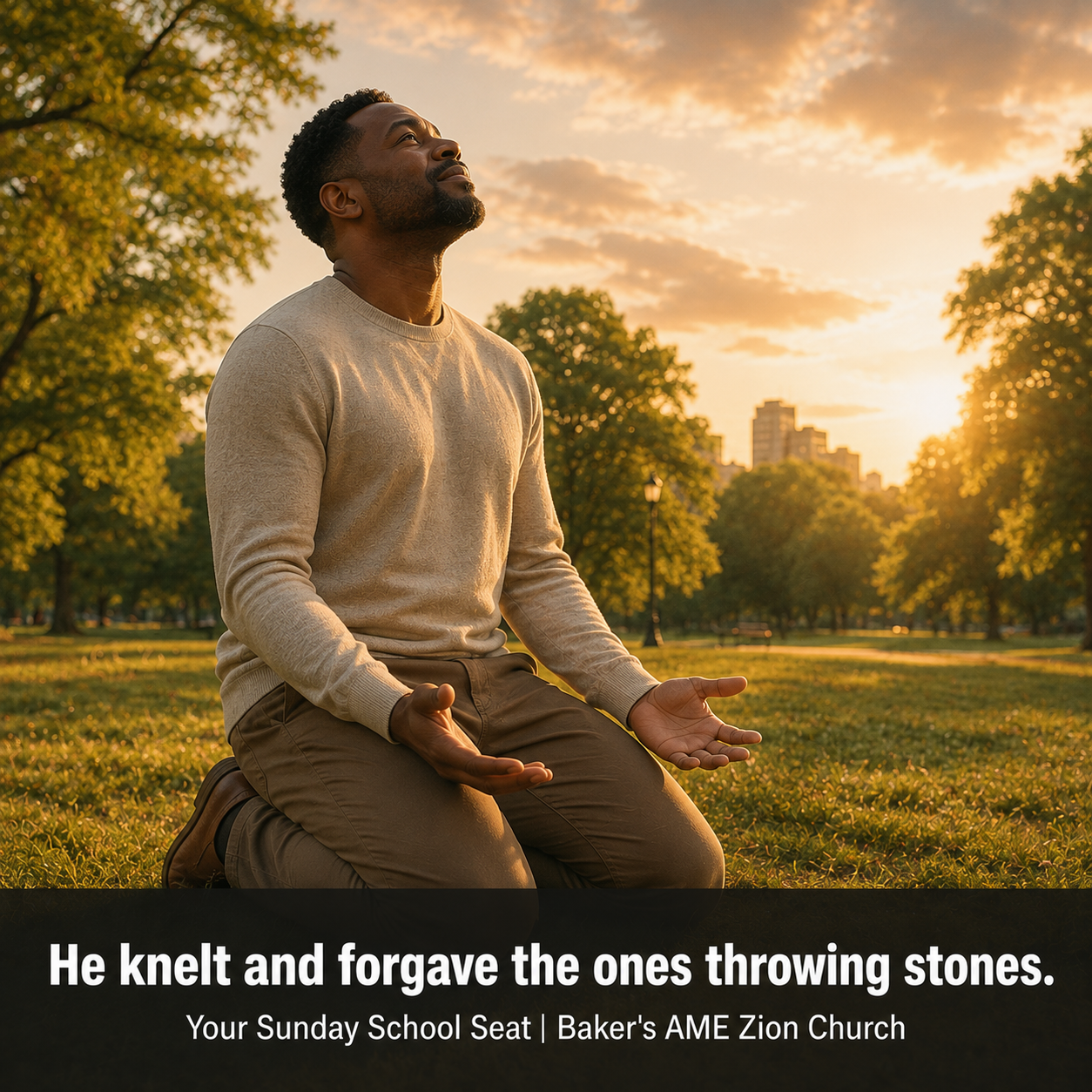
Watch what the Spirit produces in him under the stones. Not panic. Not cursing. Two prayers. First, Lord Jesus, receive my spirit — the same trust Jesus showed on the cross, now on Stephen's lips. Then, on his knees, in a loud voice so no one could miss it, Lord, lay not this sin to their charge. He forgave his killers from the ground. That is the fruit of a life full of the Holy Spirit: a man being murdered, using his final breath to ask God to spare his murderers.
And Luke slips in a name almost in passing — the witnesses laid their coats at the feet of a young man named Saul. That young man is holding the coats, approving the death. He will become Paul, who wrote much of the New Testament and carried the gospel across the world. Stephen never saw it, but his death planted a seed in the very man overseeing it. His prayer, lay not this sin to their charge, was answered in a way he couldn't have imagined — beginning with Saul.
This is why our whole week matters. The crowd around the throne, the overcomers with their blood-and-testimony victory, the grateful and steadfast witnesses of Psalm 116, the courage of the sermon — all of it converges here. Stephen shows us that a faithful witness isn't finally about winning the argument or even surviving. It's about looking like Jesus, all the way to the end. He interpreted Christianity not just with his words but with his dying, and the church has never forgotten it.
For us, the lesson comes home gently. Most of us won't be asked to die for our faith. But we're all asked to forgive people who don't deserve it, to trust God when the situation looks like defeat, and to keep our eyes on heaven when the ground is hard. Stephen fell asleep — that's Luke's tender word for it — as peacefully as a tired man at the end of a long day. That peace is available to anyone whose eyes are fixed where his were.
Thought for the Day
He knelt and forgave the ones throwing stones.
Reflection Question
Who do you need the Spirit's help to forgive — not because they deserve it, but because Christ forgave you?
Prayer
Lord Jesus, thank You for standing to welcome Your faithful ones home, and for a witness like Stephen who showed us what it looks like to die forgiving. Fill us with the same Spirit, so that when we are wronged we can bless instead of curse, and when the ground is hard we can still see heaven open. Plant seeds through our faithfulness that we may never live to see. Receive us, keep us, and make us look like You. Amen.
Today is Sunday school. We save you a seat.
Saturday, August 8 — Telling the Truth Anyway
The hardest words to say are often true ones — spoken to people who have already made up their minds not to hear them. Today Stephen does exactly that.
Acts 7:1, 44-53 — KJV
1 Then said the high priest, Are these things so? 44 Our fathers had the tabernacle of witness in the wilderness, as he had appointed, speaking unto Moses, that he should make it according to the fashion that he had seen. 45 Which also our fathers that came after brought in with Jesus into the possession of the Gentiles, whom God drave out before the face of our fathers, unto the days of David; 46 Who found favour before God, and desired to find a tabernacle for the God of Jacob. 47 But Solomon built him an house. 48 Howbeit the most High dwelleth not in temples made with hands; as saith the prophet, 49 Heaven is my throne, and earth is my footstool: what house will ye build me? saith the Lord: or what is the place of my rest? 50 Hath not my hand made all these things? 51 Ye stiffnecked and uncircumcised in heart and ears, ye do always resist the Holy Ghost: as your fathers did, so do ye. 52 Which of the prophets have not your fathers persecuted? and they have slain them which shewed before of the coming of the Just One; of whom ye have been now the betrayers and murderers: 53 Who have received the law by the disposition of angels, and have not kept it.
Acts 7:1, 44-53 — WEB
1 The high priest said, "Are these things so?" 44 "Our fathers had the tabernacle of the testimony in the wilderness, even as he who spoke to Moses commanded him to make it according to the pattern that he had seen; 45 which also our fathers, in their turn, brought in with Joshua when they entered into the possession of the nations, whom God drove out before the face of our fathers, to the days of David, 46 who found favor in the sight of God, and asked to find a habitation for the God of Jacob. 47 But Solomon built him a house. 48 However, the Most High doesn't dwell in temples made with hands, as the prophet says, 49 'heaven is my throne, and the earth a footstool for my feet. What kind of house will you build me?' says the Lord. 'Or what is the place of my rest? 50 Didn't my hand make all these things?' 51 "You stiff-necked and uncircumcised in heart and ears, you always resist the Holy Spirit! As your fathers did, so you do. 52 Which of the prophets didn't your fathers persecute? They killed those who foretold the coming of the Righteous One, of whom you have now become betrayers and murderers. 53 You received the law as it was ordained by angels, and didn't keep it!"
Explanation
The high priest asks Stephen one question: are these things so? And instead of scrambling to save his own skin, Stephen preaches the longest sermon in the book of Acts. Our reading catches the closing stretch of it. He walks through Israel's history — the tabernacle in the wilderness, the entry into the land under Joshua, David's longing to build God a house, Solomon actually building it. Then he lands a point his hearers didn't want to face: the Most High doesn't live in a building made by human hands. Their pride in the temple had quietly become a substitute for obeying the God the temple was supposed to honor.
Then Stephen stops being gentle. Ye stiffnecked, he says, uncircumcised in heart and ears — you always resist the Holy Ghost. He tells them the plain, uncomfortable truth: they are standing in a long line of people who persecuted the prophets and have now betrayed and murdered the Righteous One those prophets pointed to. He had the law, and he didn't keep it. This is not the speech of a man trying to get released. It's the speech of a man who has decided that the truth matters more than his own safety.
That's why our lesson calls him a courageous witness. Courage here isn't a lack of fear; it's the decision to say what's true when everything in the room is pressuring you to soften it, spin it, or swallow it. Stephen could have hedged. He could have found a diplomatic exit. Instead he loved these people enough to tell them the very thing they most needed and least wanted to hear.
The thread to tomorrow is almost unbearable: this is the sermon that gets him killed. Sunday we'll watch the stones fall. But sit with the courage of it today, because it asks something of us. Most of us will never face a council, but we face the smaller, daily version constantly. The truth we don't say at the dinner table to keep the peace. The wrong we notice at work and decide not to name. The apology we owe and keep postponing. The faith we keep quiet about so we won't seem strange.
Courageous witness rarely feels heroic in the moment. It feels like a dry mouth and a racing heart and the strong temptation to just let it go. Stephen shows us the other road — telling the truth anyway, in love, and leaving the outcome to God. The world has never had too many people willing to do that.
Thought for the Day
Courage tells the truth even when it costs everything.
Reflection Question
What true thing have you been leaving unsaid because saying it feels too costly?
Prayer
Lord, give us Stephen's kind of courage — not the reckless kind, but the loving kind that tells hard truths because people matter more than our comfort. Forgive us for the times we stayed quiet to keep the peace when You were asking us to speak. Loosen our stiff necks and open our ears to Your Spirit. And when telling the truth costs us something, help us leave the outcome in Your hands. Amen.
This week we walk toward Sunday's lesson: Stephen, An Early Interpreter of Christianity.
Friday, August 7 — Believing Out Loud
It's one thing to believe something quietly. It's another to say it out loud when life has given you every reason to go silent. Today's psalm keeps going right into that harder place.
Psalm 116:10-19 — KJV
10 I believed, therefore have I spoken: I was greatly afflicted: 11 I said in my haste, All men are liars. 12 What shall I render unto the LORD for all his benefits toward me? 13 I will take the cup of salvation, and call upon the name of the LORD. 14 I will pay my vows unto the LORD now in the presence of all his people. 15 Precious in the sight of the LORD is the death of his saints. 16 O LORD, truly I am thy servant; I am thy servant, and the son of thine handmaid: thou hast loosed my bonds. 17 I will offer to thee the sacrifice of thanksgiving, and will call upon the name of the LORD. 18 I will pay my vows unto the LORD now in the presence of all his people, 19 In the courts of the LORD's house, in the midst of thee, O Jerusalem. Praise ye the LORD.
Psalm 116:10-19 — WEB
10 I believed, therefore I said, "I was greatly afflicted." 11 I said in my haste, "All men are liars." 12 What will I give to Yahweh for all his benefits toward me? 13 I will take the cup of salvation, and call on Yahweh's name. 14 I will pay my vows to Yahweh, yes, in the presence of all his people. 15 Precious in Yahweh's sight is the death of his saints. 16 Yahweh, truly I am your servant. I am your servant, the son of your servant girl. You have freed me from my chains. 17 I will offer to you the sacrifice of thanksgiving, and will call on Yahweh's name. 18 I will pay my vows to Yahweh, yes, in the presence of all his people, 19 in the courts of Yahweh's house, in the middle of you, Jerusalem. Praise Yah!
Explanation
The second half of Psalm 116 turns yesterday's gratitude into something sturdier: a steadfast witness. Verse 10 sets the tone — I believed, therefore have I spoken. The psalmist didn't wait until he felt strong to open his mouth. He spoke his faith while he was still greatly afflicted, still shaken, still fresh off a moment when he blurted out in his panic that all men are liars. That's an honest detail. He isn't pretending he handled his trouble perfectly. He's saying that even in the mess, faith found its voice.
Then comes the question every grateful heart eventually asks: what shall I render unto the LORD for all his benefits toward me? How do you pay God back for grace? The psalmist's answer is beautiful because it doesn't try to. He doesn't offer to settle the account. He lifts the cup of salvation — he receives even more — and he keeps calling on the name of the Lord. The only way to honor a gift you can't repay is to keep receiving it and keep giving thanks in public.
Verse 15 is one of the most quietly powerful lines in the psalms: precious in the sight of the LORD is the death of his saints. Hold that next to where the week is going. Tomorrow and Sunday we watch Stephen die for his faith. To the mob, his death looked like a disaster and a disgrace. But heaven's ledger reads differently — the death of God's faithful ones is precious, weighty, honored in His sight. Not wasted. Not forgotten. Held close.
And notice the setting of this steadfast witness. Four times the psalmist insists he'll pay his vows in the presence of all his people, in the courts of the Lord's house. His faith isn't a private arrangement he keeps to himself. It's lived out loud, in the congregation, where others can see it and be strengthened. That's what steadfastness looks like — not gritting your teeth alone, but showing up among God's people and testifying to what He's done.
For your Friday, the challenge is simple and hard. Believe, therefore speak. Don't wait for the affliction to fully lift before you say what God has done. Somebody near you is barely hanging on and needs to hear an ordinary person say, out loud, "He freed me from my chains." Your steadfast witness — thankful, public, honest about the struggle — might be the exact thing that keeps someone else from going under this weekend.
Thought for the Day
I believed, so I spoke — even while afflicted.
Reflection Question
What has God done for you that you've been keeping private, when someone around you needs to hear it out loud?
Prayer
Lord, we believe, so help us speak — even before the struggle fully lifts. Thank You for loosing our chains and lifting the cup of salvation to us again and again. Teach us to render our thanks not in secret but among Your people, where our witness can strengthen somebody else. And thank You that even the hardest losses are precious in Your sight. Praise the Lord. Amen.
This week we walk toward Sunday's lesson: Stephen, An Early Interpreter of Christianity.
Thursday, August 6 — He Heard My Voice
There's a particular kind of relief that comes when someone finally listens — really listens — to what you've been carrying. Today's psalm is written by a man fresh out of that moment.
Psalm 116:1-9 — KJV
1 I love the LORD, because he hath heard my voice and my supplications. 2 Because he hath inclined his ear unto me, therefore will I call upon him as long as I live. 3 The sorrows of death compassed me, and the pains of hell gat hold upon me: I found trouble and sorrow. 4 Then called I upon the name of the LORD; O LORD, I beseech thee, deliver my soul. 5 Gracious is the LORD, and righteous; yea, our God is merciful. 6 The LORD preserveth the simple: I was brought low, and he helped me. 7 Return unto thy rest, O my soul; for the LORD hath dealt bountifully with thee. 8 For thou hast delivered my soul from death, mine eyes from tears, and my feet from falling. 9 I will walk before the LORD in the land of the living.
Psalm 116:1-9 — WEB
1 I love Yahweh, because he listens to my voice, and my cries for mercy. 2 Because he has turned his ear to me, therefore I will call on him as long as I live. 3 The cords of death surrounded me, the pains of Sheol got a hold of me. I found trouble and sorrow. 4 Then I called on Yahweh's name: "Yahweh, I beg you, deliver my soul." 5 Yahweh is gracious and righteous. Yes, our God is merciful. 6 Yahweh preserves the simple. I was brought low, and he saved me. 7 Return to your rest, my soul, for Yahweh has dealt bountifully with you. 8 For you have delivered my soul from death, my eyes from tears, and my feet from falling. 9 I will walk before Yahweh in the land of the living.
Explanation
After two days in Revelation and one in the courtroom with Stephen, today's reading feels like sitting down at the kitchen table with an old friend who just came through something hard. Psalm 116 is a thank-you note. Somebody was in real trouble — the cords of death wrapped around him, trouble and sorrow closing in — and he cried out, and God heard, and now he can't stop talking about it.
Look at how the psalm begins. Not "I love the Lord because He's powerful" or "because He's holy," true as those are. It says, I love the Lord because he heard my voice. This is love born from an experience — the deeply personal discovery that when he called, God bent down to listen. The Hebrew picture is of God inclining His ear, leaning in the way you lean toward a child whispering something important. The God who runs the universe turned His head to catch one desperate voice.
This is what our lesson calls a grateful witness. All week the readings have shown us costly, courageous testimony. Today reminds us that witness isn't only what you say in the hard moments; it's the gratitude that pours out after God brings you through. Stephen could face a hostile council with peace because he already knew this God — the One who hears, who preserves the humble, who deals bountifully with people who were brought low. You can't testify with that kind of steadiness unless you've first been on the receiving end of grace.
And notice verse 7, where the psalmist actually talks to himself: Return unto thy rest, O my soul. Sometimes faith means preaching to your own anxious heart, reminding it of what God has already done before it spins out again. He lists the receipts — delivered from death, eyes wiped of tears, feet kept from falling. Then he makes a decision about the future: I will walk before the LORD in the land of the living. Gratitude that stays in the past is just a memory. Gratitude that shapes how you'll live going forward becomes a witness.
For your Thursday, this is an invitation to remember out loud. Think back over this year — the prayer that got answered, the bill that somehow got covered, the diagnosis that wasn't what you feared, the morning you woke up still standing. God heard your voice. He inclined His ear to you. So the honest response isn't just relief; it's love, and a life that walks before Him in gratitude for as long as you've got breath.
Thought for the Day
God bent down to listen, so I keep calling.
Reflection Question
What specific answered prayer can you thank God for out loud today, before the day gets away from you?
Prayer
Gracious God, thank You for inclining Your ear when we called — for hearing a voice the world often overlooks. You have delivered us from more than we even know, kept our feet from falling, and dealt bountifully with us. Teach our anxious hearts to return to their rest in You. However long we have in the land of the living, let us walk it before You with gratitude. Amen.
This week we walk toward Sunday's lesson: Stephen, An Early Interpreter of Christianity.
Wednesday, August 5 — Wisdom They Couldn't Beat
Some people have a way of speaking that stops a room. Not because they're loud, but because there's something behind the words you can't argue with. Today we meet the man who had it.
Acts 6:7-14 — KJV
7 And the word of God increased; and the number of the disciples multiplied in Jerusalem greatly; and a great company of the priests were obedient to the faith. 8 And Stephen, full of faith and power, did great wonders and miracles among the people. 9 Then there arose certain of the synagogue, which is called the synagogue of the Libertines, and Cyrenians, and Alexandrians, and of them of Cilicia and of Asia, disputing with Stephen. 10 And they were not able to resist the wisdom and the spirit by which he spake. 11 Then they suborned men, which said, We have heard him speak blasphemous words against Moses, and against God. 12 And they stirred up the people, and the elders, and the scribes, and came upon him, and caught him, and brought him to the council, 13 And set up false witnesses, which said, This man ceaseth not to speak blasphemous words against this holy place, and the law: 14 For we have heard him say, that this Jesus of Nazareth shall destroy this place, and shall change the customs which Moses delivered us.
Acts 6:7-14 — WEB
7 The word of God increased and the number of the disciples greatly multiplied in Jerusalem. A great company of the priests were obedient to the faith. 8 Stephen, full of faith and power, performed great wonders and signs among the people. 9 But some of those who were of the synagogue called "The Libertines", and of the Cyrenians, of the Alexandrians, and of those of Cilicia and Asia arose, disputing with Stephen. 10 They weren't able to withstand the wisdom and the Spirit by which he spoke. 11 Then they secretly induced men to say, "We have heard him speak blasphemous words against Moses and God." 12 They stirred up the people, the elders, and the scribes, and came against him and seized him, and brought him in to the council, 13 and set up false witnesses who said, "This man never stops speaking blasphemous words against this holy place and the law. 14 For we have heard him say that this Jesus of Nazareth will destroy this place, and will change the customs which Moses delivered to us."
Explanation
Now we come to Sunday's man himself. A few verses earlier, Stephen had been chosen for what sounds like a thankless assignment — making sure the widows in the church got fed fairly. It was, in the plainest sense, a dirty job, the kind of behind-the-scenes work nobody writes songs about. But watch what God does with a man who's faithful in the unglamorous task. The same Stephen who waited tables is now full of faith and power, doing wonders among the people and speaking with a wisdom his opponents simply cannot beat.
Verse 10 is the hinge. They weren't able to resist the wisdom and the Spirit by which he spoke. This wasn't debate-club cleverness. It was the Holy Spirit speaking through an ordinary man, and it left the smartest men in the room with no comeback. So they did what people often do when they can't win the argument — they changed the game. If you can't beat the wisdom, discredit the person. They bribed men to lie, stirred up a crowd, and hauled Stephen before the council on charges built from twisted half-truths.
That move should feel familiar, because it still happens. When someone can't answer what you're saying, they go after who you are. They question your motives, dig up your past, put words in your mouth. Stephen learned what many faithful witnesses learn: doing right and speaking truth does not guarantee applause. Sometimes it guarantees opposition.
But don't miss the quiet victory tucked into the same passage. Verse 7 says the word of God kept increasing and even a great company of priests came to the faith. Stephen's boldness wasn't happening in a vacuum — the church was growing, and hardened religious insiders were being won. The opposition was loud, but the kingdom was spreading anyway.
The thread to Sunday is clear now: Stephen is the Spirit-filled witness who tells the truth even when it turns the room against him. And the lesson for us lands close to home. You may never stand before a council, but you'll have your own moments — a meeting, a family conversation, a stand at work — where telling the truth costs you goodwill. The invitation isn't to be clever or combative. It's to be full of the Spirit, to speak honestly, and to trust God with the fallout. They could silence Stephen's voice for a while. They could not touch the wisdom that gave it weight.
Thought for the Day
They could silence his voice but not his wisdom.
Reflection Question
Where is God asking you to speak the truth right now, even if it might cost you someone's approval?
Prayer
Lord, make us faithful in the small, unseen jobs the way Stephen was, and fill us with Your Spirit for the moments that ask for courage. When people twist our words or question our hearts, keep us from bitterness and keep us honest. Give us wisdom that comes from You and not just from cleverness. We trust You with whatever the truth costs. Amen.
This week we walk toward Sunday's lesson: Stephen, An Early Interpreter of Christianity.
Tuesday, August 4 — How Heaven Wins
We talk a lot about winning, but we rarely stop to ask how the victories that actually last get won. Today's reading pulls back the curtain on a battle most of us never see.
Revelation 12:7-11 — KJV
7 And there was war in heaven: Michael and his angels fought against the dragon; and the dragon fought and his angels, 8 And prevailed not; neither was their place found any more in heaven. 9 And the great dragon was cast out, that old serpent, called the Devil, and Satan, which deceiveth the whole world: he was cast out into the earth, and his angels were cast out with him. 10 And I heard a loud voice saying in heaven, Now is come salvation, and strength, and the kingdom of our God, and the power of his Christ: for the accuser of our brethren is cast down, which accused them before our God day and night. 11 And they overcame him by the blood of the Lamb, and by the word of their testimony; and they loved not their lives unto the death.
Revelation 12:7-11 — WEB
7 There was war in the sky. Michael and his angels made war on the dragon. The dragon and his angels made war. 8 They didn't prevail. No place was found for them any more in heaven. 9 The great dragon was thrown down, the old serpent, he who is called the devil and Satan, the deceiver of the whole world. He was thrown down to the earth, and his angels were thrown down with him. 10 I heard a loud voice in heaven, saying, "Now the salvation, the power, and the Kingdom of our God, and the authority of his Christ has come; for the accuser of our brothers has been thrown down, who accuses them before our God day and night. 11 They overcame him because of the Lamb's blood, and because of the word of their testimony. They didn't love their life, even to death.
Explanation
Yesterday we saw the crowd of witnesses safe around the throne. Today we find out what they came through — because behind the visible struggles of the church stands an invisible one, and John names it plainly. There was war. The dragon, the old serpent, the accuser, is thrown down and loses his place. This is old imagery, and John's readers would have caught the echo: the serpent from the garden, the deceiver from the beginning, finally running out of ground to stand on.
The most important detail is what the accuser does for a living. He accuses. Day and night, verse 10 says, he stands before God pointing at the brothers and sisters. That is his whole job — to remind God and to remind you of every failure with your name on it. Some of us know that voice well. It shows up at 3 a.m. and reads the list: the thing you said, the person you let down, the habit you can't seem to beat. It never runs out of material.
So how does he lose? Verse 11 gives the answer in a line worth memorizing. They overcame him by the blood of the Lamb, and by the word of their testimony, and they loved not their lives unto the death. Two weapons and a posture. First, the blood of the Lamb — the accuser's charges are answered not by our record but by Christ's. When he points at your sin, grace points at the cross. Second, the word of their testimony — the plain, out-loud confession of what God has done. And underneath both, a heart that no longer clings to its own comfort at any cost.
Here's where the week is heading. Stephen is about to overcome by exactly these means. He won't out-argue his enemies into silence forever; they'll stone him. But he holds the blood of the Lamb, he speaks his testimony to the end, and he does not love his life more than his Lord. By heaven's math, that is how the battle is won — not by staying alive, but by staying faithful.
For your Tuesday, take the weapon that fits. When the accuser reads your list, you don't have to argue the facts. You answer with the blood of the Lamb and the testimony of what God has already done in your life. That voice has already lost its place. It just hasn't stopped talking yet.
Thought for the Day
We overcome by the blood and by our testimony.
Reflection Question
What accusation replays in your mind, and how would answering it with the blood of the Lamb change how you carry it?
Prayer
Father, we know the voice that accuses — it is loud and it is relentless. Thank You that the accuser has already been thrown down, and that his charges are answered by the blood of Your Son. Teach us to overcome by that blood and by our testimony, and to hold what we love most in open hands. Quiet the 3 a.m. voice with Your truth. Amen.
This week we walk toward Sunday's lesson: Stephen, An Early Interpreter of Christianity.
Monday, August 3 — A Crowd No One Can Count
Close your eyes for a second and picture the biggest crowd you've ever been part of — a stadium, a march, a family reunion that outgrew the backyard. Now imagine one so large that nobody, not one person, could ever count it.
Revelation 7:9-10, 13-17 — KJV
9 After this I beheld, and, lo, a great multitude, which no man could number, of all nations, and kindreds, and people, and tongues, stood before the throne, and before the Lamb, clothed with white robes, and palms in their hands; 10 And cried with a loud voice, saying, Salvation to our God which sitteth upon the throne, and unto the Lamb. 13 And one of the elders answered, saying unto me, What are these which are arrayed in white robes? and whence came they? 14 And I said unto him, Sir, thou knowest. And he said to me, These are they which came out of great tribulation, and have washed their robes, and made them white in the blood of the Lamb. 15 Therefore are they before the throne of God, and serve him day and night in his temple: and he that sitteth on the throne shall dwell among them. 16 They shall hunger no more, neither thirst any more; neither shall the sun light on them, nor any heat. 17 For the Lamb which is in the midst of the throne shall feed them, and shall lead them unto living fountains of waters: and God shall wipe away all tears from their eyes.
Revelation 7:9-10, 13-17 — WEB
9 After these things I looked, and behold, a great multitude, which no man could number, out of every nation and of all tribes, peoples, and languages, standing before the throne and before the Lamb, dressed in white robes, with palm branches in their hands. 10 They cried with a loud voice, saying, "Salvation be to our God, who sits on the throne, and to the Lamb!" 13 One of the elders answered, saying to me, "These who are arrayed in the white robes, who are they, and where did they come from?" 14 I told him, "My lord, you know." He said to me, "These are those who came out of the great tribulation. They washed their robes, and made them white in the Lamb's blood. 15 Therefore they are before the throne of God, and they serve him day and night in his temple. He who sits on the throne will spread his tabernacle over them. 16 They will never be hungry or thirsty any more. The sun won't beat on them, nor any heat; 17 for the Lamb who is in the middle of the throne shepherds them and leads them to springs of waters of life. And God will wipe away every tear from their eyes."
Explanation
This week our Sunday school lesson introduces Stephen, and the daily readings build toward it by asking a single question over and over: what does a faithful witness actually look like? John's vision in Revelation answers by showing us the finish line first. Before we meet anyone who suffered, before we watch anyone stand trial, we're shown where all the faithful end up — gathered around the throne, robed in white, holding palm branches like a victory parade that never ends.
The scene was written to a church under pressure. The believers John wrote to knew what it was to lose a job over their faith, to be shut out of the market, to be watched by suspicious neighbors. Into that fear John drops a picture: an uncountable crowd from every nation and language, which means nobody who belongs to the Lamb gets left off the roll. The elder asks who they are, and the answer is tender — these are the ones who came out of great tribulation. Not around it. Through it. Their robes are white not because their lives were easy but because they were washed in the blood of the Lamb.
Notice what heaven promises them. No more hunger. No more thirst. No more scorching heat beating down on tired people. And the line that has carried grieving families through a thousand funerals: God shall wipe away all tears from their eyes. That's not a distant God. That's a God close enough to reach your face.
Here's the thread to Sunday. Stephen will be dragged before a council and lose his life for telling the truth about Jesus. If you only read his story on its own, it looks like a defeat. But Revelation shows you what Stephen saw — that the witness who suffers here is received there. The crowd around the throne is made up of people exactly like him.
For us, this passage steadies the week before it starts. Maybe you're tired. Maybe the bills, the diagnosis, the worry over a child have you feeling like you're barely holding your robe together. This chapter says the story isn't over, and it isn't ending where you fear. There's a seat in that crowd with your name on it, and the One on the throne already knows your face and the tears He intends to wipe away.
Thought for the Day
Every faithful witness ends up standing before the throne.
Reflection Question
When life feels like all tribulation and no relief, what would change if you truly believed the ending God has promised?
Prayer
Lord, when the week ahead already feels heavy, remind us how the story ends. Wash what is stained in us, and steady our hands when we feel like we're barely holding on. Thank You that no faithful witness is ever lost in the crowd — You know each of us by name. Keep our eyes on the throne. Amen.
This week we walk toward Sunday's lesson: Stephen, An Early Interpreter of Christianity.
August 3 - 9,2026 - Stephen: The Life and Legacy of a Faithful Witness
This week on Your Sunday School Seat, we walk from the throne room of Revelation all the way to a hard hill outside Jerusalem, tracing one question through all seven days: what does a faithful witness really look like? We begin at the finish line with the uncountable crowd already safe around the throne, learn how the overcomers win by the blood of the Lamb and the word of their testimony, sit with the gratitude and steadfastness of Psalm 116, and watch Stephen speak with Spirit-filled courage before forgiving his own killers from the ground. It all builds toward Sunday's lesson, "Stephen, An Early Interpreter of Christianity" — a man who preached the gospel with his life and his death. Watch, then come join us for Sunday school.
Monday — Witness around the Throne (Revelation 7:9-10, 13-17)
Tuesday — Overcoming Witness (Revelation 12:7-11)
Wednesday — Spirit-filled Witness (Acts 6:7-14)
Thursday — Grateful Witness (Psalm 116:1-9)
Friday — Steadfast Witness (Psalm 116:10-19)
Saturday — Courageous Witness (Acts 7:1, 44-53)
Sunday — The Witness of Martyrdom (Acts 7:54-60)
Your Sunday School Seat | Baker's AME Zion Church — We Save You a Seat
#YourSundaySchoolSeat #AMEZion #DailyDevotional #Faith #BlackChurch #Stephen
Sunday, August 2 — My Lord and My God
Everybody has been the one left out of the group chat when the big news broke — everyone else already knows, already celebrated, and you're the last to hear it secondhand. That's Thomas, for a whole week. And Jesus goes back for him.
John 20:24-29 — KJV 24 But Thomas, one of the twelve, called Didymus, was not with them when Jesus came. 25 The other disciples therefore said unto him, We have seen the Lord. But he said unto them, Except I shall see in his hands the print of the nails, and put my finger into the print of the nails, and thrust my hand into his side, I will not believe. 26 And after eight days again his disciples were within, and Thomas with them: then came Jesus, the doors being shut, and stood in the midst, and said, Peace be unto you. 27 Then saith he to Thomas, reach hither thy finger, and behold my hands; and reach hither thy hand, and thrust it into my side: and be not faithless, but believing. 28 And Thomas answered and said unto him, My Lord and my God. 29 Jesus saith unto him, Thomas, because thou hast seen me, thou hast believed: blessed are they that have not seen, and yet have believed.
John 20:24-29 — WEB 24 But Thomas, one of the twelve, called Didymus, wasn't with them when Jesus came. 25 The other disciples therefore said to him, "We have seen the Lord!" But he said to them, "Unless I see in his hands the print of the nails, put my finger into the print of the nails, and put my hand into his side, I will not believe." 26 After eight days again his disciples were inside, and Thomas was with them. Jesus came, the doors being locked, and stood in the middle, and said, "Peace be to you." 27 Then he said to Thomas, "Reach here your finger, and see my hands. Reach here your hand, and put it into my side. Don't be unbelieving, but believing." 28 Thomas answered him, "My Lord and my God!" 29 Jesus said to him, "Because you have seen me, you have believed. Blessed are those who have not seen, and have believed."
Explanation
A week has passed since that first locked-room appearance, and Thomas has spent every day of it hearing "we have seen the Lord" from ten people he trusts, and still not believing it. That's worth sitting with. Thomas isn't a stranger to the resurrection story or a skeptic by nature — he's watched Jesus raise Lazarus, he's followed Him toward Jerusalem even when he expected it to mean death. He's not doubting because he's faithless. He's doubting because the claim is enormous and he wasn't there to see it.
So he says exactly what he needs: nail prints, his finger, his hand in Jesus's side. It's blunt, even a little defiant. And when Jesus finally does appear eight days later, He doesn't lecture Thomas for setting conditions. He meets every single one of them. Reach here your finger. See my hands. Put your hand in my side. Jesus gives Thomas precisely what he asked for, offered without a hint of resentment.
Thomas's response is the highest confession of who Jesus is anywhere in John's Gospel: My Lord and my God. Not just "you're alive," but a direct declaration of Jesus's divinity. The honest doubter ends up making the boldest statement of faith in the entire book. That's not a contradiction — it's the point. Real faith doesn't require pretending the questions were never asked. Sometimes the most rock-solid belief is the kind that had to work its way through real doubt to get there.
And then Jesus adds one more line, and this is the one aimed straight at us: blessed are those who have not seen, and yet have believed. That's every reader of this devotional. We don't get nail prints. We get a story, passed down, and an invitation to trust it anyway. This whole week has walked toward this moment — seeking while He's near, extending mercy to doubters, asking honest questions about the way, calling on God for real instead of performing faith, searching for Him even from a distance, trusting the peace He offers behind locked doors. Thomas shows us it's possible to doubt honestly and still end up kneeling. That's the invitation today, too.
Thought for the Day You don't need proof to be blessed — just belief.
Reflection Question What would it take for you to move from "we have seen the Lord" being someone else's story to being your own confession, "My Lord and my God"?
Prayer Lord, we haven't seen the nail prints, but we've seen You work in enough of our lives to believe You're real. Meet us in our honest doubts the way You met Thomas — without shame, with exactly what we need. Turn our questions into confession. We say with him today: My Lord and my God. Amen.
Today is Sunday school. We save you a seat.
Saturday, August 1 — Peace Before the Sending
There's a room full of people afraid to open the door, and Jesus doesn't wait for them to unlock it. He just shows up in the middle of the room, and the first thing out of His mouth is peace.
John 20:19-23 — KJV 19 Then the same day at evening, being the first day of the week, when the doors were shut where the disciples were assembled for fear of the Jews, came Jesus and stood in the midst, and saith unto them, Peace be unto you. 20 And when he had so said, he shewed unto them his hands and his side. Then were the disciples glad, when they saw the Lord. 21 Then said Jesus to them again, Peace be unto you: as my Father hath sent me, even so send I you. 22 And when he had said this, he breathed on them, and saith unto them, Receive ye the Holy Ghost: 23 Whose soever sins ye remit, they are remitted unto them; and whose soever sins ye retain, they are retained.
John 20:19-23 — WEB 19 When therefore it was evening, on that day, the first day of the week, and when the doors were locked where the disciples were assembled, for fear of the Jews, Jesus came and stood in the middle, and said to them, "Peace be to you." 20 When he had said this, he showed them his hands and his side. The disciples therefore were glad when they saw the Lord. 21 Jesus therefore said to them again, "Peace be to you. As the Father has sent me, even so I send you." 22 When he had said this, he breathed on them, and said to them, "Receive the Holy Spirit! 23 If you forgive anyone's sins, they have been forgiven them. If you retain anyone's sins, they have been retained."
Explanation
It's Easter evening, and the disciples are hiding — doors locked, afraid the people who killed Jesus are coming for them next. Into that locked room, Jesus simply appears. No knock, no explanation for how He got in. He speaks peace over a room full of fear, shows them the wounds that prove it's really Him, and then does something remarkable: He commissions them. As the Father sent me, so I send you. He breathes on them, gives them the Spirit, and hands them real authority — to carry forgiveness out into the world.
Notice what's easy to miss here: Thomas isn't in the room. John will tell us explicitly in tomorrow's passage that he "was not with them when Jesus came." Whatever he was doing that evening, he missed the single most important moment of his life, through no dramatic fault of his own — just an absence. The other ten got to see the wounds, hear the peace, receive the sending. Thomas got a secondhand report.
This is the hinge the whole week has been swinging toward. Everything about doubt, distance, exile, and seeking has been building to this exact gap — the gap between the ones who were in the room and the one who wasn't. Sunday's lesson topic asks, "I'll see it when I believe it," but this passage flips the order for ten of the disciples: they believed because they saw. Thomas is about to be asked to do something harder.
There's real comfort here too, though, for anyone who's ever felt like they missed the moment — the healing that happened at a service you didn't attend, the answered prayer you heard about after the fact instead of living it firsthand. Being sent doesn't require having seen everything. The peace Jesus speaks over that locked room is available even to those of us hearing about it two thousand years and one Bible verse later. He still comes to locked rooms. He still sends. And tomorrow's story is proof that missing the room isn't the end of things — Jesus is already planning to go back for the one who wasn't there.
Thought for the Day Even behind locked doors, Jesus still finds His way to you.
Reflection Question Where in your life do you feel like you "missed the room" — and what would it mean to trust the peace Jesus offers anyway?
Prayer Lord, You don't need our doors unlocked to bring peace into our fear. Come into the rooms where we've shut ourselves in. Send us the way You sent them — not because we've seen everything, but because You've called us. Breathe Your Spirit on us today. Amen.
This week we walk toward Sunday's lesson: Thomas, The Honest Doubter.
Friday, July 31 — Even From Exile, He's Found

Every family has a season they'd rather not talk about — the scattered years, the far-from-home years. Moses says even those years aren't outside the reach of God finding His way back to you.
Deuteronomy 4:27-31 — KJV 27 And the LORD shall scatter you among the nations, and ye shall be left few in number among the heathen, whither the LORD shall lead you. 28 And there ye shall serve gods, the work of men's hands, wood and stone, which neither see, nor hear, nor eat, nor smell. 29 But if from thence thou shalt seek the LORD thy God, thou shalt find him, if thou seek him with all thy heart and with all thy soul. 30 When thou art in tribulation, and all these things are come upon thee, even in the latter days, if thou turn to the LORD thy God, and shalt be obedient unto his voice; 31 (For the LORD thy God is a merciful God;) he will not forsake thee, neither destroy thee, nor forget the covenant of thy fathers which he sware unto them.
Deuteronomy 4:27-31 — WEB 27 Yahweh will scatter you among the peoples, and you will be left few in number among the nations, where Yahweh will lead you away. 28 There you shall serve gods, the work of men's hands, wood and stone, which neither see, nor hear, nor eat, nor smell. 29 But from there you shall seek Yahweh your God, and you shall find him, when you search after him with all your heart and with all your soul. 30 When you are in oppression, and all these things have come on you, in the latter days you shall return to Yahweh your God, and listen to his voice. 31 For Yahweh your God is a merciful God. He will not fail you, neither destroy you, nor forget the covenant of your fathers which he swore to them.
Explanation
This passage comes from Moses's farewell address, delivered to Israel just before they cross into the promised land. He's not just handing them a rulebook — he's warning them what will happen if they drift into idolatry: scattering, exile, life among nations that don't know their God. It's a hard word, and Moses doesn't soften it. But he doesn't end there either. Even in exile, even after failure, verse 29 promises that a wholehearted search will still find God. Verse 31 goes further — God is described as merciful, someone who won't forget the covenant even when His people have forgotten Him.
That's the pivot of this whole passage. Consequences are real. Scattering is real. But so is the promise that distance from God is never the final word for someone who genuinely seeks Him. This isn't a loophole for careless living — it's a lifeline for people who've already wandered and are wondering if it's too late to come back.
This ties back to Monday's invitation to seek while God is near, and it points forward to Thomas, who by Sunday will be about as far from belief as a person can get, at least for a few days. Exile in this passage isn't just geography — it's any season where you feel far from where you're supposed to be spiritually. Thomas experiences his own kind of exile: he's outside the room when Jesus first appears, cut off from the moment everyone else got to share. And yet he's not left there. That's the pattern this whole week is building.
Think about your own exile seasons — the years you drifted, the relationship with God that went quiet, the "far country" seasons that don't always look like anything dramatic from the outside. This passage says the door back isn't locked. A heart and soul that actually seek will find Him, because the God on the other side of your distance is a merciful one, not one keeping score. Whatever scattered you — grief, busyness, hurt from the church, plain old drift — Moses's promise still stands on the other side of it: seek Him fully, and you won't come up empty-handed.
Thought for the Day Even scattered and far off, a wholehearted search still finds Him.
Reflection Question What would it look like to seek God "with all your heart and all your soul" in whatever season you're in right now?
Prayer Merciful God, thank You that our distance from You is never the end of the story. In the seasons we've drifted, draw us back. Give us hearts that seek You wholly, not halfway. We trust Your covenant over our failure. Bring us home. Amen.
This week we walk toward Sunday's lesson: Thomas, The Honest Doubter.
Thursday, July 30 — More Than Empty Ritual

You can show up every Sunday, say all the right words, and still never actually talk to God. This psalm calls that out — and points somewhere better.
Psalm 50:7-15 — KJV 7 Hear, O my people, and I will speak; O Israel, and I will testify against thee: I am God, even thy God. 8 I will not reprove thee for thy sacrifices or thy burnt offerings, to have been continually before me. 9 I will take no bullock out of thy house, nor he goats out of thy folds. 10 For every beast of the forest is mine, and the cattle upon a thousand hills. 11 I know all the fowls of the mountains: and the wild beasts of the field are mine. 12 If I were hungry, I would not tell thee: for the world is mine, and the fulness thereof. 13 Will I eat the flesh of bulls, or drink the blood of goats? 14 Offer unto God thanksgiving; and pay thy vows unto the most High: 15 And call upon me in the day of trouble: I will deliver thee, and thou shalt glorify me.
Psalm 50:7-15 — WEB 7 "Hear, my people, and I will speak; Israel, and I will testify against you. I am God, your God. 8 I don't rebuke you for your sacrifices. Your burnt offerings are continually before me. 9 I have no need for a bull from your stall, nor male goats from your pens. 10 For every animal of the forest is mine, and the livestock on a thousand hills. 11 I know all the birds of the mountains. The wild animals of the field are mine. 12 If I were hungry, I would not tell you, for the world is mine, and all that is in it. 13 Will I eat the meat of bulls, or drink the blood of goats? 14 Offer to God the sacrifice of thanksgiving. Pay your vows to the Most High. 15 Call on me in the day of trouble. I will deliver you, and you will honor me."
Explanation
Psalm 50 is written from God's perspective as judge, calling Israel to account — not for skipping their sacrifices, but for offering them without ever actually meaning it. God isn't hungry. He doesn't need livestock; He already owns every animal on every hill. The sacrifices were never the point. They were supposed to be an outward sign of an inward relationship, and somewhere along the way the sign had replaced the relationship.
Verses 14 and 15 tell us what God actually wants instead: real thanksgiving, kept promises, and a genuine cry to Him in the day of trouble. That last part is the heart of the whole psalm. Anybody can go through religious motions. Fewer people actually call on God when things fall apart and mean it — trusting He's really listening, really able to deliver.
That distinction connects directly to Thomas. Whatever else you want to say about him, Thomas never faked it. He didn't perform belief he didn't have just to fit in with the other ten disciples. He said plainly that he hadn't seen and he wasn't going to pretend otherwise. There's something in that honesty that this psalm actually honors — God has never been impressed by performance. He's after the real thing, even when the real thing is messier than the polished version.
It's worth asking yourself where ritual has quietly replaced relationship in your own life. Maybe it's grace before dinner said on autopilot, or a prayer list you run through without really praying. None of that is wrong on its own — but this psalm is a reminder to check whether you're actually calling on God or just going through the motions of someone who used to. The invitation in verse 15 is still open: call on Him in the day of trouble, and He will deliver you. That's not a formula for getting what you want — it's a promise that when you finally stop performing and actually call, someone is really listening. God was never interested in the show. He's been waiting on the real conversation the whole time.
Thought for the Day God wants your real cry, not your religious performance.
Reflection Question Where in your faith life has ritual quietly taken the place of an actual conversation with God?
Prayer God, we don't want to just go through the motions with You. Search us and show us where we've been performing instead of praying. Thank You that You don't need anything from us — You just want us. In our day of trouble, we're calling on You now, and we trust You to answer. Amen.
Closing Line This week we walk toward Sunday's lesson: Thomas, The Honest Doubter.
Wednesday, July 29 — How Can We Know the Way

Ever been given directions that made perfect sense to the person giving them and no sense at all to you? That's Thomas in this passage — and Jesus doesn't make him feel small for asking.
John 14:1-7 — KJV 1 Let not your heart be troubled: ye believe in God, believe also in me. 2 In my Father's house are many mansions: if it were not so, I would have told you. I go to prepare a place for you. 3 And if I go and prepare a place for you, I will come again, and receive you unto myself; that where I am, there ye may be also. 4 And whither I go ye know, and the way ye know. 5 Thomas saith unto him, Lord, we know not whither thou goest; and how can we know the way? 6 Jesus saith unto him, I am the way, the truth, and the life: no man cometh unto the Father, but by me. 7 If ye had known me, ye should have known my Father also: and from henceforth ye know him, and have seen him.
John 14:1-7 — WEB 1 "Don't let your heart be troubled. Believe in God. Believe also in me. 2 In my Father's house are many homes. If it weren't so, I would have told you. I am going to prepare a place for you. 3 If I go and prepare a place for you, I will come again, and will receive you to myself; that where I am, you may be there also. 4 Where I go, you know, and you know the way." 5 Thomas said to him, "Lord, we don't know where you are going. How can we know the way?" 6 Jesus said to him, "I am the way, the truth, and the life. No one comes to the Father, except through me. 7 If you had known me, you would have known my Father also. From now on, you know him, and have seen him."
Explanation
This is the night before the crucifixion. Jesus is trying to steady a room full of men who are about to watch their world fall apart, and He opens with the gentlest possible instruction: don't let your heart be troubled. He talks about His Father's house, about going ahead to prepare a place, about coming back for them. It's meant to comfort. And then Thomas says out loud what everyone else in the room was probably too afraid to ask: Lord, we don't even know where you're going — so how could we possibly know the way?
This is the first time we really hear Thomas's voice in Scripture, and it tells us exactly who he is. He's not being difficult. He's being honest. He's not going to nod along and pretend he understands something he doesn't. And Jesus doesn't correct him for asking — He answers him directly: I am the way, the truth, and the life. The way isn't a set of directions Thomas failed to follow. The way is a person standing right in front of him.
This matters for where the week is headed. Thomas is going to ask a much bigger, much harder question by Sunday — one that's made him famous for the wrong reasons for two thousand years. But before he's "Doubting Thomas," he's just a disciple asking a fair question in a room full of fear and confusion. Jesus's pattern with him starts here: no shame, just an answer.
Most of us have a version of Thomas's question running underneath our own lives — how do I know I'm headed the right direction, in my marriage, my career, my faith, my grief? We want a map. Jesus offers Himself instead. That's not always the answer we're looking for in the moment, but it's the one that holds. If you're in a season where you genuinely don't know the way, you're in good company. Thomas didn't either, and Jesus met him with an answer, not a rebuke. Notice, too, that Jesus doesn't wait for the room to fall silent and reverent before He speaks. He answers a scared, confused disciple in real time, in the middle of the worst week of his life — which means He's just as willing to answer you in the middle of yours.
Thought for the Day Jesus doesn't shame the question — He becomes the answer.
Reflection Question What's the "how can we know the way" question you're most afraid to ask out loud right now?
Prayer Jesus, like Thomas, we don't always know where we're going, and we need You to be honest with us the way You were with him. Quiet the trouble in our hearts. When we ask hard questions, meet us the way You met Thomas — with an answer, not a rebuke. Be the way when we can't see the way. Amen.
Closing Line This week we walk toward Sunday's lesson: Thomas, The Honest Doubter.
Tuesday, July 28 — Mercy for the Ones Who Doubt

Jude 20-25
Somebody in your life is hanging on by a thread right now — not walking away from faith exactly, just not sure they believe it anymore. Jude has instructions for exactly that person, and for you.
Jude 20-25 — KJV 20 But ye, beloved, building up yourselves on your most holy faith, praying in the Holy Ghost, 21 Keep yourselves in the love of God, looking for the mercy of our Lord Jesus Christ unto eternal life. 22 And of some have compassion, making a difference: 23 And others save with fear, pulling them out of the fire; hating even the garment spotted by the flesh. 24 Now unto him that is able to keep you from falling, and to present you faultless before the presence of his glory with exceeding joy, 25 To the only wise God our Saviour, be glory and majesty, dominion and power, both now and ever. Amen.
Jude 20-25 — WEB 20 But you, beloved, keep building up yourselves on your most holy faith, praying in the Holy Spirit. 21 Keep yourselves in God's love, looking for the mercy of our Lord Jesus Christ to eternal life. 22 On some have compassion, making a distinction, 23 and some save, snatching them out of the fire with fear, hating even the clothing stained by the flesh. 24 Now to him who is able to keep them from stumbling, and to present you faultless before the presence of his glory in great joy, 25 to God our Savior, who alone is wise, be glory and majesty, dominion and power, both now and forever. Amen.
Explanation
Jude is a short letter, easy to skip past, written to a church wrestling with false teachers pulling people away from the faith. But it closes with something tender and practical: instructions for how to treat people at different stages of doubt and drift. Some just need compassion — a patient hand, no lecture. Others need something more urgent, described almost like a rescue, pulling a person back from real danger, while still being careful not to get burned or stained in the process. Jude isn't asking the church to pick a side between truth and mercy. He's asking for both, applied wisely, person by person.
Verse 22 is the hinge of the whole passage: have compassion on those who are doubting. Not contempt. Not distance. Compassion. That word alone reframes how we're supposed to see the doubters in our lives — not as problems to fix or people to avoid, but as people who need exactly the kind of patience Jude is describing.
This sets up Sunday's lesson before we've even met Thomas. Before we get to a man who said "I will not believe" out loud, Jude teaches us how to respond when someone we love says the same thing. Doubt isn't always rebellion. Sometimes it's exhaustion, grief, unanswered prayer, or a faith that got smaller than the pain it was supposed to carry. Jude's answer isn't shame. It's mercy — the same mercy Jesus will show Thomas by the end of this week.
Think of the person in your family, your job, your group chat who's gone quiet about faith, or openly said they're not sure anymore. Jude doesn't tell you to argue them back into belief. He tells you to build yourself up, stay rooted in God's love, and then reach toward them with compassion — patient with some, more urgent with others, but never with contempt. That's a hard needle to thread, and it's exactly the one we're asked to thread this week. It means staying close enough to notice when someone's faith is slipping, and humble enough to remember that you've had your own seasons of doubt, too — seasons where somebody else's patience was the only thing that kept you in the room.
Thought for the Day Doubters need mercy, not shame — build them up in love.
Reflection Question Who in your life is quietly doubting right now, and what would it look like to reach toward them with compassion instead of correction?
Prayer God, keep us rooted in Your love so we have something steady to stand on. Give us eyes to see the doubters around us with compassion instead of judgment. Where someone needs a gentler hand, help us be patient. Where someone needs a more urgent rescue, give us courage without contempt. We trust You to keep us, and them, from falling. Amen.
Closing Line This week we walk toward Sunday's lesson: Thomas, The Honest Doubter.
Monday, July 27 — Seek Him While He's Near
Isaiah 55:6-11
There's a window in every relationship where reaching out still means something — before the silence turns into distance, before "I'll call them back" becomes a thing you never do. Isaiah says God is near right now. That's the whole invitation.
Isaiah 55:6-11 — KJV 6 Seek ye the LORD while he may be found, call ye upon him while he is near: 7 Let the wicked forsake his way, and the unrighteous man his thoughts: and let him return unto the LORD, and he will have mercy upon him; and to our God, for he will abundantly pardon. 8 For my thoughts are not your thoughts, neither are your ways my ways, saith the LORD. 9 For as the heavens are higher than the earth, so are my ways higher than your ways, and my thoughts than your thoughts. 10 For as the rain cometh down, and the snow from heaven, and returneth not thither, but watereth the earth, and maketh it bring forth and bud, that it may give seed to the sower, and bread to the eater: 11 So shall my word be that goeth forth out of my mouth: it shall not return unto me void, but it shall accomplish that which I please, and it shall prosper in the thing whereto I sent it.
Isaiah 55:6-11 — WEB 6 Seek Yahweh while he may be found. Call on him while he is near. 7 Let the wicked forsake his way, and the unrighteous man his thoughts. Let him return to Yahweh, and he will have mercy on him; and to our God, for he will freely pardon. 8 "For my thoughts are not your thoughts, and your ways are not my ways," says Yahweh. 9 "For as the heavens are higher than the earth, so are my ways higher than your ways, and my thoughts than your thoughts. 10 For as the rain comes down and the snow from the sky, and doesn't return there, but waters the earth, and makes it grow and bud, and gives seed to the sower and bread to the eater; 11 so is my word that goes out of my mouth: it will not return to me void, but it will accomplish that which I please, and it will prosper in the thing I sent it to do.
Explanation
Isaiah 55 speaks to people in exile — Judah's descendants living far from home, wondering if God still had a plan for them. The prophet doesn't open with a scolding. He opens with an invitation: seek, call, return. It's urgent but it isn't harsh. There's a "while" in verse 6 that matters — while he may be found, while he is near. The door is open right now, and Isaiah wants his people to walk through it before they talk themselves out of it.
Verses 8 and 9 are where most of us stop and squirm a little. God's ways are not our ways, His thoughts not our thoughts — higher, the way the sky sits over the earth. That's not God being distant or mysterious for the sake of it. It's God explaining why His plan sometimes looks like nothing at all is happening, the way rain and snow seem to disappear into the ground before anything green shows up. But nothing is wasted. His word goes out and it does what it was sent to do, even when we can't trace the path from seed to harvest.
That's the thread that runs through this whole week. Sunday's lesson centers on Thomas, a man who needed to see before he'd believe. Isaiah gets there first: God's ways aren't always visible to us in the moment, and that gap between what we can see and what God is actually doing is exactly where faith either grows or stalls out. This week asks us to sit in that gap without pretending it's comfortable.
Think about the areas of your life where you're still waiting to understand before you'll trust — a diagnosis, a layoff, a child who's drifted, a prayer that hasn't been answered on your timeline. Isaiah isn't asking you to pretend you understand. He's asking you to seek while it's still near, to call while the door's still open, and to trust that the word God sent into your situation is still working even where you can't see it moving. That's a hard ask on a Monday morning, when the week ahead looks uncertain and answers feel far off. But the same rain that seems to vanish into dry ground is, right now, working its way toward a harvest you can't see yet. Seek Him today, while it's still called today.
Thought for the Day God's word never returns empty — even when we don't understand it.
Reflection Question What's one area of your life where you're waiting to understand before you're willing to trust God with it?
Prayer Lord, You are near right now, and we don't want to let that window pass us by. Forgive us for the ways we've drifted, in thought and in action, and meet us with the mercy You promised. Help us trust that Your word is working even in the places we can't see. We believe You finish what You start. Amen.
Closing Line This week we walk toward Sunday's lesson: Thomas, The Honest Doubter.
July 27 - August 2, 2026 - Thomas the Honest Doubter
This week walks one honest doubter's journey from a distant invitation to seek God, all the way to the moment he falls to his knees and says, "My Lord and my God." Starting in Isaiah's call to seek the Lord while He's near and closing in John 20 with Thomas's doubt turned to worship, all seven days build toward Sunday's lesson, Thomas, The Honest Doubter — a reminder that real faith doesn't require pretending the questions were never asked. Watch the full breakdown below, and join us for Sunday school this week.
Monday — Seek the Lord; Call on God (Isaiah 55:6-11) Tuesday — Have Mercy on Those Who Doubt (Jude 20-25) Wednesday — How Can We Know the Way? (John 14:1-7) Thursday — Call on the Lord (Psalm 50:7-15) Friday — Seek God with Heart and Soul (Deuteronomy 4:27-31) Saturday — So I Send You (John 20:19-23) Sunday — My Lord and My God! (John 20:24-29)
Your Sunday School Seat | Baker's AME Zion Church — We Save You a Seat #YourSundaySchoolSeat #AMEZion #DailyDevotional #Faith #BlackChurch #ThomasTheDoubter