
A daily walk through Scripture, preparing our hearts for Sunday.
Thursday, August 20 — A Worthy And Trusted Minister

Character is what people say about you when you are not in the room, and it is built long before anyone is watching.
Philippians 2:19-24 — KJV
19 But I trust in the Lord Jesus to send Timotheus shortly unto you, that I also may be of good comfort, when I know your state. 20 For I have no man likeminded, who will naturally care for your state. 21 For all seek their own, not the things which are Jesus Christ's. 22 But ye know the proof of him, that, as a son with the father, he hath served with me in the gospel. 23 Him therefore I hope to send presently, so soon as I shall see how it will go with me. 24 But I trust in the Lord that I also myself shall come shortly.
Philippians 2:19-24 — WEB
19 But I hope in the Lord Jesus to send Timothy to you soon, that I also may be cheered up when I know how you are doing. 20 For I have no one else like-minded, who will truly care about you. 21 For they all seek their own, not the things of Jesus Christ. 22 But you know the proof of him, that as a child serves a father, so he served with me in furtherance of the Good News. 23 Therefore I hope to send him at once, as soon as I see how it will go with me. 24 But I trust in the Lord that I myself also will come shortly.
Explanation
Paul is writing from prison, and he wants to send someone he trusts to check on the Philippian church. Out of everyone he could name, he points to Timothy, and the reason he gives is beautiful. I have no one else like-minded, who will truly care about you. In a moment when Paul says plainly that most people around him were looking out for their own interests, Timothy stood out as someone who genuinely cared about other people. That is the fruit of home training grown all the way up.
Then Paul reaches for a family image to describe their working relationship. As a child serves a father, so he served with me in furtherance of the Good News. The boy from Lystra who was raised in a faithful home, then mentored by Paul, has now become a proven minister. Paul uses the word proof. Timothy's reliability was not a guess. It had been tested over years of hard travel, difficult churches, and shared suffering. His character had receipts.
This is exactly where our week has been heading. On Monday we met the protégé with promise. Now we see the promise fulfilled. The faith that Lois and Eunice planted, that Paul watered, has produced a man that whole churches could depend on. Home training was the seed. A trusted minister is the harvest.
There is a quiet challenge here for all of us who serve. Paul's highest compliment was not that Timothy was gifted or eloquent. It was that he genuinely cared and could be trusted. In our own churches, families, and jobs, those two qualities are still the rarest and most valuable. Anyone can be impressive for an afternoon. Very few people can be counted on for years. The person who shows up, follows through, and truly cares about others is worth more than a room full of talent.
It is worth asking who invested in us to make us trustworthy, and whether we are becoming the kind of people others can rely on. Trustworthiness is not an accident of personality. It is built one kept promise at a time, usually in small and unglamorous moments. Timothy became dependable on the road because he first learned faithfulness at home.
As we move toward Sunday, remember that the goal of home training is not merely a well-behaved child. It is a faithful adult whom God and people can trust. That is the influence a good home leaves on the world.
Thought for the Day
Genuine care and proven faithfulness are worth more than raw talent.
Reflection Question
In what relationship or responsibility do you most need to be someone others can truly count on?
Prayer
Lord Jesus, make me trustworthy. Not just gifted, not just busy, but faithful and genuinely caring like Timothy. Thank You for those who shaped my character in the unseen moments. Help me keep my promises, follow through on my word, and truly care about the people You have placed around me. Let my life have proof. Amen.
This week we walk toward Sunday's lesson: Timothy, The Influence of Home Training.
Wednesday, August 19 — Learn From Father And Mother
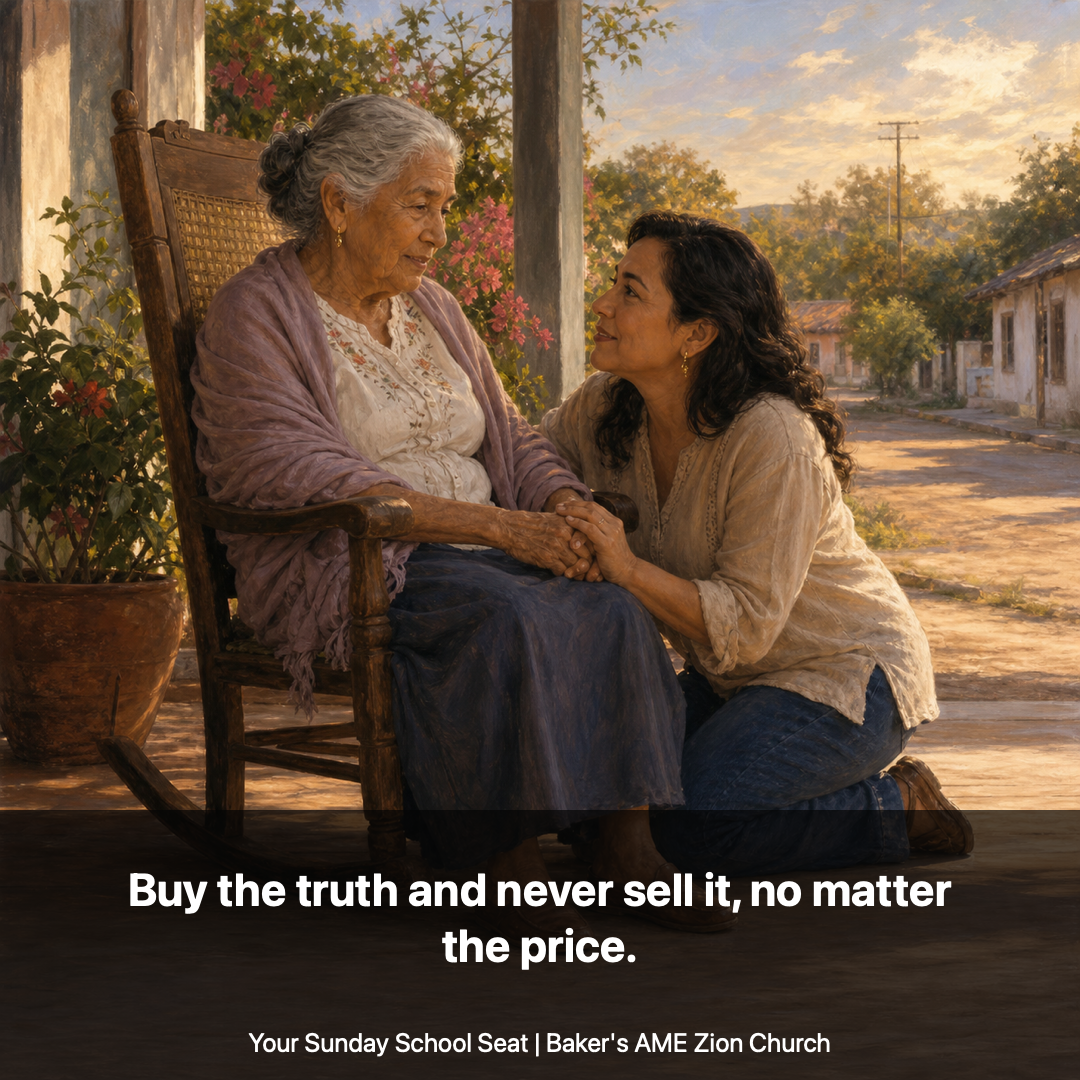
There is a moment, usually somewhere in our thirties or forties, when we suddenly hear our parents' words coming out of our own mouths.
Proverbs 23:22-26 — KJV
22 Hearken unto thy father that begat thee, and despise not thy mother when she is old. 23 Buy the truth, and sell it not; also wisdom, and instruction, and understanding. 24 The father of the righteous shall greatly rejoice: and he that begetteth a wise child shall have joy of him. 25 Thy father and thy mother shall be glad, and she that bare thee shall rejoice. 26 My son, give me thine heart, and let thine eyes observe my ways.
Proverbs 23:22-26 — WEB
22 Listen to your father who gave you life, and don't despise your mother when she is old. 23 Buy the truth, and don't sell it. Get wisdom, discipline, and understanding. 24 The father of the righteous has great joy. Whoever fathers a wise child delights in him. 25 Let your father and your mother be glad! Let her who bore you rejoice! 26 My son, give me your heart; and let your eyes keep in my ways.
Explanation
Today's proverb speaks to grown children as much as to young ones. Listen to your father who gave you life, and do not despise your mother when she is old. That last phrase is tender and pointed at the same time. There comes a season when the parents who once carried us grow older and need us, and the temptation is to grow impatient with them, to dismiss their stories, to treat their counsel as out of date. Scripture says the opposite. Honor them. Keep listening even when the roles have started to reverse.
Right in the middle of this passage is one of the most striking verses in Proverbs. Buy the truth, and do not sell it. Truth is presented like a treasure worth paying for and never worth trading away. Along with it come wisdom, discipline, and understanding. The picture is of a person who spends whatever it costs to gain what is true and then holds onto it no matter the pressure to let it go. In a culture where truth is often up for sale to the highest bidder or the loudest opinion, that is a radical instruction.
Then the passage widens to show us the joy on the other side of home training. The father of the righteous has great joy. Let your father and your mother be glad. Parents who invested in their children get to taste the harvest of a child who grew up wise. This is the emotional heart of the week's theme. Home training is not just duty. When it takes root, it produces joy that runs both directions, the child who lives well and the parent who gets to watch it happen.
The passage closes with a plea. My son, give me your heart, and let your eyes keep in my ways. Notice it asks for the heart, not just obedience. A parent can force behavior for a while, but the real goal is a child who wants the good life, who has internalized the values rather than just tolerated the rules. That is what Timothy had. His grandmother Lois and his mother Eunice did not just teach him facts about God. They won his heart.
For us, this passage cuts two ways. If your parents are still living, there is honor to give and listening to do. And whatever your age, someone is watching your ways. Give the people who love you your heart, and give the young ones watching you a life worth imitating.
Thought for the Day
Buy the truth and never sell it, no matter the price.
Reflection Question
Is there a parent or elder you need to honor with your patience and attention this season?
Prayer
Lord, thank You for those who gave me life and taught me to walk. Where I have grown impatient or dismissive, forgive me and soften my heart. Help me buy the truth and never sell it, and help me live in a way that brings joy to the people who invested in me. Give my heart fully to You. Amen.
This week we walk toward Sunday's lesson: Timothy, The Influence of Home Training.
Tuesday, August 18 — Listen To Wise Instruction

We live in a world full of information but starving for wisdom, and the two are not the same thing.
Proverbs 1:1-9 — KJV
1 The proverbs of Solomon the son of David, king of Israel; 2 To know wisdom and instruction; to perceive the words of understanding; 3 To receive the instruction of wisdom, justice, and judgment, and equity; 4 To give subtilty to the simple, to the young man knowledge and discretion. 5 A wise man will hear, and will increase learning; and a man of understanding shall attain unto wise counsels: 6 To understand a proverb, and the interpretation; the words of the wise, and their dark sayings. 7 The fear of the LORD is the beginning of knowledge: but fools despise wisdom and instruction. 8 My son, hear the instruction of thy father, and forsake not the law of thy mother: 9 For they shall be an ornament of grace unto thy head, and chains about thy neck.
Proverbs 1:1-9 — WEB
1 The proverbs of Solomon, the son of David, king of Israel: 2 to know wisdom and instruction; to discern the words of understanding; 3 to receive instruction in wise dealing, in righteousness, justice, and equity; 4 to give prudence to the simple, knowledge and discretion to the young man: 5 that the wise man may hear, and increase in learning; that the man of understanding may attain to sound counsel: 6 to understand a proverb and parables, the words and riddles of the wise. 7 The fear of Yahweh is the beginning of knowledge; but the foolish despise wisdom and instruction. 8 My son, listen to your father's instruction, and don't forsake your mother's teaching: 9 for they will be a garland to grace your head, and chains around your neck.
Explanation
Proverbs opens like a father pulling up a chair to talk to his child before the child leaves home. Solomon lays out his purpose right away. These sayings are meant to give wisdom, discretion, and good judgment, especially to the young and the inexperienced. Then he drops the sentence that anchors the whole book. The fear of the Lord is the beginning of knowledge. Everything else is built on that foundation.
That word fear does not mean being scared of God. It means reverence, the humble recognition that God is God and we are not. It is the posture of a person who knows they still have something to learn. And that posture is exactly what makes wisdom possible. A know-it-all cannot be taught. But a person who begins in humility can grow for the rest of their life.
This connects directly to the week's theme and to Timothy. Long before Timothy met Paul, someone at home was teaching him to reverence God and to listen. Verse eight says it out loud. Hear the instruction of your father, and do not forsake the teaching of your mother. That is home training in one sentence. Not lectures barked from across the room, but a steady voice at the kitchen table shaping how a child thinks about right and wrong.
Notice what Solomon says these teachings become. A garland to grace your head and chains around your neck. In that culture, those were ornaments of honor, jewelry you were proud to wear. The instruction our parents and elders give us is not a burden to shake off. Worn faithfully, it becomes something beautiful, a dignity other people can see.
We ought to be honest, though. Not everyone grew up with wise instruction, and some of us carry the wounds of bad counsel we had to unlearn. The good news of Proverbs is that wisdom is available to anyone who will begin in the fear of the Lord. It is never too late to sit down and learn. And if you did have someone who taught you well, this passage is a nudge to honor them, and to keep passing on what they poured into you.
Wisdom starts with reverence, grows through listening, and gets handed down at home. That is the road Timothy walked, and it is the road Solomon invites us to walk today.
Thought for the Day
The fear of the Lord is where real wisdom begins.
Reflection Question
Whose wise instruction have you been ignoring lately, and what would it look like to listen?
Prayer
Father, I confess how often I chase information and skip right past wisdom. Teach me to begin with reverence for You. Give me the humility to keep learning and the good sense to honor the people who taught me well. Let the instruction I received become something beautiful in how I live. Amen.
This week we walk toward Sunday's lesson: Timothy, The Influence of Home Training.
Monday, August 17 — A Protégé With Promise

Some of the most important people in our lives are the ones who saw something in us before we could see it in ourselves.
Acts 16:1-5 — KJV
1 Then came he to Derbe and Lystra: and, behold, a certain disciple was there, named Timotheus, the son of a certain woman, which was a Jewess, and believed; but his father was a Greek: 2 Which was well reported of by the brethren that were at Lystra and Iconium. 3 Him would Paul have to go forth with him; and took and circumcised him because of the Jews which were in those quarters: for they knew all that his father was a Greek. 4 And as they went through the cities, they delivered them the decrees for to keep, that were ordained of the apostles and elders which were at Jerusalem. 5 And so were the churches established in the faith, and increased in number daily.
Acts 16:1-5 — WEB
1 He came to Derbe and Lystra: and behold, a certain disciple was there, named Timothy, the son of a Jewess who believed; but his father was a Greek. 2 The brothers who were at Lystra and Iconium gave a good testimony about him. 3 Paul wanted to have him go out with him, and he took and circumcised him because of the Jews who were in those parts; for they all knew that his father was a Greek. 4 As they went on their way through the cities, they delivered the decrees to them to keep which had been ordained by the apostles and elders who were at Jerusalem. 5 So the assemblies were strengthened in the faith, and increased in number daily.
Explanation
Paul is on his second missionary journey when he comes back through Lystra, a town where he had once been stoned and left for dead. But this time the story is not about opposition. It is about a young man named Timothy. Luke tells us plainly that Timothy came from a mixed household, a Jewish mother who believed and a Greek father. In a world that liked to sort people into tidy categories, Timothy did not fit neatly into any of them. And yet the believers at Lystra and Iconium spoke well of him. Before Timothy ever preached a sermon, his home and his character had already written his recommendation letter.
This is where our week begins, and it sets the theme for Sunday. Timothy did not become useful to God by accident. He grew up in a home where faith was real, and then a mentor came along who recognized what home had already planted. Paul saw promise in him and invested in it. He took Timothy with him, taught him, corrected him, and eventually trusted him with whole churches.
Notice that Paul did not wait for Timothy to be finished. He took a young man who was still becoming and gave him room to grow on the road. Most of us can point to somebody who did that for us. A teacher who kept us after class. A deacon who learned our name. An aunt who said, you are going to make it. That is what a mentor does. They see the promise and then they walk with you long enough for the promise to come true.
The passage also reminds us that the churches were strengthened and grew in number daily. Timothy's ministry did not happen in isolation. It happened inside a community that was being built up. When one person is poured into, a whole congregation feels it. The investment multiplies.
So as the week opens, ask yourself two questions. Who saw promise in me and refused to let me quit? And who is the Timothy in my life right now, the young person, the new believer, the coworker, who needs someone to say, I see something in you? Home training raised Timothy. A mentor released him. This week we watch how faith gets passed from one hand to the next.
Thought for the Day
Someone saw promise in you. Now go see it in someone else.
Reflection Question
Who is one younger person you could encourage this week, and what will you actually say to them?
Prayer
Lord, thank You for the people who saw something good in me when I could not see it myself. Make me that kind of person for someone else. Give me eyes to notice the promise in the young people around me, and give me patience to walk with them while they grow. Use my ordinary encouragement for something eternal. Amen.
This week we walk toward Sunday's lesson: Timothy, The Influence of Home Training.
August 17 -23, 2026 - Timothy, The Influence of Home Training
Think about the people who shaped your faith before you even knew it was happening. Maybe it was a grandmother who prayed over you at night. A mother who read you Bible stories before you could read them yourself. A deacon who learned your name, or a teacher who kept believing in you when you were hard to believe in. This week, we're following the story of a young man named Timothy, and we're going to see how a faithful home and a few faithful people can shape a person who changes the world. It all builds toward Sunday's lesson, Timothy, The Influence of Home Training.
We start on Monday in Acts chapter 16. Paul comes back through a town called Lystra and meets Timothy, a young disciple from a mixed home, a believing Jewish mother and a Greek father. Before Timothy ever preaches, the believers already speak well of him. His home and his character wrote his recommendation letter. Paul sees the promise and takes him along. That's how it often works. Somebody sees something in us, and then they walk with us long enough for it to come true.
Tuesday takes us to Proverbs chapter 1. Solomon sits down like a father talking to his child before that child leaves home, and he gives us the anchor for the whole book: the fear of the Lord is the beginning of knowledge. Real wisdom starts with reverence and grows through listening. And notice verse 8, hear your father's instruction and don't forsake your mother's teaching. That's home training in a single line.
Wednesday, we stay in Proverbs, chapter 23. Here the word is for grown children as much as young ones. Listen to your father, and don't despise your mother when she is old. Right in the middle sits that jewel of a verse, buy the truth and don't sell it. Truth is a treasure worth paying for and never worth trading away. And when home training takes root, it brings joy running both directions, the child who lives well and the parent who gets to see it.
Thursday brings us to Philippians chapter 2, and now we see the boy grown up. Paul is in prison and needs someone he can trust to send to the church. Out of everyone, he chooses Timothy, because, he says, I have no one else who will truly care about you. Not the most gifted, the most trustworthy. That's what home training grows into: a person who genuinely cares and can be counted on for years.
Friday, we go all the way back to Deuteronomy chapter 4. Moses is an old man, and his burning concern is that the people won't forget, and that their children won't forget. Make God known to your children and your children's children. Faith is always one generation from being forgotten. It isn't passed down in the bloodstream. It has to be handed over on purpose, at the kitchen table, in ordinary families who simply keep telling the story.
Saturday, we reach the heart of the week, 2 Timothy chapter 1. Paul finally names the women behind the man. The sincere faith in you, he says, lived first in your grandmother Lois and your mother Eunice, and now in you. Three generations, one faith, handed hand to hand. And he reminds Timothy that God gave him not a spirit of fear, but of power, love, and a sound mind. If you had a Lois or a Eunice, today is a day to be thankful.
And that brings us to Sunday, 2 Timothy chapter 3, where Paul gives Timothy his charge in one word: continue. Remain in what you have learned, knowing who you learned it from. From infancy, Paul says, you have known the sacred writings that make you wise for salvation. What was planted in the nursery bore fruit on the mission field. And all Scripture is God-breathed, useful for every season of the road.
So the week comes full circle. We began with a protégé of promise, and we end with a charge to continue. The influence of a faithful home doesn't just start our journey. It gives us something to hold onto when the road gets hard, and then it asks us to hand it to someone else. That's Sunday's lesson, and we'll unpack it together. Come thankful, come ready. We save you a seat.
Sunday, August 16 — Knocked Down, Sent Out

Everything this week has been building to a dusty road outside Damascus, where the last man anyone expected to change met the God who changes everyone.
Acts 22:3-15 — KJV
3 I am verily a man which am a Jew, born in Tarsus, a city in Cilicia, yet brought up in this city at the feet of Gamaliel, and taught according to the perfect manner of the law of the fathers, and was zealous toward God, as ye all are this day. 4 And I persecuted this way unto the death, binding and delivering into prisons both men and women. 5 As also the high priest doth bear me witness, and all the estate of the elders: from whom also I received letters unto the brethren, and went to Damascus, to bring them which were there bound unto Jerusalem, for to be punished. 6 And it came to pass, that, as I made my journey, and was come nigh unto Damascus about noon, suddenly there shone from heaven a great light round about me. 7 And I fell unto the ground, and heard a voice saying unto me, Saul, Saul, why persecutest thou me? 8 And I answered, Who art thou, Lord? And he said unto me, I am Jesus of Nazareth, whom thou persecutest. 9 And they that were with me saw indeed the light, and were afraid; but they heard not the voice of him that spake to me. 10 And I said, What shall I do, Lord? And the Lord said unto me, Arise, and go into Damascus; and there it shall be told thee of all things which are appointed for thee to do. 11 And when I could not see for the glory of that light, being led by the hand of them that were with me, I came into Damascus. 12 And one Ananias, a devout man according to the law, having a good report of all the Jews which dwelt there, 13 Came unto me, and stood, and said unto me, Brother Saul, receive thy sight. And the same hour I looked up upon him. 14 And he said, The God of our fathers hath chosen thee, that thou shouldest know his will, and see that Just One, and shouldest hear the voice of his mouth. 15 For thou shalt be his witness unto all men of what thou hast seen and heard.
Acts 22:3-15 — WEB
3 "I am indeed a Jew, born in Tarsus of Cilicia, but brought up in this city at the feet of Gamaliel, instructed according to the strict manner of the law of our fathers, being zealous for God, even as you all are today. 4 I persecuted this Way to the death, binding and delivering into prisons both men and women, 5 as also the high priest and all the council of the elders testify, from whom also I received letters to the brothers, and traveled to Damascus to bring them also who were there to Jerusalem in bonds to be punished. 6 As I made my journey, and came close to Damascus, about noon suddenly a great light shone around me from the sky. 7 I fell to the ground, and heard a voice saying to me, 'Saul, Saul, why are you persecuting me?' 8 I answered, 'Who are you, Lord?' He said to me, 'I am Jesus of Nazareth, whom you persecute.' 9 "Those who were with me indeed saw the light and were afraid, but they didn't understand the voice of him who spoke to me. 10 I said, 'What shall I do, Lord?' The Lord said to me, 'Arise, and go into Damascus. There you will be told about all things which are appointed for you to do.' 11 When I couldn't see for the glory of that light, being led by the hand of those who were with me, I came into Damascus. 12 One Ananias, a devout man according to the law, well reported of by all the Jews who lived in Damascus, 13 came to me, and standing by me said to me, 'Brother Saul, receive your sight!' In that very hour I looked up at him. 14 He said, 'The God of our fathers has appointed you to know his will, and to see the Righteous One, and to hear a voice from his mouth. 15 For you will be a witness for him to all men of what you have seen and heard.'
Explanation
Here is the moment the whole week has been walking toward. Paul is standing before a hostile crowd in Jerusalem, on trial for his life, and he tells his story. He begins with his credentials — trained under Gamaliel, the finest teacher of his day, zealous for God, blameless by the law. This is the Pharisee we met on Wednesday, the man with the perfect résumé.
Then he tells the truth about what that zeal produced: he persecuted "this way unto the death," dragging men and women off to prison. He was on the road to Damascus with official letters in hand, ready to do more of the same, when the light stopped him cold. Notice the question the risen Jesus asks: "Saul, Saul, why persecutest thou me?" Not "why persecutest thou my people" — me. Jesus so identifies with His church that to strike them was to strike Him.
Saul's answer is the beginning of everything: "Who art thou, Lord?" And "What shall I do, Lord?" The man who had all the answers suddenly has only questions, and he's asking the right One. That's what conversion looks like — not becoming smart enough to find God, but being found by Him and finally listening.
Then comes a beautiful, ordinary detail. God doesn't finish the job with lightning. He sends a man named Ananias, who walks up to the church's worst enemy and calls him "Brother Saul." Grace came to Saul through a person willing to obey. And the commission is clear in verses 14 and 15: God has chosen you to know His will, to see the Righteous One, and — here it is — to be "his witness unto all men of what thou hast seen and heard."
That's the whole week in one line. The fountain of life on Monday, grace reaching a persecutor on Tuesday, the résumé counted as loss on Wednesday, the merciful God on Thursday, the new creation on Friday, the weight of sin lifted on Saturday — all of it converges here. Saul the Pharisee becomes Paul the Christian, and immediately he's sent to all the world.
And that's the invitation for us too. You don't need a Damascus-road light show. You need to ask his two questions and mean them: "Who are You, Lord?" and "What shall I do?" However far gone you think you are, the God who commissioned His enemy has a place for you and a witness only you can give. What you've seen and heard of His mercy — that's your assignment.
Thought for the Day
The God who changed you is sending you out.
Reflection Question
What have you seen and heard of God's mercy that someone else needs to hear from you?
Prayer
Lord Jesus, You met Saul on the road and made him new, and I know You can do the same with me. I ask his questions and I mean them: Who are You, and what would You have me do? Thank You for the people, like Ananias, who called me brother when I didn't deserve it. Send me out as Your witness, to tell what I have seen and heard. Amen.
Today is Sunday school. We save you a seat.
Saturday, August 15 — The Weight You Don't Have to Carry
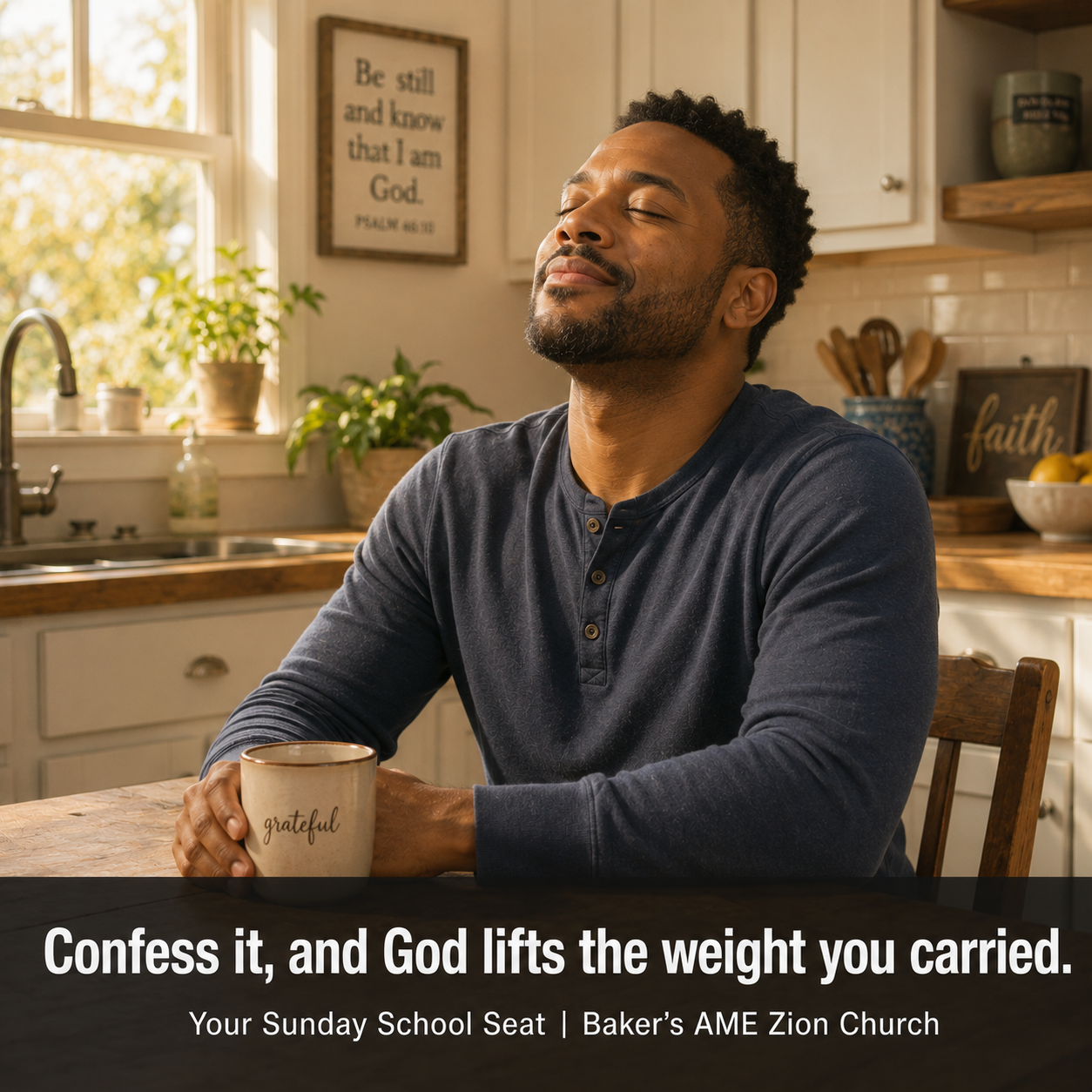
There's a particular kind of tired that no nap fixes — the heaviness of carrying something you've never said out loud. Today's psalm is about finally setting it down.
Psalm 32 — KJV
1 Blessed is he whose transgression is forgiven, whose sin is covered. 2 Blessed is the man unto whom the LORD imputeth not iniquity, and in whose spirit there is no guile. 3 When I kept silence, my bones waxed old through my roaring all the day long. 4 For day and night thy hand was heavy upon me: my moisture is turned into the drought of summer. Selah. 5 I acknowledged my sin unto thee, and mine iniquity have I not hid. I said, I will confess my transgressions unto the LORD; and thou forgavest the iniquity of my sin. Selah. 6 For this shall every one that is godly pray unto thee in a time when thou mayest be found: surely in the floods of great waters they shall not come nigh unto him. 7 Thou art my hiding place; thou shalt preserve me from trouble; thou shalt compass me about with songs of deliverance. Selah. 8 I will instruct thee and teach thee in the way which thou shalt go: I will guide thee with mine eye. 9 Be ye not as the horse, or as the mule, which have no understanding: whose mouth must be held in with bit and bridle, lest they come near unto thee. 10 Many sorrows shall be to the wicked: but he that trusteth in the LORD, mercy shall compass him about. 11 Be glad in the LORD, and rejoice, ye righteous: and shout for joy, all ye that are upright in heart.
Psalm 32 — WEB
1 Blessed is he whose disobedience is forgiven, whose sin is covered. 2 Blessed is the man to whom Yahweh doesn't impute iniquity, in whose spirit there is no deceit. 3 When I kept silence, my bones wasted away through my groaning all day long. 4 For day and night your hand was heavy on me. My strength was sapped in the heat of summer. Selah. 5 I acknowledged my sin to you. I didn't hide my iniquity. I said, I will confess my transgressions to Yahweh, and you forgave the iniquity of my sin. Selah. 6 For this, let everyone who is godly pray to you in a time when you may be found. Surely when the great waters overflow, they shall not reach to him. 7 You are my hiding place. You will preserve me from trouble. You will surround me with songs of deliverance. Selah. 8 I will instruct you and teach you in the way which you shall go. I will counsel you with my eye on you. 9 Don't be like the horse, or like the mule, which have no understanding, who are controlled by bit and bridle, or else they will not come near to you. 10 Many sorrows come to the wicked, but loving kindness shall surround him who trusts in Yahweh. 11 Be glad in Yahweh, and rejoice, you righteous! Shout for joy, all you who are upright in heart!
Explanation
This is one of David's psalms of confession, and he doesn't start with the sin — he starts with the joy on the other side of it. "Blessed is he whose transgression is forgiven, whose sin is covered." He's telling us where the road ends before he describes the road, because he wants us to know it's worth the walk.
Then he gets honest about the cost of hiding. Verses 3 and 4 are some of the most physical descriptions of guilt in Scripture. When he kept silent, his bones wasted away, he groaned all day, his strength dried up like a creek bed in August heat. Anyone who has sat on a secret knows this feeling. Unconfessed wrong doesn't stay tucked away quietly; it leaks out as exhaustion, irritability, and that low hum of dread you can't name.
Verse 5 is the turn, and it happens fast — almost as fast as it happens in real life once you finally decide to stop running. "I acknowledged my sin unto thee... and thou forgavest." He barely finishes the sentence about confessing before God has already forgiven. That's the good news hiding in this psalm: God isn't reluctant. He's been waiting for you to stop hiding.
And notice what forgiveness opens up. God says in verse 8, "I will instruct thee and teach thee in the way which thou shalt go." Confession doesn't just clear the past; it reopens the relationship. God moves from being the heavy hand in verse 4 to the guiding eye in verse 8. He'd rather lead you gently than have to steer you like a stubborn mule.
This is the perfect place to be the day before we study Saul. Because on Sunday we meet a man whose sins were public and serious, and we watch God not only forgive him but commission him. Psalm 32 tells us the inner experience of what happened to Saul: the crushing weight of the old life, and the flood of relief when mercy has the last word. The psalm even ends where a forgiven life belongs — in rejoicing.
So here's the practical invitation for a Saturday. Is there something you've been keeping silent about, carrying alone, hoping it'll fade? It won't fade; it'll just get heavier. Take David's path. Bring it honestly to God, name it, don't dress it up. You may be surprised how quickly the weight lifts, and how the same God who forgives is ready to start guiding you forward. You were never meant to carry it. Set it down and let the rejoicing start.
Thought for the Day
Confess it, and God lifts the weight you carried.
Reflection Question
What have you been keeping silent that God is inviting you to bring into the light?
Prayer
Lord, I'm tired of carrying what I've never said out loud. Today I stop hiding. I bring it to You honestly, trusting that You forgive the moment I confess. Thank You for being my hiding place instead of my judge. Now teach me the way I should go, and let the weight I've carried turn into a song. Amen.
This week we walk toward Sunday's lesson: Saul of Tarsus, How a Pharisee Became a Christian.
Friday, August 14 — Made New, Sent Out

There's a difference between getting cleaned up and being made new. One is a fresh coat of paint. The other is a whole new frame.
2 Corinthians 5:17-21 — KJV
17 Therefore if any man be in Christ, he is a new creature: old things are passed away; behold, all things are become new. 18 And all things are of God, who hath reconciled us to himself by Jesus Christ, and hath given to us the ministry of reconciliation; 19 To wit, that God was in Christ, reconciling the world unto himself, not imputing their trespasses unto them; and hath committed unto us the word of reconciliation. 20 Now then we are ambassadors for Christ, as though God did beseech you by us: we pray you in Christ's stead, be ye reconciled to God. 21 For he hath made him to be sin for us, who knew no sin; that we might be made the righteousness of God in him.
2 Corinthians 5:17-21 — WEB
17 Therefore if anyone is in Christ, he is a new creation. The old things have passed away. Behold, all things have become new. 18 But all things are of God, who reconciled us to himself through Jesus Christ, and gave to us the ministry of reconciliation; 19 namely, that God was in Christ reconciling the world to himself, not reckoning to them their trespasses, and having committed to us the word of reconciliation. 20 We are therefore ambassadors on behalf of Christ, as though God were entreating by us: we beg you on behalf of Christ, be reconciled to God. 21 For him who knew no sin he made to be sin on our behalf, so that in him we might become the righteousness of God.
Explanation
Paul writes to a church that knew all about second chances, and he hands them one of the clearest statements of the gospel in the whole Bible. "If any man be in Christ, he is a new creature." Not renovated. Not improved. New. The old has passed away and something genuinely fresh has begun.
That word "new creation" would have meant something personal to Paul. He knew what it was to have his old self die. The man who once breathed threats against believers is the same man now writing to build them up. If anyone was living proof that a person can become new, it was him. So when Paul says the old things pass away, he's not selling something he hasn't bought himself.
But watch where the passage goes, because it doesn't stop at your personal makeover. Verse 18 says God reconciled us to Himself and then "hath given to us the ministry of reconciliation." Being made new comes with an assignment. You're not just rescued; you're recruited. Verse 20 gives it a title: we are "ambassadors for Christ." An ambassador doesn't speak for himself. He carries a message from his King into places the King wants reached. God is making His appeal to the world, Paul says, through ordinary people like us.
And the message we carry is stunning. Verse 21: the sinless One was made to be sin for us, so that we could become the righteousness of God in Him. That's the great exchange. He took what was ours so we could receive what was His. This is the same righteousness Paul described on Wednesday — not one we build, but one we receive.
Notice how neatly this fits the week. We've watched a Pharisee lose confidence in his own record, meet a merciful God, and get made new. Now the new man gets sent. That's precisely where Sunday's lesson lands: Saul isn't just converted, he's commissioned, sent to carry the good news to all the world.
For you and me, the practical word is this. If you're in Christ, your past does not get the final say over your identity — you are a new creation, today, even if you don't feel especially new this morning. And that newness has a direction to it. You're an ambassador at your job, in your family, on your street. You don't need a pulpit; you need a life that carries the message. Someone near you needs to hear, from a person they trust, "Be reconciled to God." You might be the ambassador assigned to them.
Thought for the Day
In Christ you are new; the old is gone.
Reflection Question
If you're an ambassador for Christ, who is on your route this week?
Prayer
Father, thank You for making me new — not patched up, but new. Thank You for the great exchange, that Christ took my sin so I could carry Your righteousness. Help me believe it on the days I don't feel it. And make me a faithful ambassador right where I live, carrying Your appeal to the people You've put in my path. Amen.
This week we walk toward Sunday's lesson: Saul of Tarsus, How a Pharisee Became a Christian.
Thursday, August 13 — The God Who Announces His Own Name
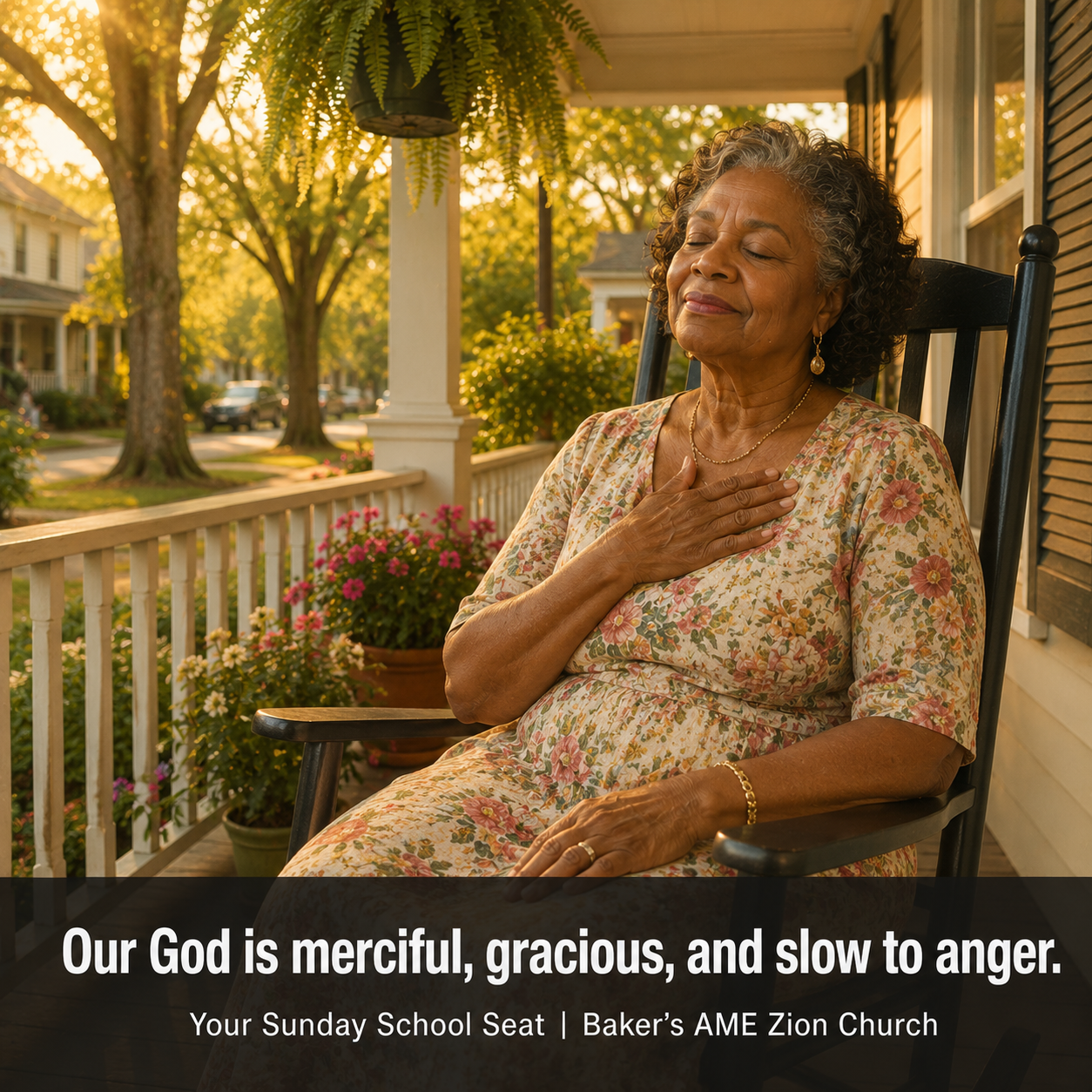
If you got to describe yourself in one sentence, what would you lead with? When God describes Himself to Moses, He leads with mercy.
Exodus 34:5-9 — KJV
5 And the LORD descended in the cloud, and stood with him there, and proclaimed the name of the LORD. 6 And the LORD passed by before him, and proclaimed, The LORD, The LORD God, merciful and gracious, longsuffering, and abundant in goodness and truth, 7 Keeping mercy for thousands, forgiving iniquity and transgression and sin, and that will by no means clear the guilty; visiting the iniquity of the fathers upon the children, and upon the children's children, unto the third and to the fourth generation. 8 And Moses made haste, and bowed his head toward the earth, and worshipped. 9 And he said, If now I have found grace in thy sight, O Lord, let my Lord, I pray thee, go among us; for it is a stiffnecked people; and pardon our iniquity and our sin, and take us for thine inheritance.
Exodus 34:5-9 — WEB
5 Yahweh descended in the cloud, and stood with him there, and proclaimed Yahweh's name. 6 Yahweh passed by before him, and proclaimed, "Yahweh! Yahweh, a merciful and gracious God, slow to anger, and abundant in loving kindness and truth, 7 keeping loving kindness for thousands, forgiving iniquity and disobedience and sin; and who will by no means clear the guilty, visiting the iniquity of the fathers on the children, and on the children's children, on the third and on the fourth generation." 8 Moses hurried and bowed his head toward the earth, and worshiped. 9 He said, "If now I have found favor in your sight, Lord, please let the Lord go among us, even though this is a stiff-necked people; pardon our iniquity and our sin, and take us for your inheritance."
Explanation
This scene comes right after one of Israel's lowest moments. The people had made a golden calf while Moses was still up on the mountain. By every fair measure, the relationship should have been over. Instead, God calls Moses back up, and in this moment God does something remarkable: He announces His own name, His own character, out loud.
And listen to what He leads with. Not "the all-powerful," not "the terrifying," though He is holy beyond our imagining. He proclaims, "The LORD, The LORD God, merciful and gracious, longsuffering, and abundant in goodness and truth." Mercy comes first. Slow to anger. Overflowing with steadfast love. This is God's own self-description, given to a people who had just failed Him badly.
Verse 7 keeps a real tension, and we shouldn't smooth it over. God forgives iniquity and transgression and sin — and He does not simply wink at evil as though it doesn't matter. He is both merciful and just. Sin has consequences that ripple. But the emphasis, the thing God says first and dwells on longest, is mercy that reaches thousands of generations.
Moses' response is the only sane one: he hurries to bow down and worship. And then he prays boldly. He asks this merciful God to go with them — not because the people deserve it, but because that's who God just said He is. He even names the problem: "it is a stiffnecked people." He's basically saying, "Lord, we're hardheaded and we'll fail again, so come with us anyway, and take us as Your own."
This is the God our whole week points to. When we get to Sunday and watch Saul the persecutor knocked to the ground on the Damascus road, we shouldn't be surprised that mercy is what he meets. The God who described Himself to Moses hadn't changed. He is still "merciful and gracious, slow to anger."
So carry this into your day. When you fail — and you will — your first thought about God matters enormously. If you picture Him standing over you with folded arms, you'll hide. But God's own testimony is that He leads with mercy. That's not permission to take Him lightly. It's an invitation to come back quickly, like Moses, and ask Him to keep walking with a stiff-necked people who need Him. Which is all of us.
Thought for the Day
Our God is merciful, gracious, and slow to anger.
Reflection Question
When you picture God's face turned toward you, what expression do you assume He's wearing?
Prayer
Lord, You know how easily I imagine You disappointed and distant. Thank You for telling me who You really are: merciful, gracious, slow to anger, abundant in love. When I fail, help me run toward You instead of hiding. Go with us, stubborn as we are, and take us as Your own. We're grateful to belong to You. Amen.
This week we walk toward Sunday's lesson: Saul of Tarsus, How a Pharisee Became a Christian.
Wednesday, August 12 — Willing to Lose the Résumé
Most of us keep a mental list of what makes us worth something — the title, the degree, the name people know us by. Paul had a list like that too, and he tore it up.
Philippians 3:3-9 — KJV
3 For we are the circumcision, which worship God in the spirit, and rejoice in Christ Jesus, and have no confidence in the flesh. 4 Though I might also have confidence in the flesh. If any other man thinketh that he hath whereof he might trust in the flesh, I more: 5 Circumcised the eighth day, of the stock of Israel, of the tribe of Benjamin, an Hebrew of the Hebrews; as touching the law, a Pharisee; 6 Concerning zeal, persecuting the church; touching the righteousness which is in the law, blameless. 7 But what things were gain to me, those I counted loss for Christ. 8 Yea doubtless, and I count all things but loss for the excellency of the knowledge of Christ Jesus my Lord: for whom I have suffered the loss of all things, and do count them but dung, that I may win Christ, 9 And be found in him, not having mine own righteousness, which is of the law, but that which is through the faith of Christ, the righteousness which is of God by faith:
Philippians 3:3-9 — WEB
3 For we are the circumcision, who worship God in the Spirit, and rejoice in Christ Jesus, and have no confidence in the flesh; 4 though I myself might have confidence even in the flesh. If any other man thinks that he has confidence in the flesh, I yet more: 5 circumcised the eighth day, of the stock of Israel, of the tribe of Benjamin, a Hebrew of Hebrews; concerning the law, a Pharisee; 6 concerning zeal, persecuting the assembly; concerning the righteousness which is in the law, found blameless. 7 However, I consider those things that were gain to me as a loss for Christ. 8 Yes most certainly, and I count all things to be a loss for the excellency of the knowledge of Christ Jesus, my Lord, for whom I suffered the loss of all things, and count them nothing but refuse, that I may gain Christ 9 and be found in him, not having a righteousness of my own, that which is of the law, but that which is through faith in Christ, the righteousness which is from God by faith,
Explanation
Philippians was written from a prison cell, which makes what Paul says here even more striking. He's not talking about his accomplishments from a comfortable armchair. He's chained up, and still he says his old credentials are worth nothing next to Christ.
And what credentials they were. In verses 5 and 6 Paul lists them like a man reading off his own trophy shelf: the right family, the right tribe, the right training, flawless in keeping the law. If anyone could have earned God's approval by pedigree and performance, it was him. This is the same man we've been reading about all week — the Pharisee, the zealot, the one who was so sure of his standing that he persecuted the church.
Then verse 7 lands like a hammer: "But what things were gain to me, those I counted loss for Christ." He does the math and comes out the opposite of what you'd expect. The very things that made him somebody, he now moves to the loss column. In verse 8 the older English is blunt — he calls his old glory "dung," garbage, the stuff you scrape off and throw out. Not because those things were evil, but because he found something so much better that they stopped being the point.
Here's the deep thing Paul is after. He no longer wants a righteousness he built himself, "mine own righteousness, which is of the law." He wants the righteousness that comes from God through faith in Christ. That's the difference between a Pharisee and a Christian, and it's the exact turn our Sunday lesson traces. Saul the Pharisee trusted his own record. Paul the Christian trusted Christ's.
For us, this cuts close. We may not have Paul's religious résumé, but we all have something we quietly lean on to feel acceptable — how hard we work, how we look on paper, how much better we are than "those people." Paul isn't telling you your work or your family or your effort is worthless. He's telling you they make a terrible savior. The freedom in this passage is that you can finally stop auditioning. You don't have to earn your way into God's good graces by stacking up a perfect record. Christ already has the record; faith receives it. Loosen your grip on the list you've been trusting, and you may find your hands are finally free to hold on to Him.
Thought for the Day
Everything I lost was nothing next to knowing Christ.
Reflection Question
What are you still trusting to make you acceptable — and could you set it down?
Prayer
Lord Jesus, I've spent a lot of energy building a record I hoped would be enough. Today I lay it down. I don't want a righteousness I made; I want the one You give. Help me to count all of it loss next to knowing You, and to rest in what You've already done. Be my confidence today. Amen.
This week we walk toward Sunday's lesson: Saul of Tarsus, How a Pharisee Became a Christian.
Tuesday, August 11 — When the Chaser Becomes the Preacher
We all know someone we've quietly written off — the one we're sure will never change. Today's passage is about a man everybody had written off, until God did the writing.
Galatians 1:13-24 — KJV
13 For ye have heard of my conversation in time past in the Jews' religion, how that beyond measure I persecuted the church of God, and wasted it: 14 And profited in the Jews' religion above many my equals in mine own nation, being more exceedingly zealous of the traditions of my fathers. 15 But when it pleased God, who separated me from my mother's womb, and called me by his grace, 16 To reveal his Son in me, that I might preach him among the heathen; immediately I conferred not with flesh and blood: 17 Neither went I up to Jerusalem to them which were apostles before me; but I went into Arabia, and returned again unto Damascus. 18 Then after three years I went up to Jerusalem to see Peter, and abode with him fifteen days. 19 But other of the apostles saw I none, save James the Lord's brother. 20 Now the things which I write unto you, behold, before God, I lie not. 21 Afterwards I came into the regions of Syria and Cilicia; 22 And was unknown by face unto the churches of Judaea which were in Christ: 23 But they had heard only, That he which persecuted us in times past now preacheth the faith which once he destroyed. 24 And they glorified God in me.
Galatians 1:13-24 — WEB
13 For you have heard of my way of living in time past in the Jews' religion, how that beyond measure I persecuted the assembly of God and ravaged it. 14 I advanced in the Jews' religion beyond many of my own age among my countrymen, being more exceedingly zealous for the traditions of my fathers. 15 But when it was the good pleasure of God, who separated me from my mother's womb and called me through his grace, 16 to reveal his Son in me, that I might preach him among the Gentiles, I didn't immediately confer with flesh and blood, 17 nor did I go up to Jerusalem to those who were apostles before me, but I went away into Arabia. Then I returned to Damascus. 18 Then after three years I went up to Jerusalem to visit Peter, and stayed with him fifteen days. 19 But of the other apostles I saw no one, except James, the Lord's brother. 20 Now about the things which I write to you, behold, before God, I'm not lying. 21 Then I came to the regions of Syria and Cilicia. 22 I was still unknown by face to the assemblies of Judea which were in Christ, 23 but they only heard: "He who once persecuted us now preaches the faith that he once tried to destroy." 24 And they glorified God in me.
Explanation
Paul is writing this letter to churches in Galatia who are being told he isn't a real apostle. So he tells them his story plainly, and he doesn't clean it up. He names who he used to be: a man so zealous for the traditions of his fathers that he hunted down believers and tried to wipe the church off the map. He was, in his own words, out ahead of everyone his age — the star student, the enforcer, the one going places. And he was using all of it against God's people.
Then comes the hinge of the whole passage in verse 15: "But when it pleased God." Notice Paul doesn't say "when I got my act together" or "when I finally saw reason." The turnaround wasn't something he engineered. It pleased God to separate him, to call him by grace, to reveal His Son in him. Paul's entire résumé — his zeal, his brilliance, his religion — did not save him. Grace interrupted him.
And look at how the neighbors responded. The churches of Judea didn't even know his face. All they knew was the report going around: "The one who used to hunt us down is now preaching the very faith he tried to destroy." Their reaction is worth sitting with. They didn't get suspicious. They didn't demand he prove himself for years first. Verse 24 says simply, "they glorified God in me." They saw a changed man and gave God the credit.
This is the heart of where our week is heading. On Sunday we study how a Pharisee became a Christian, and today we get it told in Paul's own hand. The takeaway is not "try harder to be good." It's that God's grace can reach a person we'd consider a lost cause — including, some days, the person in our own mirror.
So here's the practical question this passage presses on us. First, is there someone you've decided is beyond changing? Paul's life says be careful; grace has a longer reach than your judgment. Second, when God does something new in you, don't let embarrassment about your past silence you. Paul's testimony wasn't "look how good I've always been." It was "look what grace did with someone like me." That's a story people still need to hear across the kitchen table and the checkout line.
Thought for the Day
Grace can turn a persecutor into a preacher.
Reflection Question
Who have you written off that God may not be finished with yet?
Prayer
Father, thank You that Your grace reached the last person anyone expected, and that it can reach me too. Forgive me for writing people off as if I know the end of their story. Give me eyes to see what You're doing in people, and the courage to tell what You've done in me. When others see the change, let them glorify You. Amen.
This week we walk toward Sunday's lesson: Saul of Tarsus, How a Pharisee Became a Christian.
Monday, August 10 — Where the Real Fountain Is

Some mornings you wake up already tired, reaching for coffee before your feet hit the floor, wondering where you're supposed to get the strength for another full day.
Psalm 36:1-9 — KJV
1 The transgression of the wicked saith within my heart, that there is no fear of God before his eyes. 2 For he flattereth himself in his own eyes, until his iniquity be found to be hateful. 3 The words of his mouth are iniquity and deceit: he hath left off to be wise, and to do good. 4 He deviseth mischief upon his bed; he setteth himself in a way that is not good; he abhorreth not evil. 5 Thy mercy, O LORD, is in the heavens; and thy faithfulness reacheth unto the clouds. 6 Thy righteousness is like the great mountains; thy judgments are a great deep: O LORD, thou preservest man and beast. 7 How excellent is thy lovingkindness, O God! therefore the children of men put their trust under the shadow of thy wings. 8 They shall be abundantly satisfied with the fatness of thy house; and thou shalt make them drink of the river of thy pleasures. 9 For with thee is the fountain of life: in thy light shall we see light.
Psalm 36:1-9 — WEB
1 An oracle is within my heart about the disobedience of the wicked: "There is no fear of God before his eyes." 2 For he flatters himself in his own eyes, too much to detect and hate his sin. 3 The words of his mouth are iniquity and deceit. He has ceased to be wise and to do good. 4 He plots iniquity on his bed. He sets himself in a way that is not good. He doesn't abhor evil. 5 Your loving kindness, LORD, is in the heavens. Your faithfulness reaches to the skies. 6 Your righteousness is like the mountains of God. Your judgments are like a great deep. LORD, you preserve man and animal. 7 How precious is your loving kindness, God! The children of men take refuge under the shadow of your wings. 8 They shall be abundantly satisfied with the abundance of your house. You will make them drink of the river of your pleasures. 9 For with you is the spring of life. In your light we will see light.
Explanation
David opens this psalm by staring straight at a hard truth: there is a way of living that shuts God out entirely. The person he describes has stopped listening to conscience. He flatters himself, talks himself into whatever he wants, and lies awake at night not wrestling with guilt but planning his next move. It's a portrait of a life turned completely inward, running on its own fumes.
Then, right in the middle of verse 5, the psalm pivots hard. David lifts his eyes off that dead-end life and looks up. Suddenly the language opens wide: mercy in the heavens, faithfulness reaching the clouds, righteousness tall as mountains, justice deep as the sea. He's contrasting two water sources. The wicked drink from themselves and stay thirsty. God's people drink from a river that never runs dry.
That's the phrase to carry today: "with thee is the fountain of life." Not a cup God hands you once. A fountain. A spring that keeps coming up from underneath, whether the day went your way or not.
This is exactly where our week begins, because this Sunday we study Saul of Tarsus. Here was a man who, for years, drank only from himself — his pedigree, his zeal, his certainty that he was right. He was a walking picture of Psalm 36's first four verses, so sure of his own righteousness that he persecuted the very people of God. And still, the fountain of God's mercy was higher than his sin. That same mercy is what reached down and stopped him on the Damascus road.
So what does the fountain look like on a Monday? It looks like admitting you can't manufacture your own strength. You've tried self-talk, hustle, and pretending you're fine, and none of it fills the tank. The invitation here is simple and almost embarrassingly gentle: come and drink. Before the emails, before the school drop-off, before the shift, put yourself for one honest minute under the shadow of God's wings and let Him be the source. The people who last in this life aren't the ones with the most willpower. They're the ones who keep going back to the spring.
Thought for the Day
With God is the fountain of life.
Reflection Question
What have you been drinking from lately to get through — and is it actually filling you?
Prayer
Lord, I'm tired before the day even starts, and I've been trying to be my own source for too long. Thank You that Your mercy is higher than the heavens and Your love never runs dry. Teach me to come to You first this morning instead of last. Let me drink from the fountain of life today, and share that water with someone else. Amen.
This week we walk toward Sunday's lesson: Saul of Tarsus, How a Pharisee Became a Christian.
August 10 - 16, 2026 - Saul of Tarsus, How a Pharisee Became a Christian
This week on Your Sunday School Seat, we trace one road all the way to Damascus. Across seven daily readings — from the fountain of life in Psalm 36 to the conversion of Saul in Acts 22 — we watch God's mercy take a self-righteous, self-reliant heart and make it brand new. It's the story of how the church's worst enemy became its boldest witness, and it's an invitation to anyone who's ever felt too far gone. Watch, then come join us Sunday for the lesson, "Saul of Tarsus, How a Pharisee Became a Christian."
Monday — The Fountain of Life (Psalm 36:1-9)
Tuesday — Proclaiming the Faith (Galatians 1:13-24)
Wednesday — Losing All to Gain Christ (Philippians 3:3-9)
Thursday — A Merciful and Gracious God (Exodus 34:5-9)
Friday — A New Creation in Christ (2 Corinthians 5:17-21)
Saturday — Rejoicing in God's Forgiveness (Psalm 32)
Sunday — Sent to All the World (Acts 22:3-15)
Your Sunday School Seat | Baker's AME Zion Church — We Save You a Seat
#YourSundaySchoolSeat #AMEZion #DailyDevotional #Faith #BlackChurch #Conversion
Sunday, August 9 — He Forgave From the Ground
Today we arrive at the moment the whole week has been building toward — and it is not what anyone would call a happy ending. And yet it may be the bravest, most Christlike scene in the book of Acts.
Acts 7:54-60 — KJV
54 When they heard these things, they were cut to the heart, and they gnashed on him with their teeth. 55 But he, being full of the Holy Ghost, looked up stedfastly into heaven, and saw the glory of God, and Jesus standing on the right hand of God, 56 And said, Behold, I see the heavens opened, and the Son of man standing on the right hand of God. 57 Then they cried out with a loud voice, and stopped their ears, and ran upon him with one accord, 58 And cast him out of the city, and stoned him: and the witnesses laid down their clothes at a young man's feet, whose name was Saul. 59 And they stoned Stephen, calling upon God, and saying, Lord Jesus, receive my spirit. 60 And he kneeled down, and cried with a loud voice, Lord, lay not this sin to their charge. And when he had said this, he fell asleep.
Acts 7:54-60 — WEB
54 Now when they heard these things, they were cut to the heart, and they gnashed at him with their teeth. 55 But he, being full of the Holy Spirit, looked up steadfastly into heaven and saw the glory of God, and Jesus standing on the right hand of God, 56 and said, "Behold, I see the heavens opened, and the Son of Man standing at the right hand of God!" 57 But they cried out with a loud voice and stopped their ears, then rushed at him with one accord. 58 They threw him out of the city and stoned him. The witnesses placed their garments at the feet of a young man named Saul. 59 They stoned Stephen as he called out, saying, "Lord Jesus, receive my spirit!" 60 He kneeled down and cried with a loud voice, "Lord, don't hold this sin against them!" When he had said this, he fell asleep.
Explanation
Stephen's sermon lands, and the council doesn't repent — they rage. They gnash their teeth, cover their ears, and rush him all at once. But right there, in the worst moment of his life, Stephen looks up and heaven opens. He sees the glory of God and Jesus standing at God's right hand. That detail is worth pausing on. Everywhere else in Scripture, Jesus is seated at the right hand — the posture of finished work and rest. Here He is standing, as if the Lord has risen to His feet to receive His faithful witness home. Stephen dies knowing he is seen and welcomed.
Watch what the Spirit produces in him under the stones. Not panic. Not cursing. Two prayers. First, Lord Jesus, receive my spirit — the same trust Jesus showed on the cross, now on Stephen's lips. Then, on his knees, in a loud voice so no one could miss it, Lord, lay not this sin to their charge. He forgave his killers from the ground. That is the fruit of a life full of the Holy Spirit: a man being murdered, using his final breath to ask God to spare his murderers.
And Luke slips in a name almost in passing — the witnesses laid their coats at the feet of a young man named Saul. That young man is holding the coats, approving the death. He will become Paul, who wrote much of the New Testament and carried the gospel across the world. Stephen never saw it, but his death planted a seed in the very man overseeing it. His prayer, lay not this sin to their charge, was answered in a way he couldn't have imagined — beginning with Saul.
This is why our whole week matters. The crowd around the throne, the overcomers with their blood-and-testimony victory, the grateful and steadfast witnesses of Psalm 116, the courage of the sermon — all of it converges here. Stephen shows us that a faithful witness isn't finally about winning the argument or even surviving. It's about looking like Jesus, all the way to the end. He interpreted Christianity not just with his words but with his dying, and the church has never forgotten it.
For us, the lesson comes home gently. Most of us won't be asked to die for our faith. But we're all asked to forgive people who don't deserve it, to trust God when the situation looks like defeat, and to keep our eyes on heaven when the ground is hard. Stephen fell asleep — that's Luke's tender word for it — as peacefully as a tired man at the end of a long day. That peace is available to anyone whose eyes are fixed where his were.
Thought for the Day
He knelt and forgave the ones throwing stones.
Reflection Question
Who do you need the Spirit's help to forgive — not because they deserve it, but because Christ forgave you?
Prayer
Lord Jesus, thank You for standing to welcome Your faithful ones home, and for a witness like Stephen who showed us what it looks like to die forgiving. Fill us with the same Spirit, so that when we are wronged we can bless instead of curse, and when the ground is hard we can still see heaven open. Plant seeds through our faithfulness that we may never live to see. Receive us, keep us, and make us look like You. Amen.
Today is Sunday school. We save you a seat.
Saturday, August 8 — Telling the Truth Anyway
The hardest words to say are often true ones — spoken to people who have already made up their minds not to hear them. Today Stephen does exactly that.
Acts 7:1, 44-53 — KJV
1 Then said the high priest, Are these things so? 44 Our fathers had the tabernacle of witness in the wilderness, as he had appointed, speaking unto Moses, that he should make it according to the fashion that he had seen. 45 Which also our fathers that came after brought in with Jesus into the possession of the Gentiles, whom God drave out before the face of our fathers, unto the days of David; 46 Who found favour before God, and desired to find a tabernacle for the God of Jacob. 47 But Solomon built him an house. 48 Howbeit the most High dwelleth not in temples made with hands; as saith the prophet, 49 Heaven is my throne, and earth is my footstool: what house will ye build me? saith the Lord: or what is the place of my rest? 50 Hath not my hand made all these things? 51 Ye stiffnecked and uncircumcised in heart and ears, ye do always resist the Holy Ghost: as your fathers did, so do ye. 52 Which of the prophets have not your fathers persecuted? and they have slain them which shewed before of the coming of the Just One; of whom ye have been now the betrayers and murderers: 53 Who have received the law by the disposition of angels, and have not kept it.
Acts 7:1, 44-53 — WEB
1 The high priest said, "Are these things so?" 44 "Our fathers had the tabernacle of the testimony in the wilderness, even as he who spoke to Moses commanded him to make it according to the pattern that he had seen; 45 which also our fathers, in their turn, brought in with Joshua when they entered into the possession of the nations, whom God drove out before the face of our fathers, to the days of David, 46 who found favor in the sight of God, and asked to find a habitation for the God of Jacob. 47 But Solomon built him a house. 48 However, the Most High doesn't dwell in temples made with hands, as the prophet says, 49 'heaven is my throne, and the earth a footstool for my feet. What kind of house will you build me?' says the Lord. 'Or what is the place of my rest? 50 Didn't my hand make all these things?' 51 "You stiff-necked and uncircumcised in heart and ears, you always resist the Holy Spirit! As your fathers did, so you do. 52 Which of the prophets didn't your fathers persecute? They killed those who foretold the coming of the Righteous One, of whom you have now become betrayers and murderers. 53 You received the law as it was ordained by angels, and didn't keep it!"
Explanation
The high priest asks Stephen one question: are these things so? And instead of scrambling to save his own skin, Stephen preaches the longest sermon in the book of Acts. Our reading catches the closing stretch of it. He walks through Israel's history — the tabernacle in the wilderness, the entry into the land under Joshua, David's longing to build God a house, Solomon actually building it. Then he lands a point his hearers didn't want to face: the Most High doesn't live in a building made by human hands. Their pride in the temple had quietly become a substitute for obeying the God the temple was supposed to honor.
Then Stephen stops being gentle. Ye stiffnecked, he says, uncircumcised in heart and ears — you always resist the Holy Ghost. He tells them the plain, uncomfortable truth: they are standing in a long line of people who persecuted the prophets and have now betrayed and murdered the Righteous One those prophets pointed to. He had the law, and he didn't keep it. This is not the speech of a man trying to get released. It's the speech of a man who has decided that the truth matters more than his own safety.
That's why our lesson calls him a courageous witness. Courage here isn't a lack of fear; it's the decision to say what's true when everything in the room is pressuring you to soften it, spin it, or swallow it. Stephen could have hedged. He could have found a diplomatic exit. Instead he loved these people enough to tell them the very thing they most needed and least wanted to hear.
The thread to tomorrow is almost unbearable: this is the sermon that gets him killed. Sunday we'll watch the stones fall. But sit with the courage of it today, because it asks something of us. Most of us will never face a council, but we face the smaller, daily version constantly. The truth we don't say at the dinner table to keep the peace. The wrong we notice at work and decide not to name. The apology we owe and keep postponing. The faith we keep quiet about so we won't seem strange.
Courageous witness rarely feels heroic in the moment. It feels like a dry mouth and a racing heart and the strong temptation to just let it go. Stephen shows us the other road — telling the truth anyway, in love, and leaving the outcome to God. The world has never had too many people willing to do that.
Thought for the Day
Courage tells the truth even when it costs everything.
Reflection Question
What true thing have you been leaving unsaid because saying it feels too costly?
Prayer
Lord, give us Stephen's kind of courage — not the reckless kind, but the loving kind that tells hard truths because people matter more than our comfort. Forgive us for the times we stayed quiet to keep the peace when You were asking us to speak. Loosen our stiff necks and open our ears to Your Spirit. And when telling the truth costs us something, help us leave the outcome in Your hands. Amen.
This week we walk toward Sunday's lesson: Stephen, An Early Interpreter of Christianity.
Friday, August 7 — Believing Out Loud
It's one thing to believe something quietly. It's another to say it out loud when life has given you every reason to go silent. Today's psalm keeps going right into that harder place.
Psalm 116:10-19 — KJV
10 I believed, therefore have I spoken: I was greatly afflicted: 11 I said in my haste, All men are liars. 12 What shall I render unto the LORD for all his benefits toward me? 13 I will take the cup of salvation, and call upon the name of the LORD. 14 I will pay my vows unto the LORD now in the presence of all his people. 15 Precious in the sight of the LORD is the death of his saints. 16 O LORD, truly I am thy servant; I am thy servant, and the son of thine handmaid: thou hast loosed my bonds. 17 I will offer to thee the sacrifice of thanksgiving, and will call upon the name of the LORD. 18 I will pay my vows unto the LORD now in the presence of all his people, 19 In the courts of the LORD's house, in the midst of thee, O Jerusalem. Praise ye the LORD.
Psalm 116:10-19 — WEB
10 I believed, therefore I said, "I was greatly afflicted." 11 I said in my haste, "All men are liars." 12 What will I give to Yahweh for all his benefits toward me? 13 I will take the cup of salvation, and call on Yahweh's name. 14 I will pay my vows to Yahweh, yes, in the presence of all his people. 15 Precious in Yahweh's sight is the death of his saints. 16 Yahweh, truly I am your servant. I am your servant, the son of your servant girl. You have freed me from my chains. 17 I will offer to you the sacrifice of thanksgiving, and will call on Yahweh's name. 18 I will pay my vows to Yahweh, yes, in the presence of all his people, 19 in the courts of Yahweh's house, in the middle of you, Jerusalem. Praise Yah!
Explanation
The second half of Psalm 116 turns yesterday's gratitude into something sturdier: a steadfast witness. Verse 10 sets the tone — I believed, therefore have I spoken. The psalmist didn't wait until he felt strong to open his mouth. He spoke his faith while he was still greatly afflicted, still shaken, still fresh off a moment when he blurted out in his panic that all men are liars. That's an honest detail. He isn't pretending he handled his trouble perfectly. He's saying that even in the mess, faith found its voice.
Then comes the question every grateful heart eventually asks: what shall I render unto the LORD for all his benefits toward me? How do you pay God back for grace? The psalmist's answer is beautiful because it doesn't try to. He doesn't offer to settle the account. He lifts the cup of salvation — he receives even more — and he keeps calling on the name of the Lord. The only way to honor a gift you can't repay is to keep receiving it and keep giving thanks in public.
Verse 15 is one of the most quietly powerful lines in the psalms: precious in the sight of the LORD is the death of his saints. Hold that next to where the week is going. Tomorrow and Sunday we watch Stephen die for his faith. To the mob, his death looked like a disaster and a disgrace. But heaven's ledger reads differently — the death of God's faithful ones is precious, weighty, honored in His sight. Not wasted. Not forgotten. Held close.
And notice the setting of this steadfast witness. Four times the psalmist insists he'll pay his vows in the presence of all his people, in the courts of the Lord's house. His faith isn't a private arrangement he keeps to himself. It's lived out loud, in the congregation, where others can see it and be strengthened. That's what steadfastness looks like — not gritting your teeth alone, but showing up among God's people and testifying to what He's done.
For your Friday, the challenge is simple and hard. Believe, therefore speak. Don't wait for the affliction to fully lift before you say what God has done. Somebody near you is barely hanging on and needs to hear an ordinary person say, out loud, "He freed me from my chains." Your steadfast witness — thankful, public, honest about the struggle — might be the exact thing that keeps someone else from going under this weekend.
Thought for the Day
I believed, so I spoke — even while afflicted.
Reflection Question
What has God done for you that you've been keeping private, when someone around you needs to hear it out loud?
Prayer
Lord, we believe, so help us speak — even before the struggle fully lifts. Thank You for loosing our chains and lifting the cup of salvation to us again and again. Teach us to render our thanks not in secret but among Your people, where our witness can strengthen somebody else. And thank You that even the hardest losses are precious in Your sight. Praise the Lord. Amen.
This week we walk toward Sunday's lesson: Stephen, An Early Interpreter of Christianity.
Thursday, August 6 — He Heard My Voice

There's a particular kind of relief that comes when someone finally listens — really listens — to what you've been carrying. Today's psalm is written by a man fresh out of that moment.
Psalm 116:1-9 — KJV
1 I love the LORD, because he hath heard my voice and my supplications. 2 Because he hath inclined his ear unto me, therefore will I call upon him as long as I live. 3 The sorrows of death compassed me, and the pains of hell gat hold upon me: I found trouble and sorrow. 4 Then called I upon the name of the LORD; O LORD, I beseech thee, deliver my soul. 5 Gracious is the LORD, and righteous; yea, our God is merciful. 6 The LORD preserveth the simple: I was brought low, and he helped me. 7 Return unto thy rest, O my soul; for the LORD hath dealt bountifully with thee. 8 For thou hast delivered my soul from death, mine eyes from tears, and my feet from falling. 9 I will walk before the LORD in the land of the living.
Psalm 116:1-9 — WEB
1 I love Yahweh, because he listens to my voice, and my cries for mercy. 2 Because he has turned his ear to me, therefore I will call on him as long as I live. 3 The cords of death surrounded me, the pains of Sheol got a hold of me. I found trouble and sorrow. 4 Then I called on Yahweh's name: "Yahweh, I beg you, deliver my soul." 5 Yahweh is gracious and righteous. Yes, our God is merciful. 6 Yahweh preserves the simple. I was brought low, and he saved me. 7 Return to your rest, my soul, for Yahweh has dealt bountifully with you. 8 For you have delivered my soul from death, my eyes from tears, and my feet from falling. 9 I will walk before Yahweh in the land of the living.
Explanation
After two days in Revelation and one in the courtroom with Stephen, today's reading feels like sitting down at the kitchen table with an old friend who just came through something hard. Psalm 116 is a thank-you note. Somebody was in real trouble — the cords of death wrapped around him, trouble and sorrow closing in — and he cried out, and God heard, and now he can't stop talking about it.
Look at how the psalm begins. Not "I love the Lord because He's powerful" or "because He's holy," true as those are. It says, I love the Lord because he heard my voice. This is love born from an experience — the deeply personal discovery that when he called, God bent down to listen. The Hebrew picture is of God inclining His ear, leaning in the way you lean toward a child whispering something important. The God who runs the universe turned His head to catch one desperate voice.
This is what our lesson calls a grateful witness. All week the readings have shown us costly, courageous testimony. Today reminds us that witness isn't only what you say in the hard moments; it's the gratitude that pours out after God brings you through. Stephen could face a hostile council with peace because he already knew this God — the One who hears, who preserves the humble, who deals bountifully with people who were brought low. You can't testify with that kind of steadiness unless you've first been on the receiving end of grace.
And notice verse 7, where the psalmist actually talks to himself: Return unto thy rest, O my soul. Sometimes faith means preaching to your own anxious heart, reminding it of what God has already done before it spins out again. He lists the receipts — delivered from death, eyes wiped of tears, feet kept from falling. Then he makes a decision about the future: I will walk before the LORD in the land of the living. Gratitude that stays in the past is just a memory. Gratitude that shapes how you'll live going forward becomes a witness.
For your Thursday, this is an invitation to remember out loud. Think back over this year — the prayer that got answered, the bill that somehow got covered, the diagnosis that wasn't what you feared, the morning you woke up still standing. God heard your voice. He inclined His ear to you. So the honest response isn't just relief; it's love, and a life that walks before Him in gratitude for as long as you've got breath.
Thought for the Day
God bent down to listen, so I keep calling.
Reflection Question
What specific answered prayer can you thank God for out loud today, before the day gets away from you?
Prayer
Gracious God, thank You for inclining Your ear when we called — for hearing a voice the world often overlooks. You have delivered us from more than we even know, kept our feet from falling, and dealt bountifully with us. Teach our anxious hearts to return to their rest in You. However long we have in the land of the living, let us walk it before You with gratitude. Amen.
This week we walk toward Sunday's lesson: Stephen, An Early Interpreter of Christianity.
Wednesday, August 5 — Wisdom They Couldn't Beat
Some people have a way of speaking that stops a room. Not because they're loud, but because there's something behind the words you can't argue with. Today we meet the man who had it.
Acts 6:7-14 — KJV
7 And the word of God increased; and the number of the disciples multiplied in Jerusalem greatly; and a great company of the priests were obedient to the faith. 8 And Stephen, full of faith and power, did great wonders and miracles among the people. 9 Then there arose certain of the synagogue, which is called the synagogue of the Libertines, and Cyrenians, and Alexandrians, and of them of Cilicia and of Asia, disputing with Stephen. 10 And they were not able to resist the wisdom and the spirit by which he spake. 11 Then they suborned men, which said, We have heard him speak blasphemous words against Moses, and against God. 12 And they stirred up the people, and the elders, and the scribes, and came upon him, and caught him, and brought him to the council, 13 And set up false witnesses, which said, This man ceaseth not to speak blasphemous words against this holy place, and the law: 14 For we have heard him say, that this Jesus of Nazareth shall destroy this place, and shall change the customs which Moses delivered us.
Acts 6:7-14 — WEB
7 The word of God increased and the number of the disciples greatly multiplied in Jerusalem. A great company of the priests were obedient to the faith. 8 Stephen, full of faith and power, performed great wonders and signs among the people. 9 But some of those who were of the synagogue called "The Libertines", and of the Cyrenians, of the Alexandrians, and of those of Cilicia and Asia arose, disputing with Stephen. 10 They weren't able to withstand the wisdom and the Spirit by which he spoke. 11 Then they secretly induced men to say, "We have heard him speak blasphemous words against Moses and God." 12 They stirred up the people, the elders, and the scribes, and came against him and seized him, and brought him in to the council, 13 and set up false witnesses who said, "This man never stops speaking blasphemous words against this holy place and the law. 14 For we have heard him say that this Jesus of Nazareth will destroy this place, and will change the customs which Moses delivered to us."
Explanation
Now we come to Sunday's man himself. A few verses earlier, Stephen had been chosen for what sounds like a thankless assignment — making sure the widows in the church got fed fairly. It was, in the plainest sense, a dirty job, the kind of behind-the-scenes work nobody writes songs about. But watch what God does with a man who's faithful in the unglamorous task. The same Stephen who waited tables is now full of faith and power, doing wonders among the people and speaking with a wisdom his opponents simply cannot beat.
Verse 10 is the hinge. They weren't able to resist the wisdom and the Spirit by which he spoke. This wasn't debate-club cleverness. It was the Holy Spirit speaking through an ordinary man, and it left the smartest men in the room with no comeback. So they did what people often do when they can't win the argument — they changed the game. If you can't beat the wisdom, discredit the person. They bribed men to lie, stirred up a crowd, and hauled Stephen before the council on charges built from twisted half-truths.
That move should feel familiar, because it still happens. When someone can't answer what you're saying, they go after who you are. They question your motives, dig up your past, put words in your mouth. Stephen learned what many faithful witnesses learn: doing right and speaking truth does not guarantee applause. Sometimes it guarantees opposition.
But don't miss the quiet victory tucked into the same passage. Verse 7 says the word of God kept increasing and even a great company of priests came to the faith. Stephen's boldness wasn't happening in a vacuum — the church was growing, and hardened religious insiders were being won. The opposition was loud, but the kingdom was spreading anyway.
The thread to Sunday is clear now: Stephen is the Spirit-filled witness who tells the truth even when it turns the room against him. And the lesson for us lands close to home. You may never stand before a council, but you'll have your own moments — a meeting, a family conversation, a stand at work — where telling the truth costs you goodwill. The invitation isn't to be clever or combative. It's to be full of the Spirit, to speak honestly, and to trust God with the fallout. They could silence Stephen's voice for a while. They could not touch the wisdom that gave it weight.
Thought for the Day
They could silence his voice but not his wisdom.
Reflection Question
Where is God asking you to speak the truth right now, even if it might cost you someone's approval?
Prayer
Lord, make us faithful in the small, unseen jobs the way Stephen was, and fill us with Your Spirit for the moments that ask for courage. When people twist our words or question our hearts, keep us from bitterness and keep us honest. Give us wisdom that comes from You and not just from cleverness. We trust You with whatever the truth costs. Amen.
This week we walk toward Sunday's lesson: Stephen, An Early Interpreter of Christianity.
Tuesday, August 4 — How Heaven Wins
We talk a lot about winning, but we rarely stop to ask how the victories that actually last get won. Today's reading pulls back the curtain on a battle most of us never see.
Revelation 12:7-11 — KJV
7 And there was war in heaven: Michael and his angels fought against the dragon; and the dragon fought and his angels, 8 And prevailed not; neither was their place found any more in heaven. 9 And the great dragon was cast out, that old serpent, called the Devil, and Satan, which deceiveth the whole world: he was cast out into the earth, and his angels were cast out with him. 10 And I heard a loud voice saying in heaven, Now is come salvation, and strength, and the kingdom of our God, and the power of his Christ: for the accuser of our brethren is cast down, which accused them before our God day and night. 11 And they overcame him by the blood of the Lamb, and by the word of their testimony; and they loved not their lives unto the death.
Revelation 12:7-11 — WEB
7 There was war in the sky. Michael and his angels made war on the dragon. The dragon and his angels made war. 8 They didn't prevail. No place was found for them any more in heaven. 9 The great dragon was thrown down, the old serpent, he who is called the devil and Satan, the deceiver of the whole world. He was thrown down to the earth, and his angels were thrown down with him. 10 I heard a loud voice in heaven, saying, "Now the salvation, the power, and the Kingdom of our God, and the authority of his Christ has come; for the accuser of our brothers has been thrown down, who accuses them before our God day and night. 11 They overcame him because of the Lamb's blood, and because of the word of their testimony. They didn't love their life, even to death.
Explanation
Yesterday we saw the crowd of witnesses safe around the throne. Today we find out what they came through — because behind the visible struggles of the church stands an invisible one, and John names it plainly. There was war. The dragon, the old serpent, the accuser, is thrown down and loses his place. This is old imagery, and John's readers would have caught the echo: the serpent from the garden, the deceiver from the beginning, finally running out of ground to stand on.
The most important detail is what the accuser does for a living. He accuses. Day and night, verse 10 says, he stands before God pointing at the brothers and sisters. That is his whole job — to remind God and to remind you of every failure with your name on it. Some of us know that voice well. It shows up at 3 a.m. and reads the list: the thing you said, the person you let down, the habit you can't seem to beat. It never runs out of material.
So how does he lose? Verse 11 gives the answer in a line worth memorizing. They overcame him by the blood of the Lamb, and by the word of their testimony, and they loved not their lives unto the death. Two weapons and a posture. First, the blood of the Lamb — the accuser's charges are answered not by our record but by Christ's. When he points at your sin, grace points at the cross. Second, the word of their testimony — the plain, out-loud confession of what God has done. And underneath both, a heart that no longer clings to its own comfort at any cost.
Here's where the week is heading. Stephen is about to overcome by exactly these means. He won't out-argue his enemies into silence forever; they'll stone him. But he holds the blood of the Lamb, he speaks his testimony to the end, and he does not love his life more than his Lord. By heaven's math, that is how the battle is won — not by staying alive, but by staying faithful.
For your Tuesday, take the weapon that fits. When the accuser reads your list, you don't have to argue the facts. You answer with the blood of the Lamb and the testimony of what God has already done in your life. That voice has already lost its place. It just hasn't stopped talking yet.
Thought for the Day
We overcome by the blood and by our testimony.
Reflection Question
What accusation replays in your mind, and how would answering it with the blood of the Lamb change how you carry it?
Prayer
Father, we know the voice that accuses — it is loud and it is relentless. Thank You that the accuser has already been thrown down, and that his charges are answered by the blood of Your Son. Teach us to overcome by that blood and by our testimony, and to hold what we love most in open hands. Quiet the 3 a.m. voice with Your truth. Amen.
This week we walk toward Sunday's lesson: Stephen, An Early Interpreter of Christianity.
Monday, August 3 — A Crowd No One Can Count
Close your eyes for a second and picture the biggest crowd you've ever been part of — a stadium, a march, a family reunion that outgrew the backyard. Now imagine one so large that nobody, not one person, could ever count it.
Revelation 7:9-10, 13-17 — KJV
9 After this I beheld, and, lo, a great multitude, which no man could number, of all nations, and kindreds, and people, and tongues, stood before the throne, and before the Lamb, clothed with white robes, and palms in their hands; 10 And cried with a loud voice, saying, Salvation to our God which sitteth upon the throne, and unto the Lamb. 13 And one of the elders answered, saying unto me, What are these which are arrayed in white robes? and whence came they? 14 And I said unto him, Sir, thou knowest. And he said to me, These are they which came out of great tribulation, and have washed their robes, and made them white in the blood of the Lamb. 15 Therefore are they before the throne of God, and serve him day and night in his temple: and he that sitteth on the throne shall dwell among them. 16 They shall hunger no more, neither thirst any more; neither shall the sun light on them, nor any heat. 17 For the Lamb which is in the midst of the throne shall feed them, and shall lead them unto living fountains of waters: and God shall wipe away all tears from their eyes.
Revelation 7:9-10, 13-17 — WEB
9 After these things I looked, and behold, a great multitude, which no man could number, out of every nation and of all tribes, peoples, and languages, standing before the throne and before the Lamb, dressed in white robes, with palm branches in their hands. 10 They cried with a loud voice, saying, "Salvation be to our God, who sits on the throne, and to the Lamb!" 13 One of the elders answered, saying to me, "These who are arrayed in the white robes, who are they, and where did they come from?" 14 I told him, "My lord, you know." He said to me, "These are those who came out of the great tribulation. They washed their robes, and made them white in the Lamb's blood. 15 Therefore they are before the throne of God, and they serve him day and night in his temple. He who sits on the throne will spread his tabernacle over them. 16 They will never be hungry or thirsty any more. The sun won't beat on them, nor any heat; 17 for the Lamb who is in the middle of the throne shepherds them and leads them to springs of waters of life. And God will wipe away every tear from their eyes."
Explanation
This week our Sunday school lesson introduces Stephen, and the daily readings build toward it by asking a single question over and over: what does a faithful witness actually look like? John's vision in Revelation answers by showing us the finish line first. Before we meet anyone who suffered, before we watch anyone stand trial, we're shown where all the faithful end up — gathered around the throne, robed in white, holding palm branches like a victory parade that never ends.
The scene was written to a church under pressure. The believers John wrote to knew what it was to lose a job over their faith, to be shut out of the market, to be watched by suspicious neighbors. Into that fear John drops a picture: an uncountable crowd from every nation and language, which means nobody who belongs to the Lamb gets left off the roll. The elder asks who they are, and the answer is tender — these are the ones who came out of great tribulation. Not around it. Through it. Their robes are white not because their lives were easy but because they were washed in the blood of the Lamb.
Notice what heaven promises them. No more hunger. No more thirst. No more scorching heat beating down on tired people. And the line that has carried grieving families through a thousand funerals: God shall wipe away all tears from their eyes. That's not a distant God. That's a God close enough to reach your face.
Here's the thread to Sunday. Stephen will be dragged before a council and lose his life for telling the truth about Jesus. If you only read his story on its own, it looks like a defeat. But Revelation shows you what Stephen saw — that the witness who suffers here is received there. The crowd around the throne is made up of people exactly like him.
For us, this passage steadies the week before it starts. Maybe you're tired. Maybe the bills, the diagnosis, the worry over a child have you feeling like you're barely holding your robe together. This chapter says the story isn't over, and it isn't ending where you fear. There's a seat in that crowd with your name on it, and the One on the throne already knows your face and the tears He intends to wipe away.
Thought for the Day
Every faithful witness ends up standing before the throne.
Reflection Question
When life feels like all tribulation and no relief, what would change if you truly believed the ending God has promised?
Prayer
Lord, when the week ahead already feels heavy, remind us how the story ends. Wash what is stained in us, and steady our hands when we feel like we're barely holding on. Thank You that no faithful witness is ever lost in the crowd — You know each of us by name. Keep our eyes on the throne. Amen.
This week we walk toward Sunday's lesson: Stephen, An Early Interpreter of Christianity.